Why Outdoor Rope Chairs Are Taking Over the Market
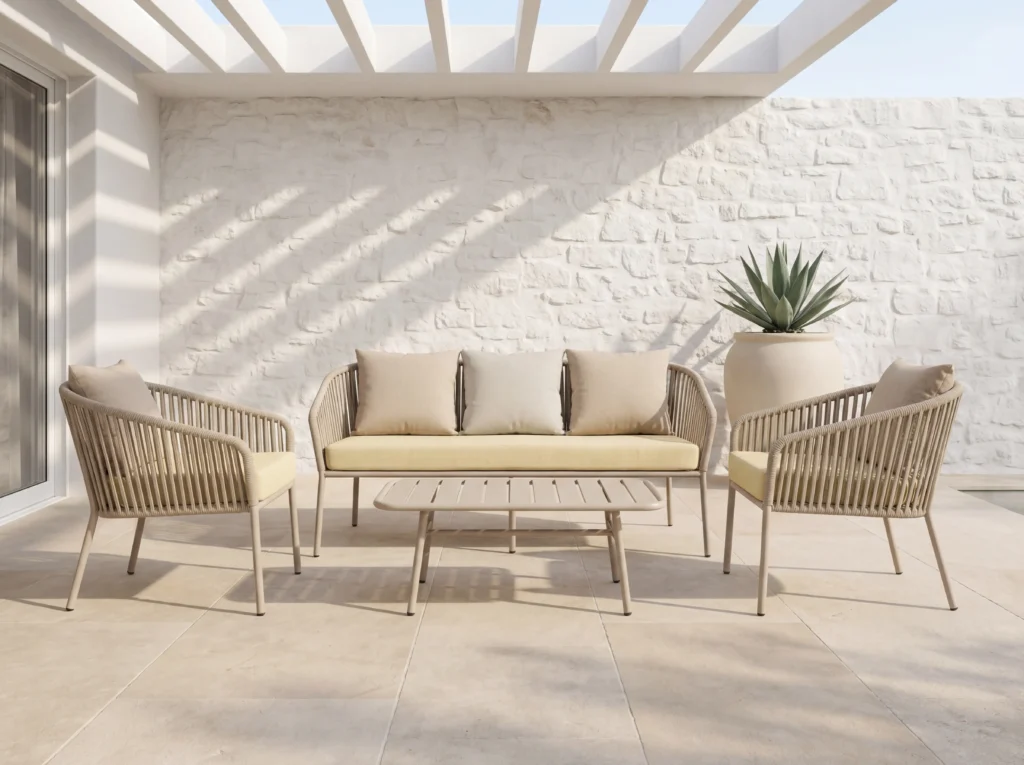
Walk into any hotel terrace, rooftop bar, or high-end patio these days, and you will notice a common thread — literally. Outdoor rope chairs have become the defining furniture trend of the 2020s, blending aesthetics, durability, and comfort in a way that traditional outdoor seating rarely achieves. For buyers looking to source these products in bulk, understanding the landscape of outdoor rope chair manufacturers is the difference between a deal that sells and one that sits.
The global outdoor furniture market is projected to reach $28 billion by 2028, and rope-woven seating represents one of its fastest-growing segments. As outlined in the Ultimate B2B Buyer’s Guide to Outdoor Rope Chairs. From carbon steel frames wrapped in weather-resistant PE rope to fully aluminum constructions that weigh half as much, manufacturers have refined their craft to meet the demands of hospitality buyers, retail chains, and e-commerce sellers alike.
What Makes a Great Outdoor Rope Chair Manufacturer?
Not all manufacturers are created equal. After analyzing dozens of suppliers across China, India, and Vietnam, several key differentiators emerge:
1. Frame Construction Quality
The frame is the backbone of any rope chair. Top-tier manufacturers use either powder-coated carbon steel or rust-resistant aluminum. For more on premium frame features, see Beyond the Weave: 5 Essentials for Commercial Rope Chairs. Carbon steel offers superior strength-to-weight ratio — ideal for commercial settings where chairs get moved around constantly. But it needs a quality powder coating to prevent rust. Aluminum, on the other hand, is naturally corrosion-resistant and lighter, making it the preferred choice for coastal hotels and resorts where salt air would eat lesser metals alive.
One manufacturer we analyzed, SJ Outdoor (sjoutdoor.com), builds their rope chairs with heavy-duty aluminum frames rated for 300+ lbs. Their ODM catalog shows over 25 different rope chair models, from dining heights to deep-seated lounge chairs. Another, Kashicreations from India, specializes in handcrafted iron rope chairs with intricate weave patterns — a different aesthetic but equally robust construction.
2. Rope Quality and UV Resistance
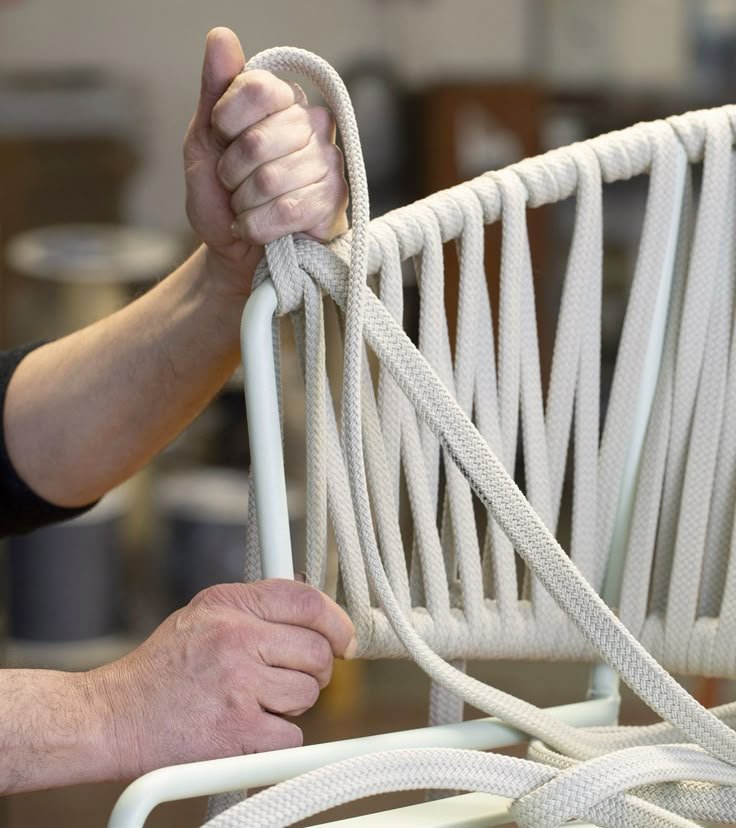
The rope itself is where many budget manufacturers cut corners. High-density polyethylene (HDPE) rope is the industry standard, but the grade matters. Commercial-grade HDPE rope should have UV stabilizers built into the extrusion process — not just a surface coating that washes off after one season. The best outdoor rope chair manufacturers use solution-dyed HDPE, where the color is part of the fiber itself, ensuring it won’t fade for 5+ years of direct sun exposure.
We found that Chinese manufacturers like YQ Furniture and Jiangyiren offer competitive pricing ($35-80 per unit for wholesale quantities) while maintaining decent rope quality. Indian manufacturers tend to be pricier ($60-120 per unit) but offer more artisanal weave patterns and better attention to finish details.
Top Manufacturing Regions and What They Offer
China — The Volume Leader
China remains the dominant force in outdoor rope chair manufacturing, with clusters in Guangdong, Zhejiang, and Fujian provinces. Companies like CFY Furniture and Uptop Chair produce thousands of units daily, with MOQs ranging from 100 to 500 pieces. The advantage? Price. A well-made Chinese rope chair can cost as little as $28 FOB for basic models, going up to $85 for premium designs with aluminum frames and high-grade rope.
Lead times typically run 30-45 days for custom orders, and most Chinese manufacturers offer OEM/ODM services — meaning they can match your design specs, apply your logo, and customize the rope color and frame finish. The trade-off is that quality consistency varies. We recommend ordering pre-production samples before committing to full container loads.
India — The Craftsmanship Alternative
Indian manufacturers like Kashicreations and Shiv Shakti Handicrafts bring a different value proposition. They focus on handwoven rope patterns that machines cannot replicate. The iron rope chairs from this region often feature ornate backrests and vintage-inspired frame designs that appeal to boutique hotels and high-end residential buyers. Pricing is higher ($55-130 per unit), but the uniqueness of the product justifies the premium.
Vietnam — The Rising Star
Vietnamese manufacturers are gaining traction, particularly for buyers looking to diversify away from China. Labor costs are competitive, and the quality of rope weaving is generally excellent due to the country’s strong tradition in rattan and wicker crafts. Lead times are slightly longer (45-60 days) but the quality-to-price ratio is attractive for mid-range products.
Key Considerations When Choosing a Rope Chair Supplier
Certifications and Compliance
If you are selling into the US or EU markets, certifications matter. Look for manufacturers that provide:
- BIFMA testing (American National Standard for office and contract furniture)
- REACH and RoHS compliance for European markets (chemical and material safety)
- Fire retardancy certifications for hospitality use
- Warranty documentation — 3-5 year frame warranties are standard from quality manufacturers
Shipping and Logistics
Rope chairs are surprisingly logistically complex. They are not fully flat-packable (the rope weaving is done on assembled frames), so they occupy significant volume in containers. A 40HQ container typically holds 250-400 rope chairs depending on the model. Factor in $3,000-5,000 for sea freight from China to the US West Coast, and another $500-1,000 for customs clearance and drayage.
Pricing Benchmarks (FOB, per unit)
Based on our research across multiple suppliers, here is what you can expect to pay:
- Basic carbon steel rope chair (China): $28-45
• Mid-range aluminum rope chair (China): $50-85
• Premium handcrafted rope chair (India): $55-130
• Commercial-grade contract rope chair (Vietnam): $45-75
• Custom ODM with brand packaging: +15-25% over base price
How to Vet an Outdoor Rope Chair Manufacturer
Before placing your first order, run this checklist:
- Request samples from at least three shortlisted manufacturers. Compare weave tightness, frame weld quality, and powder coat finish side by side.
- Ask for a video factory tour. Legitimate manufacturers will happily show you their production line, warehouse, and quality control process.
- Check trade references. Ask for three recent export customers (preferably in your target market) and follow up with them.
- Test for salt spray resistance if you are selling in coastal regions. A 72-hour salt spray test reveals frame corrosion resistance.
- Verify the rope’s UV stability. Leave a sample in direct sun for 30 days and check for fading or brittleness.
Final Thoughts
The outdoor rope chair market is growing fast, and the manufacturers who invested in quality materials and consistent production are the ones winning long-term contracts. Whether you are sourcing for a hotel chain, an e-commerce store, or a furniture retail brand, the key is finding a manufacturer who matches your quality requirements, not just your price point.
Start with samples. Compare them side by side. Ask the hard questions about UV resistance, frame durability, and warranty terms. The extra effort upfront saves returns, refunds, and unhappy customers down the line. And if you find a manufacturer that checks all the boxes — hold onto them. Reliable suppliers in this space are worth their weight in gold.
Market Trends Driving the Rope Chair Boom
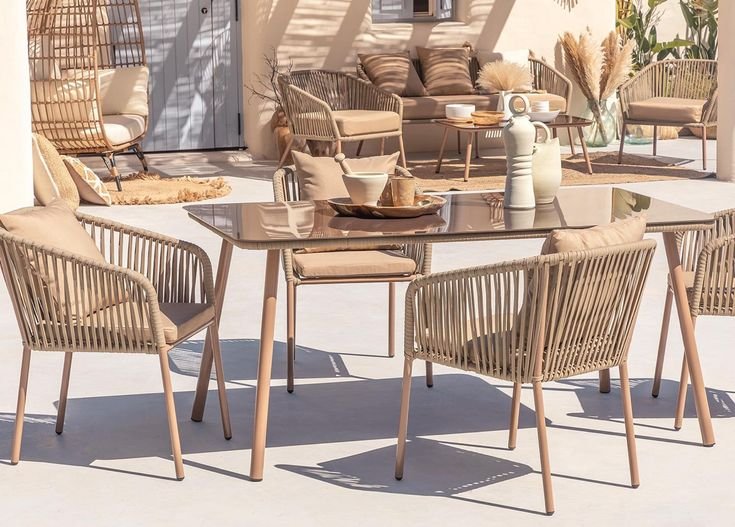
Several macro trends are fueling demand for outdoor rope chairs. First, the post-pandemic indoor-outdoor living movement has turned patios and terraces into extensions of the home. Homeowners are investing in quality outdoor furniture that matches their interior aesthetic, and rope chairs fit the bill — they are stylish enough for a living room yet rugged enough for year-round outdoor use.
Second, the hospitality industry has rebounded strongly. Hotels, resorts, and restaurants are replacing their old, tired outdoor seating with fresh, Instagram-worthy rope chair collections. The rope weave creates visual texture that photographs beautifully, which matters enormously in the age of social media marketing. A well-styled rooftop bar with rope chairs is practically free advertising when guests post photos.
Third, the rise of outdoor co-working spaces and pet-friendly cafes has created demand for durable seating that can handle heavy daily use. Rope chairs, especially those with aluminum frames and commercial-grade HDPE rope, hold up remarkably well in high-traffic environments. They are easy to clean (a quick wipe-down with soapy water), stackable for storage, and resistant to the kind of wear that would destroy upholstered furniture within months.
E-commerce has also been a significant accelerant. Platforms like Amazon, Wayfair, and Walmart Marketplace have made it possible for small-to-medium importers to sell furniture directly to consumers without massive upfront inventory commitments. Dropshipping programs from Chinese manufacturers have further lowered the barrier to entry. Today, a determined entrepreneur can go from finding a manufacturer to launching a product line in 8-12 weeks, compared to 6-12 months a decade ago.
Seasonal Buying Cycles and Inventory Planning
Smart buyers plan their orders around the manufacturing calendar. Chinese factories typically slow down for Chinese New Year (late January to mid-February), so orders placed in November-December face extended lead times. The ideal ordering window for the Northern Hemisphere summer season is October to January for delivery by March-April.
For the hospitality sector, the buying cycle is slightly different. Hotels typically place their furniture orders in Q1 (January-March) for installation before the peak summer travel season. Resorts in tropical destinations may order year-round but prefer delivery in the low season to avoid disrupting guest experiences.
One strategy that successful importers use is to stagger orders across multiple manufacturers. This reduces the risk of supply chain disruptions (a fire at one factory doesn’t wipe out your entire inventory) and gives you negotiating leverage when volumes are split. Just be careful — managing quality across multiple suppliers requires diligent inspection protocols.
Common Pitfalls When Sourcing Rope Chairs
Even experienced importers make mistakes. Here are the most common ones we have seen:
Ignoring assembly costs: Rope chairs often require partial assembly (attaching legs, screwing in the seat base). Factor in $5-12 per unit for warehouse assembly labor, or negotiate with the factory for fully assembled shipping (which costs more in freight but saves on labor).
Choosing based on price alone is a classic pitfall. As discussed in Beyond the Factory Price: The Hidden Costs of B2B Outdoor Furniture Sourcing : The cheapest quote usually cuts corners somewhere — thin powder coating, lower-grade rope, weaker welds. A $28 chair that develops rust after six months will cost you more in returns and reputation than a $45 chair that lasts five years.
Underestimating packaging requirements: Rope chairs need robust packaging because the weave can snag and pull if boxes are crushed. Insist on double-walled corrugated boxes with internal corner protectors. Test the packaging by drop-testing a sample from 3 feet — if the chair survives, the packaging is adequate.
Failing to account for seasonal demand spikes: Demand for outdoor furniture spikes in March-May. If you place your order then, expect higher prices and longer lead times because everyone else is ordering too. Buy off-season and warehouse your inventory for maximum margins.
The Future of Rope Chair Manufacturing
The outdoor rope chair industry is not standing still. Several innovations are worth watching: recycled PET rope (made from plastic bottles) is gaining traction as sustainability becomes a purchase driver. Smart manufacturers are also experimenting with modular rope chair systems that allow buyers to mix and match frame colors, rope colors, and cushion options in a single SKU, reducing inventory complexity.
Automation is slowly entering the weaving process. While most rope chairs are still hand-woven (particularly the intricate patterns), Chinese manufacturers are developing robotic weaving arms that can produce consistent, high-quality weaves at 3x the speed of human workers. This will likely bring prices down for basic models while increasing the premium on handcrafted artisan pieces.
For buyers, the message is clear: the window for getting into the outdoor rope chair market is still wide open, but competition is intensifying. The manufacturers who win are those who invest in quality control, consistent lead times, and responsive communication. Find those partners, build the relationship, and you will have a supply chain advantage that your competitors will struggle to match.
At Colors Furniture, we specialize in custom OEM outdoor rope chairs with MOQs as low as 100 units, full BIFMA/REACH certification, and lead times you can plan around. Send us your design or spec, and we will send you a sample within 10 working days.
Finding the right manufacturer is the single most important decision you will make when entering the outdoor rope chair market. Whether you are a hotel chain looking to furnish 200 rooms, an e-commerce seller launching your first collection, or a procurement manager seeking contract-grade durability — the partners you choose today will define your product quality for years to come.