When shopping for outdoor furniture, one question comes up again and again: should I go with carbon steel or aluminum? It is not a simple question, because both materials have passionate advocates — and both have real trade-offs. The right choice depends on where you live, how you use the furniture, your budget, and how much maintenance you are willing to do.
In this comprehensive guide — building on our deep dive in the Ultimate Guide to Outdoor Furniture Materials, we break down the differences between carbon steel and aluminum outdoor furniture across every important dimension: strength, weight, rust resistance, cost, lifespan, maintenance, and aesthetic options. We also include a comparison table to help you make an informed decision for your specific project.
1. Strength and Load Capacity
Carbon steel is the clear winner when it comes to raw strength. Made from iron alloyed with carbon (typically 0.05% to 2.1%), carbon steel has a tensile strength of 370–700 MPa, depending on the grade. This makes it significantly stronger than most aluminum alloys used in furniture, which typically range from 90–310 MPa.
What does this mean in practice? A carbon steel table can support heavier loads without bowing. Carbon steel chairs feel more solid when you sit down. For high-traffic commercial settings — hotel poolsides, restaurant patios, resort lounges — carbon steel frames hold up better under constant use. Aluminum furniture, by contrast, may flex slightly under heavy loads, especially in thinner-gauge frames designed for lightweight portability.
However, strength is not everything. Aluminum’s lower density (2.7 g/cm³ vs steel’s 7.8 g/cm³) means it is about one-third the weight of steel for the same volume. This makes aluminum furniture much easier to move around, rearrange, and store seasonally. For residential users who rearrange their patio layout frequently, this weight advantage is a meaningful benefit.
Aluminum patio furniture — lightweight and rust-resistant
2. Rust and Weather Resistance
This is the most significant difference between the two materials. Aluminum naturally forms a thin oxide layer when exposed to oxygen, which protects it from further corrosion. This means aluminum outdoor furniture can sit in the rain, snow, and humidity for years without rusting. No protective coating is required — although powder coating does extend its lifespan and improve appearance.
Carbon steel, on the other hand, rusts. It rusts quickly and it rusts aggressively if the protective coating is compromised. A scratch through the powder coating on a carbon steel frame can develop into visible rust within weeks in a humid environment. This is why carbon steel furniture requires a high-quality powder coating or galvanized finish, and why it is less suitable for coastal areas where salt spray accelerates corrosion dramatically.
For inland areas with moderate climates, carbon steel with a quality powder coating can last 8–12 years (see our detailed comparison: Better Aesthetics, Lower TCO: Carbon Steel Folding Chairs vs Aluminum. For coastal regions or high-humidity environments, aluminum is the safer bet, often lasting 15–20 years or more with minimal maintenance. Hotels and resorts near the ocean almost exclusively choose aluminum for this reason.
3. Cost Comparison
Carbon steel is generally cheaper than aluminum on a per-unit basis. The raw material cost of steel is lower, and the manufacturing processes (welding, bending, stamping) are well-established and efficient. A carbon steel outdoor dining set typically costs 20–35% less than a comparable aluminum set from the same manufacturer.
However, the total cost of ownership tells a different story. If you factor in the cost of rust prevention (higher-quality powder coating, annual maintenance, eventual replacement), aluminum can be more economical over a 10-year period. For seasonal use or short-term projects, carbon steel offers better upfront value. For permanent installations, aluminum’s longevity often justifies the higher initial price.
Carbon steel’s cost advantage is most pronounced in bulk orders. For a typical 50-piece dining set order, carbon steel frames cost approximately $45-75 per unit to manufacture, while aluminum frames range from $70-120 per unit. This gap narrows for higher-end designs with complex powder coating or custom finishing requirements.
Shipping costs also favor aluminum despite its higher unit price. Because aluminum furniture weighs roughly 60% less than equivalent steel furniture, container shipping costs are significantly lower. For a 40-foot container, the weight savings can reduce freight costs by $800-1,500 per shipment — a factor that matters for importers and wholesale buyers evaluating total landed cost.
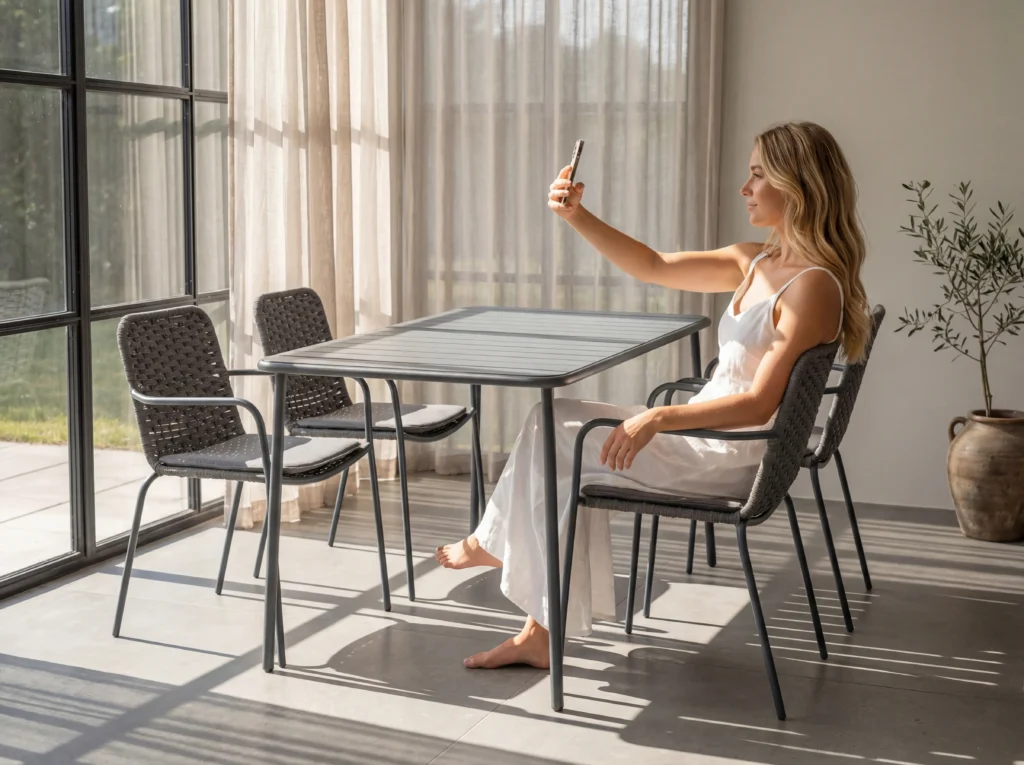
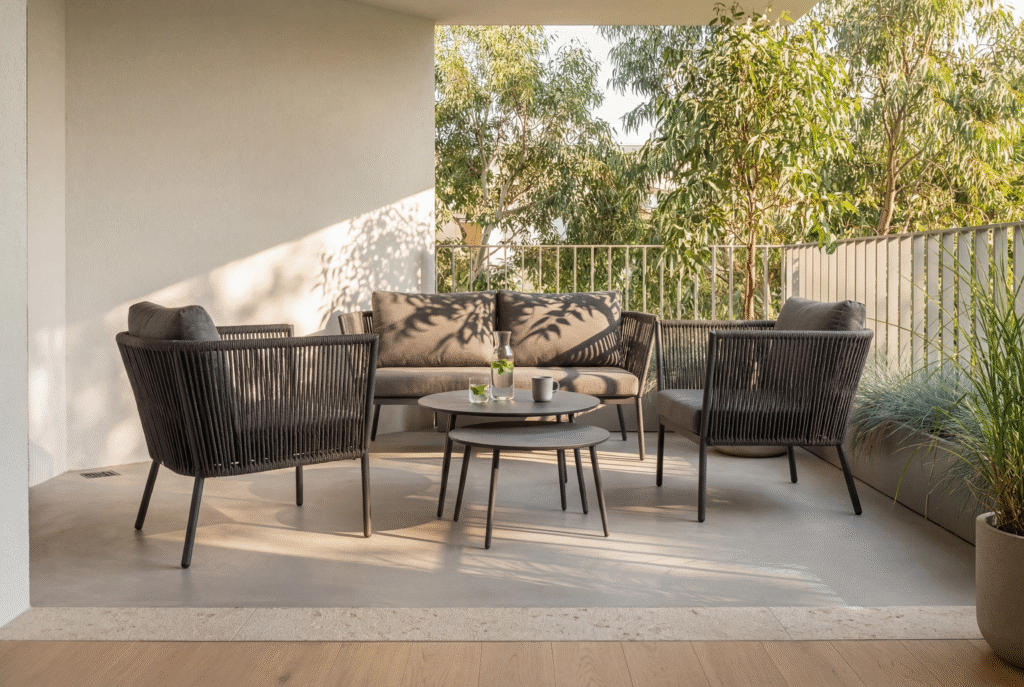
Modern metal furniture with clean geometric lines
4. Aesthetics and Design Flexibility
Carbon steel has a warmer, more substantial look. It takes powder coating exceptionally well, creating a smooth, even finish that can mimic wrought iron. It can be bent, forged, and welded into intricate designs that would be difficult or expensive to achieve with aluminum. For traditional, vintage, or industrial-style furniture, carbon steel is the better choice.
Aluminum offers a sleeker, more modern aesthetic. It can be extruded into complex profiles that give furniture a clean, contemporary look. Aluminum frames can be thinner and lighter while maintaining adequate strength, which allows for minimalist designs that are popular in modern hospitality and residential settings.
Color options are excellent for both materials thanks to modern powder coating technology. However, carbon steel tends to hold color more uniformly because the coating bonds differently to the ferrous surface. Aluminum may show slight color variation at weld points, though experienced manufacturers can minimize this effect.
5. Maintenance Requirements
Aluminum is low-maintenance. Wash it with soap and water once or twice a year, and it will look good for years. No painting, no rust treatment, no sealants. This is a major advantage for hotels, resorts, and rental properties where maintenance labor is expensive and hard to schedule.
Carbon steel requires more attention. Inspect the powder coating annually for chips or scratches. Touch up any damage immediately with matching paint. Store carbon steel furniture indoors or under cover during the off-season. In coastal areas, consider a sacrificial wax coating for added protection against salt spray.
The table below summarizes the key maintenance differences at a glance.
Comparing different patio furniture material options
6. Carbon Steel vs Aluminum — Side by Side
Factor | Carbon Steel | Aluminum |
Strength (Tensile) | 370-700 MPa | 90-310 MPa |
Weight (Density) | Heavy (7.8 g/cm³) | Light (2.7 g/cm³) |
Rust Resistance | Poor without coating | Excellent (natural oxide) |
Cost (Upfront) | Lower (20-35% less) | Higher |
Total Cost (10yr) | Often higher | Often lower |
Lifespan (Coated) | 8-12 years | 15-20+ years |
Best Environment | Covered patio, inland | All-weather, coastal |
7. Which One Should You Choose?
Choose carbon steel if: you are on a tight budget, the furniture will be used indoors or under a covered patio, you prefer traditional or industrial aesthetics, and you are willing to do annual maintenance. Carbon steel is also the better choice for heavy-use commercial settings where stability and load capacity matter most.
Choose aluminum if: the furniture will be exposed to rain, humidity, or coastal salt air, you want minimal maintenance, you prefer modern or minimalist designs, or you need to move furniture frequently. Aluminum is the smarter long-term investment for most outdoor applications.
For wholesale buyers and hospitality procurement managers, the decision often comes down to the specific project. Many successful buyers maintain both options in their catalog: carbon steel for covered patio areas and budget-conscious projects, aluminum for poolside, beachfront, and year-round outdoor installations. The key is to match the material to the specific micro-environment rather than choosing one material for an entire property.
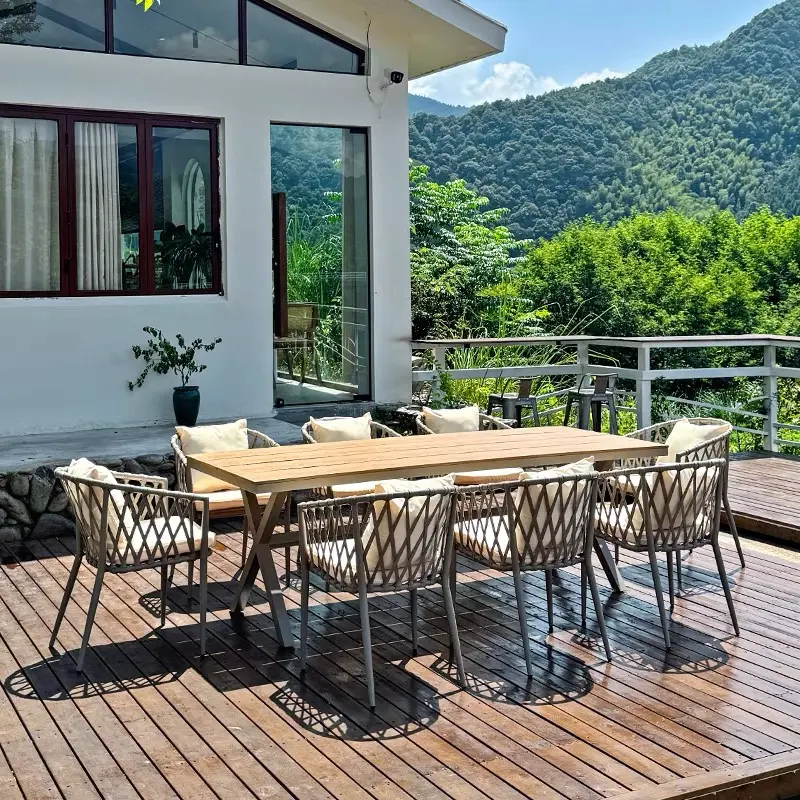
Outdoor metal dining set — suitable for both steel and aluminum
Final Thoughts
The Comeback: Why Carbon Steel & Wrought Iron Are Winning the Market
If plastic is an ecological disaster — as we discussed in The Plastic Trap: Why Smart B2B Buyers Are Ditching Plastic Outdoor Furniture, wood is too high-maintenance, and aluminum is too expensive and too soft — what is the breakthrough? The answer is high-carbon steel and wrought iron patio furniture with automotive-grade E-coating. This is exactly what top wholesalers and commercial buyers are pivoting to right now.
Here is why metal patio furniture is experiencing a massive global renaissance:
Advantage 1 — Unmatched Strength, Ultimate Design Freedom. Unlike soft aluminum, iron and carbon steel are extremely rigid and strong. This enormous tensile strength allows us to break physical boundaries, creating large-span, ultra-thin, and highly imaginative modern furniture. The rigidity of iron perfectly supports the “less is more” minimalist philosophy. These vibrant, fashion-forward, bold-framed designs capture the young generation’s aesthetic — delivering massive free social media traffic for your brand.
Advantage 2 — Unrivaled Cost-Effectiveness. While aluminum prices have surged 30%, iron prices remain highly stable and cost-efficient. Not only is the initial procurement cost lower, but iron’s ability to realize ultra-modern designs means significantly higher retail markup potential. This is the core logic of B2B procurement today: buy better-designed, sought-after products at lower costs.
Advantage 3 — Perfect Coating for Emotional Value. After premium powder coating treatment, iron’s surface adhesion and texture far surpass other materials. Iron perfectly reproduces any stunning Pantone shade, making furniture stand out dramatically in any environment. The colors on iron look richer, deeper, and more saturated — a visual advantage that drives emotional purchase decisions.
Advantage 4 — 100% Eco-Friendly & Sustainable. Unlike toxic plastic or forest-depleting wood, iron and steel are the most recycled materials on earth. They can be recycled infinitely without losing strength. Choosing iron is a highly environmentally responsible decision that perfectly aligns with modern corporate sustainability and ESG goals.
Advantage 5 — Rust Is a Myth of the Past. Modern manufacturing has made rust a solved problem. Our factories use the same E-coat (electrophoretic) process as automotive chassis, followed by a thick outdoor-grade powder coating. This dual-protection technology gives wrought iron patio furniture the same multi-year rust-free lifespan as aluminum — while delivering unmatched strength and style.
This is not a compromise. This is an upgrade. For buyers who want the best value, the best design, and the best sustainability story — carbon steel and wrought iron are not just alternatives. They are the new standard.
8. Environmental Impact and Sustainability
Carbon steel production has a higher carbon footprint than aluminum due to the energy-intensive blast furnace process. Producing one ton of carbon steel emits approximately 1.85 tons of CO₂, while primary aluminum production emits around 4-6 tons per ton. However, this comparison is not straightforward because aluminum requires significantly more energy to produce from raw ore.
The sustainability picture changes dramatically when recycled content is considered. Steel is the most recycled material on earth — approximately 80-90% of all steel is eventually recycled. Recycled steel requires 60-75% less energy than primary production. Aluminum also recycles well — about 75% of all aluminum ever produced is still in use today, and recycled aluminum requires 95% less energy than primary production.
For furniture buyers focused on sustainability, the key question is: which material will last longer in your specific environment? A piece of furniture that lasts 20 years is inherently more sustainable than one that needs replacement every 8 years, regardless of the material’s production footprint. In this context, aluminum’s longer lifespan in outdoor settings often gives it the sustainability edge, while carbon steel’s near-infinite recyclability gives it an end-of-life advantage.
There is no universal winner in the carbon steel vs aluminum debate. Each material has its sweet spot, and the best choice depends on your specific use case. What matters most is understanding the trade-offs and matching them to your climate, budget, and maintenance capacity.
One thing both materials have in common: the quality of the manufacturing matters as much as the material itself. A well-made carbon steel chair with thick powder coating can outlast a poorly made aluminum chair. Always buy from reputable manufacturers who use appropriate material grades and finishing processes.
Not Sure Which Material Fits Your Project?
We help buyers make the right call every day. Whether you need carbon steel for a budget-friendly hotel renovation or marine-grade aluminum for a coastal resort, Colors Furniture offers OEM manufacturing with full certification support.
Tell us about your project requirements — quantity, environment, design style — and we will recommend the best material, send you samples, and deliver a quote within 48 hours.
📩 Get a Material Recommendation → contact us