Stackable outdoor dining chairs wholesale buyers are usually solving more than a seating problem. They are also solving storage, freight, staff handling, seasonal reset, and replacement risk. For restaurants, hotels, cafes, event venues, wholesalers, and outdoor furniture retailers, a good stackable chair can reduce hidden costs long after the purchase order is signed.
This guide explains how to evaluate stackable outdoor dining chairs for commercial use, including frame geometry, stack height, coating protection, carton planning, container loading, and replacement parts. It is written for buyers comparing stackable patio chairs wholesale, stackable chairs for restaurants, and outdoor dining chairs for hotel or retail programs.
Quick Sourcing Path
- Browse Outdoor Dining Chairs for full dining chair options.
- Compare Matte Light Gray Stackable Outdoor Dining Chair for compact metal seating.
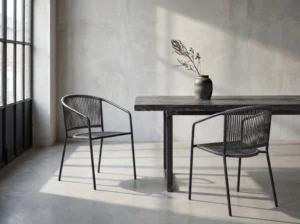
- Review Metal Rope Stackable Outdoor Dining Armchair for woven comfort with stackable storage.
- Use Folding Chairs when the project needs flat storage instead of vertical stacking.
Why Stackability Has Real B2B Value
Stacking is not only about saving warehouse space. It affects closing-time labor, bad-weather response, container loading, retail storage, and project installation. A chair that stacks safely can make a patio easier to operate. A chair that technically stacks but scratches its own finish can create problems quickly.
Buyers should ask how many chairs stack safely, where the contact points are, and whether protective details are used to reduce coating damage.
What to Check Before Ordering
| Checkpoint | What to Ask | Why It Matters |
|---|---|---|
| Stack height | How many chairs per stack are recommended? | Improves storage planning and shipping estimates |
| Contact points | Where do frames touch when stacked? | Prevents finish scratches and noise |
| Frame strength | What tube size and structure are used? | Supports daily commercial handling |
| Feet | Are glides or caps replaceable? | Protects floors and extends service life |
| Coating | Is there anti-rust pretreatment before powder coating? | Important for outdoor dining areas |
Material Choices for Stackable Chairs
Powder-coated metal is a strong option for stackable outdoor dining chairs because it gives the frame structure, slim lines, and color flexibility. Carbon steel can be effective when treated with the right anti-rust process. Aluminum can reduce weight where handling is the top priority. Rope, Textilene, or woven details can add comfort, but they should not make stacking unstable.
Colors Furniture Factory focuses on metal outdoor furniture and offers outdoor dining chairs, rope chairs, metal chairs, and custom color development. For stackable designs, the key is to balance comfort, frame geometry, and finish protection.
Storage and Container Loading
Stackable chairs can reduce freight pressure, but only if the design and packing are planned together. Ask for carton dimensions, pieces per carton, stack direction, and whether the chairs ship assembled or partially protected. For large wholesale orders, this information helps estimate landed cost more accurately.
For restaurants and hotels, storage matters after delivery too. Seasonal patios need furniture that can be moved without damaging walls, floors, or the furniture itself. Retailers need stacks that look clean in warehouse or showroom storage.
Quality Details That Separate Better Chairs
- Smooth welds at visible and stress-bearing joints.
- Frame geometry that stacks without forcing or twisting.
- Seat and back angles that remain comfortable for dining.
- Powder coating that covers corners, welds, and underside areas.
- Replaceable foot caps or glides for long service life.
- Consistent color for repeat orders.
When to Use Stackable Chairs
Stackable chairs are especially useful for restaurant patios, hotel terraces, event venues, rental programs, retail stock, and seasonal outdoor areas. They are less ideal when a project needs oversized lounge comfort or very heavy furniture for a fixed layout. The best supplier should help match stackability to the use case instead of treating it as the only selling point.
Stacking Geometry Matters
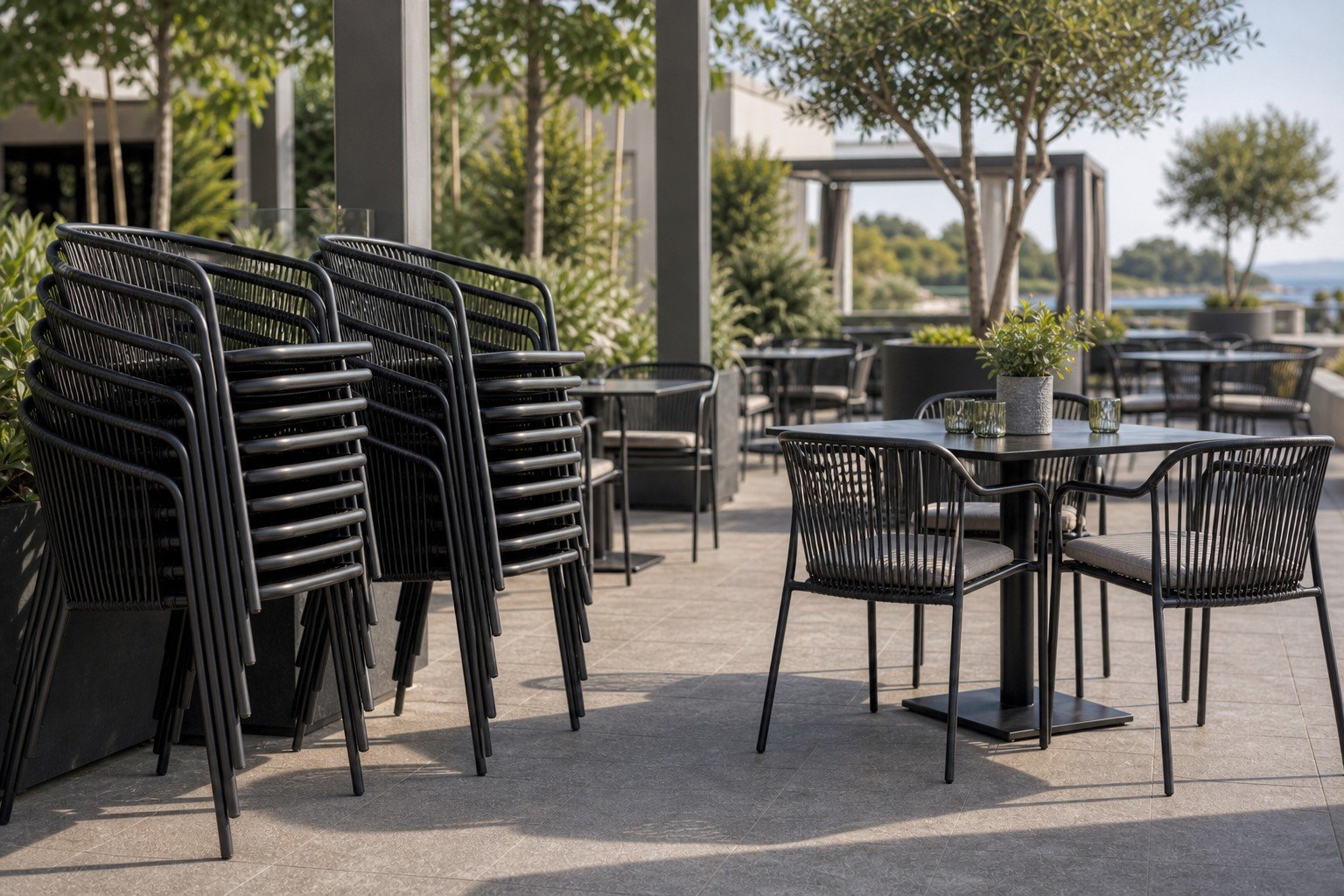
Not every stackable chair is equally useful. A chair may stack in a photo but still be awkward in real storage. Buyers should check how the legs overlap, where the seat contacts the frame, whether the backrest touches the next chair, and whether the stack remains stable when moved. Good stacking geometry protects the finish and makes handling easier for staff.
For commercial patios, stacking should be tested repeatedly. A chair that stacks once in the sample room may show scratches after daily restaurant use. Ask the factory whether protective spacers, glides, or frame contact design are included. If the chair uses rope, Textilene, or woven details, confirm that stacking does not crush or deform those areas.
How Stackable Chairs Affect Shipping Cost
Stackability can improve container loading, but buyers should ask for actual carton dimensions and loading suggestions. Some chairs stack tightly without cartons, but still need protective packaging for export. Others require more space because the armrests or backrests create a wider stack. The real question is not simply whether the chair stacks, but how it stacks when protected for shipping.
For wholesalers, this affects landed cost. A slightly more expensive chair may become more profitable if it loads better, arrives with less damage, and stores more efficiently in the warehouse. Always compare unit price together with packing volume, carton strength, and damage risk.
Commercial Use Cases for Stackable Chairs
| Use Case | Why Stackability Helps | Extra Specification |
|---|---|---|
| Restaurant patio | Fast closing, cleaning, and seasonal storage | Scratch-resistant finish and easy-grip frame |
| Hotel terrace | Flexible event and breakfast layouts | Comfort, color consistency, stable feet |
| Event venue | Quick setup and removal | Strong frame and predictable stack height |
| Retail warehouse | Efficient storage and display rotation | Clear cartons and repeatable SKU colors |
| Outdoor cafe | Daily furniture movement | Light handling and durable coating |
Frame Strength and Comfort
Stackable chairs should not sacrifice comfort for storage. A chair that is easy to stack but uncomfortable will not support restaurant or hotel use. Buyers should check seat angle, back support, armrest height, and overall width. The chair should feel stable when a guest sits down, leans back, or shifts position.
Frame strength matters at welds, leg joints, and arm connections. In commercial environments, chairs are pulled, dragged, lifted, and stacked by many people. The structure should be strong enough to tolerate this handling while keeping a clean design language.
Coating and Contact Protection
Stacking creates contact between furniture pieces. If the coating is weak or the contact points are poorly designed, scratches can appear quickly. Buyers should inspect the sample after stacking several times. Pay attention to backrest edges, leg contact points, armrests, and the underside of the seat.
Powder-coated metal can be a good choice for stackable outdoor dining chairs, but the coating process and contact protection must be discussed. For coastal or poolside projects, also ask about anti-rust pretreatment and maintenance recommendations.
Questions to Ask Before Confirming the Order
- How many chairs can be stacked safely?
- Will stacking damage the visible finish?
- What is the carton size and loading quantity?
- Are foot caps replaceable?
- Is the chair comfortable for dining, not only storage?
- Can the same color be repeated for future orders?
- Does the factory have relevant test or QC documentation?
Sample Testing Process for Stackable Chairs
When the sample arrives, do not inspect it only as a single chair. Stack it, unstack it, move it across the floor, sit in it for a full meal-length period, and check the frame after handling. If possible, let operations staff test the chair too. The people who clean, store, and reset the patio often notice practical issues that buyers miss during a quick visual review.
Check whether the chair makes noise when dragged, whether the feet protect the floor, whether the backrest feels comfortable, and whether the stack leans. If the chair is intended for a restaurant or hotel, it should be evaluated under realistic handling, not only showroom conditions.
Spare Parts and After-Sales Value
Stackable chairs often depend on small parts: foot caps, plastic glides, spacers, screws, and protective contact points. These pieces are inexpensive, but they can affect the entire service life of the chair. Buyers should ask whether spare parts are available and whether a small quantity can be included with the first order.
For wholesalers, after-sales support is a selling point. If a customer can replace foot caps instead of replacing the chair, the product becomes easier to recommend. If the supplier can keep the model and color stable for future orders, the wholesaler can build a more reliable product line.
Information to Send for a Better Quote
| Information | Reason |
|---|---|
| Target market | Restaurant, hotel, retail, event, or project use changes the specification |
| Expected quantity | Helps calculate production, packing, and MOQ |
| Use environment | Coastal, poolside, rooftop, or general patio use affects coating choices |
| Storage plan | Clarifies stack height and handling needs |
| Color requirement | Supports powder coating and repeat-order control |
Stackable Chairs vs Folding Chairs
Stackable chairs and folding chairs solve different storage problems. Stackable outdoor dining chairs are usually better when restaurants, hotels, and cafes need fast daily reset, strong dining comfort, and a cleaner installed look. Folding chairs are better when the project needs flat storage, event transport, occasional seating, or compact retail packaging.
For B2B buyers, the choice should come from the workflow. A restaurant patio may prefer stackable dining chairs because staff can clear the terrace quickly. An event supplier may prefer folding chairs because flat storage and truck loading are more important. Buyers comparing both options can review the Folding Chairs category alongside stackable dining chair samples.
Color and Range Planning
Stackable outdoor dining chairs often become repeat products for wholesalers and project buyers. A controlled color range can make the chair easier to sell across cafes, hotels, and garden retailers. Buyers should keep approved color samples and production records so future batches match the original order.
That consistency supports long-term sales.
Related Product Pages and Guides
- Matte Light Gray Stackable Outdoor Dining Chair
- Metal Rope Stackable Outdoor Dining Armchair
- Outdoor Dining Chairs Wholesale
- Coloured Folding Chairs Wholesale
- Hotel Outdoor Furniture Wholesale Guide
- Carbon Steel vs Aluminum Outdoor Furniture
Next Step
Before buying stackable outdoor dining chairs wholesale, request samples, stacking photos, packing data, and finish details. If the order is for a commercial project, also ask about EN581 documentation or salt spray testing where applicable. To discuss samples, colors, or OEM stackable chair development, contact Colors Furniture Factory.