To build a 2027 product line, we couldn’t just copy the top ten items you find online. Across Europe, the real shift is in how a collection is put together: outdoor spaces are treated more like rooms, city buyers still need compact pieces that justify their footprint, and commercial buyers have less patience for ranges that cannot be repeated cleanly next season.
A chair may look right in a lifestyle photo, but buyers need to know more: can it stack without damage? How does the table pack? And can a missing part be replaced six months later? The ten directions below are about collections, not a consumer popularity ranking.
How to read this list
The list draws on current 2026 European retail and trade signals, pointing to themes like more flexible outdoor living, modular entertaining, smaller-space use, and design-led collections that can move seamlessly between a balcony, terrace, garden and hospitality setting. While these signals are helpful, they are not a substitute for a buyer’s own sales data. Treat the list as a way to build a better sampling brief, rather than a reason to order every item at once.
1. Low, modular lounge systems
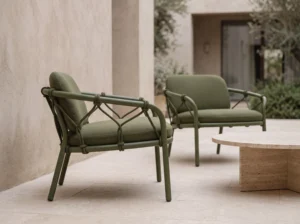
Outdoor living is no longer just about a dining table and four chairs. Low lounge pieces, corners, ottomans and occasional tables allow retailers and project buyers to create a more relaxed outdoor-room feel. The commercial question isn’t just whether the sofa looks impressive. It is whether the modules can be reconfigured without creating awkward carton sizes or a confusing SKU list. For a first range, a small group of compatible modules is usually more practical than a large sectional programme.
A good sampling brief should spell out the key layouts the buyer wants to show: perhaps a two-seat setting, a corner arrangement and an ottoman-led configuration. That gives design, packing and merchandising teams a clear shared job. It is also worth deciding early whether cushions, covers and loose components will be sold as a fixed set or managed as separate orderable items.
2. Compact bistro sets for balconies and city terraces
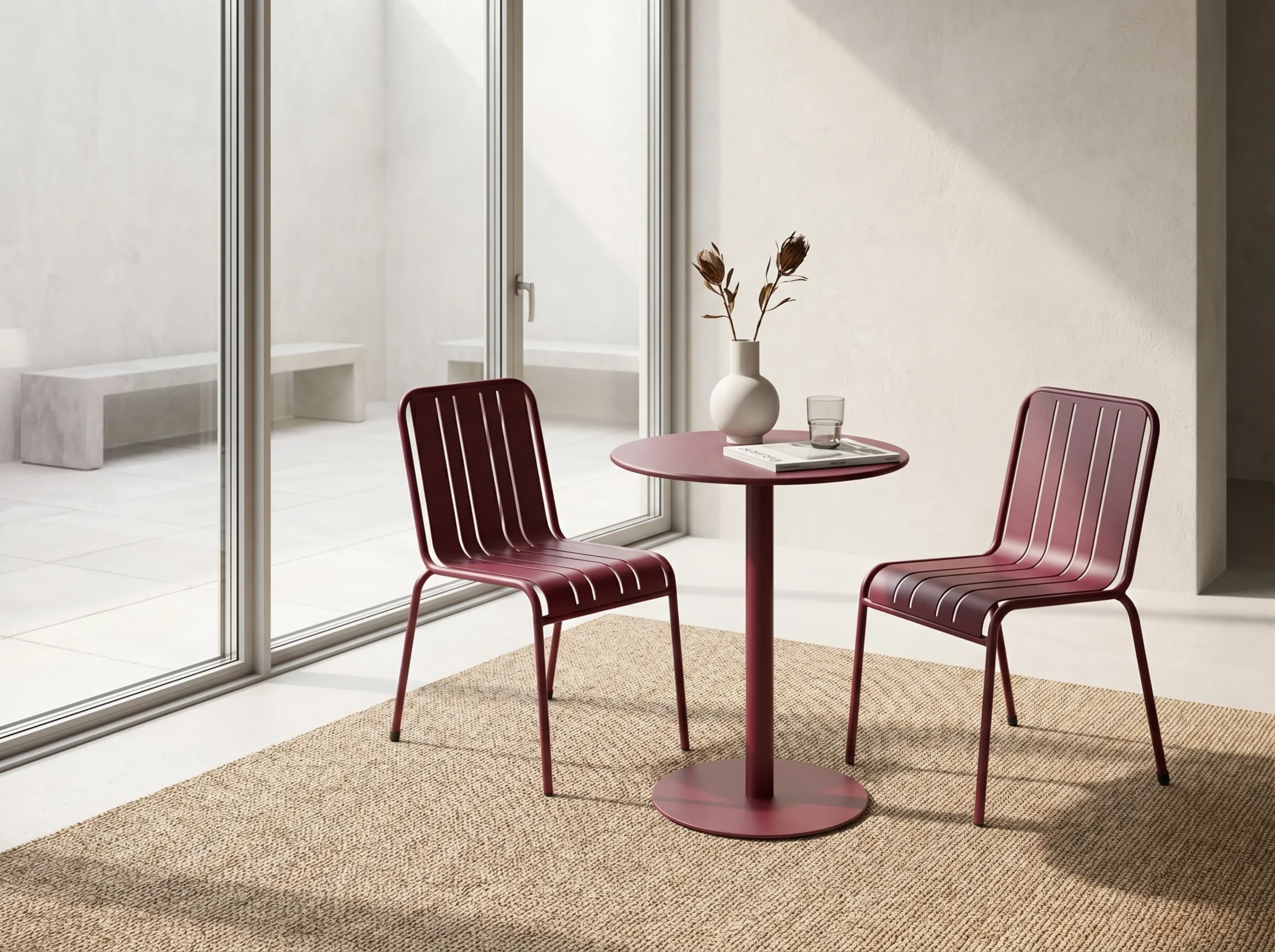
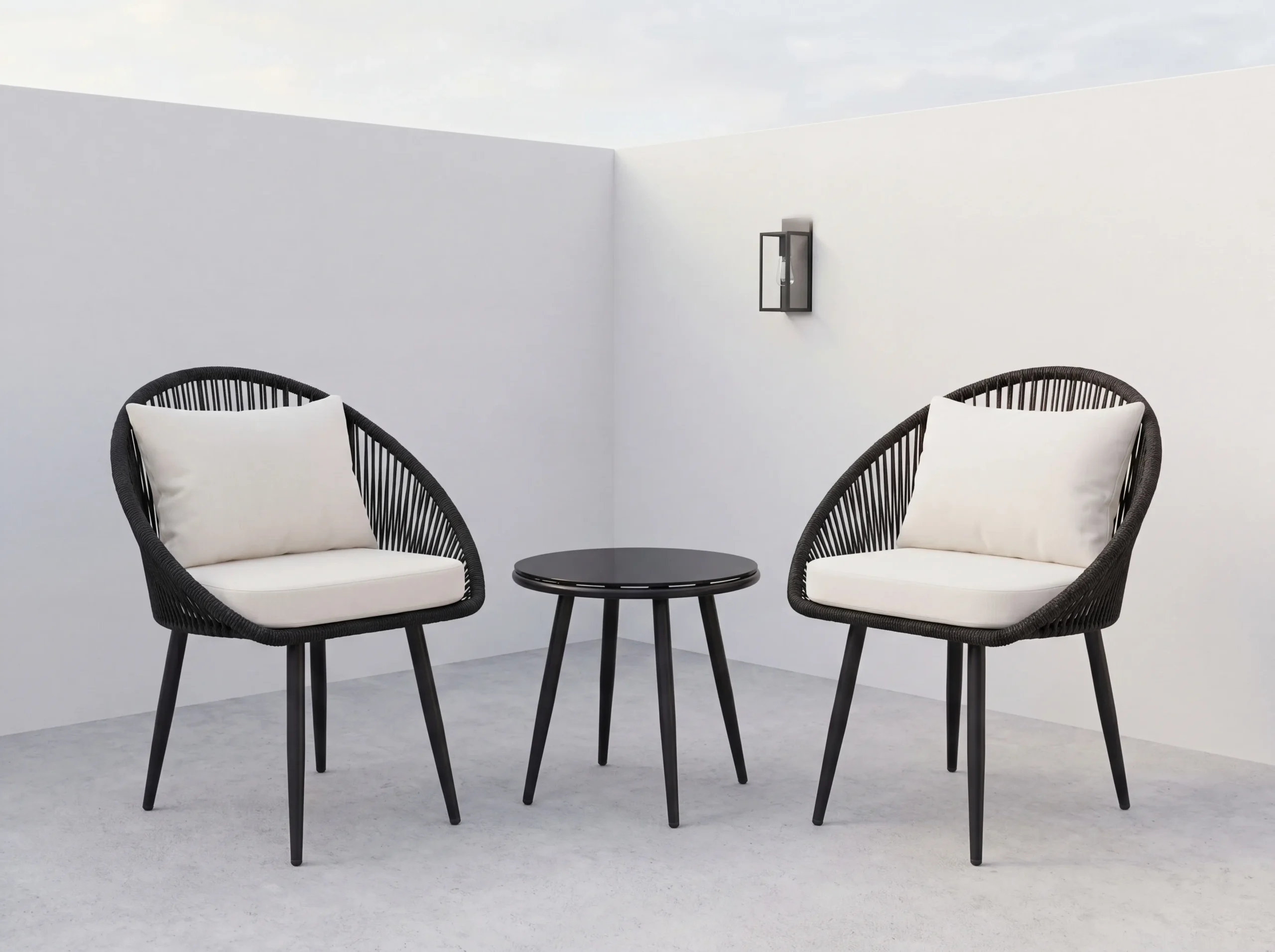
Compact furniture remains important because many European buyers have limited outdoor space. Two-seat sets, small round tables and light-looking chairs can serve balconies, apartment terraces, cafés and secondary garden spaces. A good brief should go beyond just specifying a 60–80 cm table diameter. Check chair clearance, whether the legs sit comfortably under the top, how the set looks from a doorway, and whether it can be packed or displayed without wasting space.
This is a category where a buyer should photograph the sample in a tight setting before committing. A set that feels compact in a showroom can look undersized outdoors, while a visually heavy frame can make a useful terrace look crowded. The strongest programmes normally keep the table base, chair profile and colour treatment related, even when the individual pieces are sold separately.
3. Stackable metal and rope dining chairs
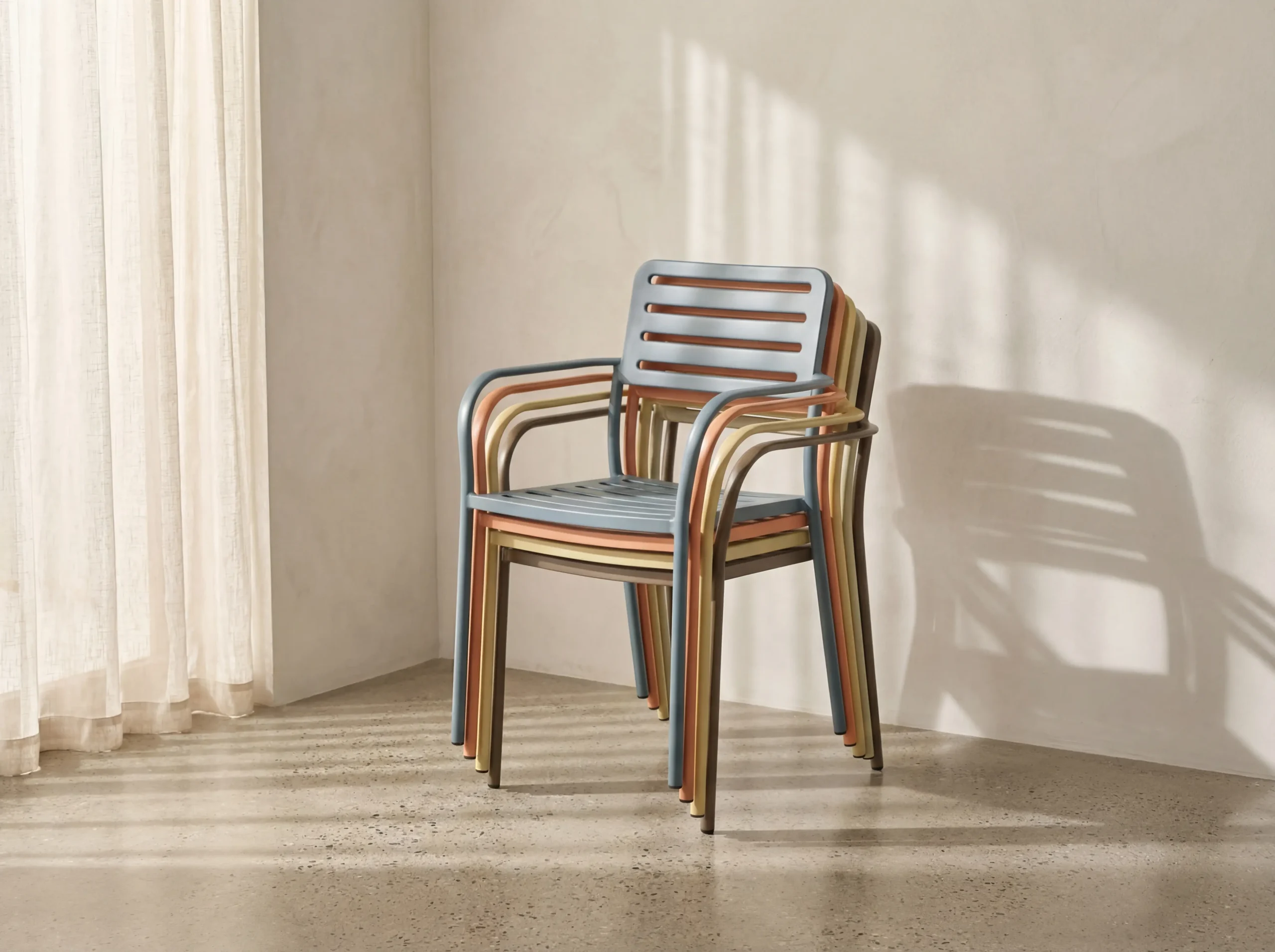
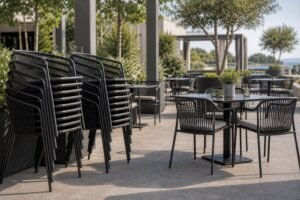
Stacking is a practical feature, not just a catalogue listing. It matters to a retailer with limited warehouse space and to a restaurant that clears a terrace at the end of the day. Metal-and-rope chairs can make a collection feel warmer than a plain metal chair while still offering a clear commercial use case. Ask for a stacking method that protects the finish, a defined rope specification, and a packing arrangement that does not crush or mark the chair during transport.
The first sample review should include the stacked product, not only an individual chair. Buyers need to see where frames touch, whether the rope catches, and what keeps a stack stable. Those details affect the shelf-life of the product long before the consumer sees it. If stackability is the key reason for choosing this chair, it needs to be demonstrated clearly in the sales and packing material too.
4. Powder-coated bistro pieces in mineral and garden colours
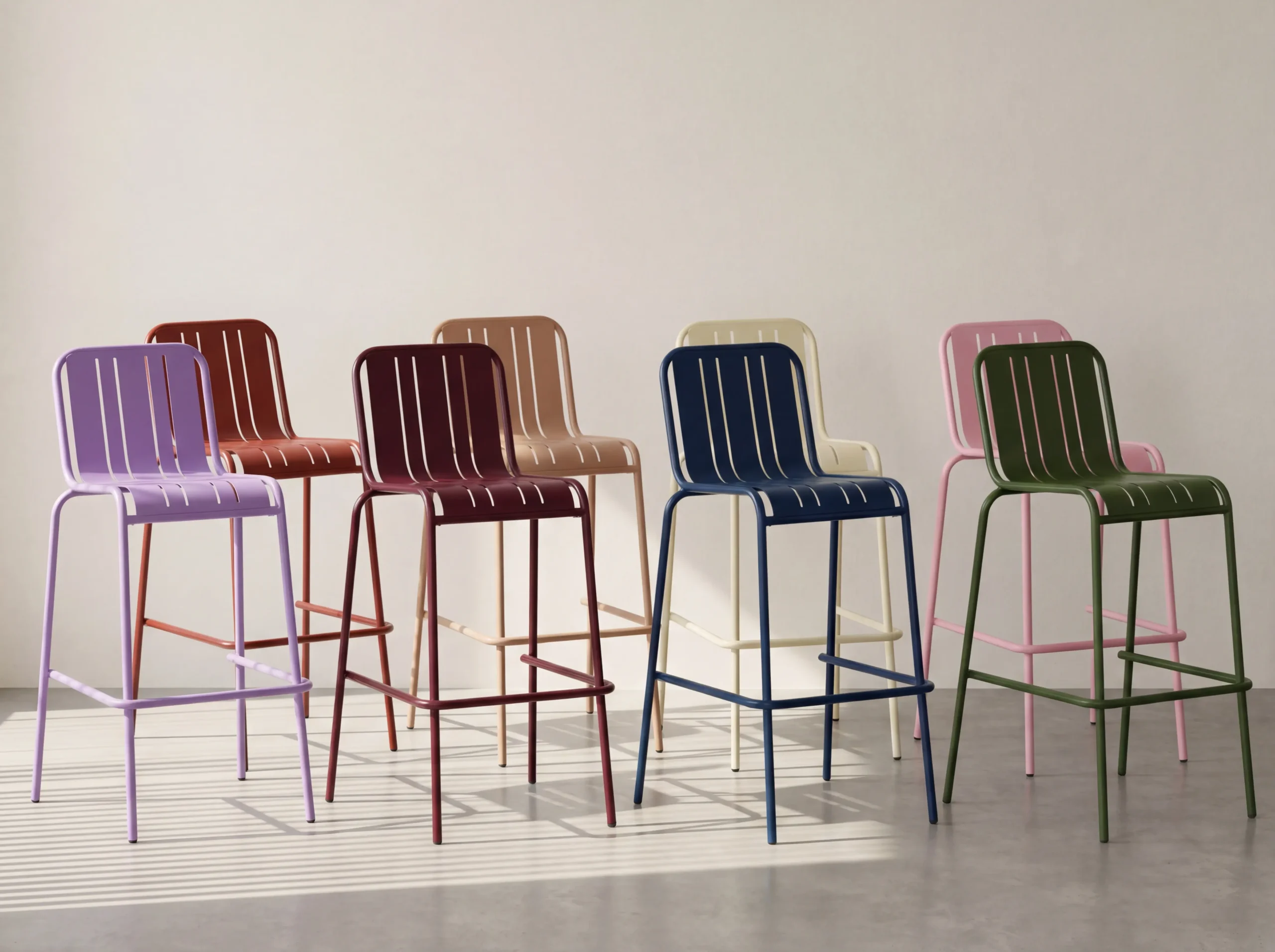
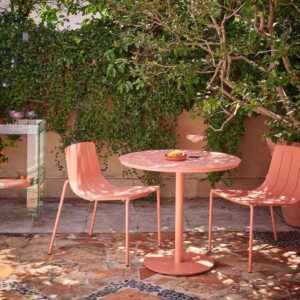
Colour is making a comeback, but in a more restrained way than the bright trend palettes often seen on mood boards. Olive green, clay, warm off-white, muted blue and soft charcoal can give a small collection a clear point of view without making it difficult to reorder. The useful test is not whether a shade is fashionable this week; it is whether it works across chairs, tables and accessories, can be approved against a physical sample, and still reads well in a product photograph and a garden setting.
For a new programme, two or three approved finishes are often enough. More colours increase the chance that production, packaging and repeat ordering become difficult to control. A buyer can still create seasonal interest through photography, cushions or merchandising. The frame colour should be chosen for its role in the collection, not because it happened to be popular in one reference image.
5. Curved and softened silhouettes
Curves are appearing in chair backs, arm details, table edges and low lounge profiles. They can soften an otherwise industrial metal range and help a buyer build a more residential-looking outdoor offer. They also bring manufacturing questions. Curved components should be checked for consistency, joins should look intentional rather than hidden, and the finished product still needs to make sense for stacking, nesting or carton dimensions. A curve that creates a beautiful sample but expensive empty space in every carton is not automatically a good commercial design.
Buyers should review the design from the side and rear as well as the front. It is often from these angles that weld locations, frame transitions and the practical relationship between a chair and a table become visible. A small adjustment to a curve can improve both the product’s visual balance and the way several units nest in a carton or display on a retailer’s floor.
6. Metal-and-rope mixed-material collections
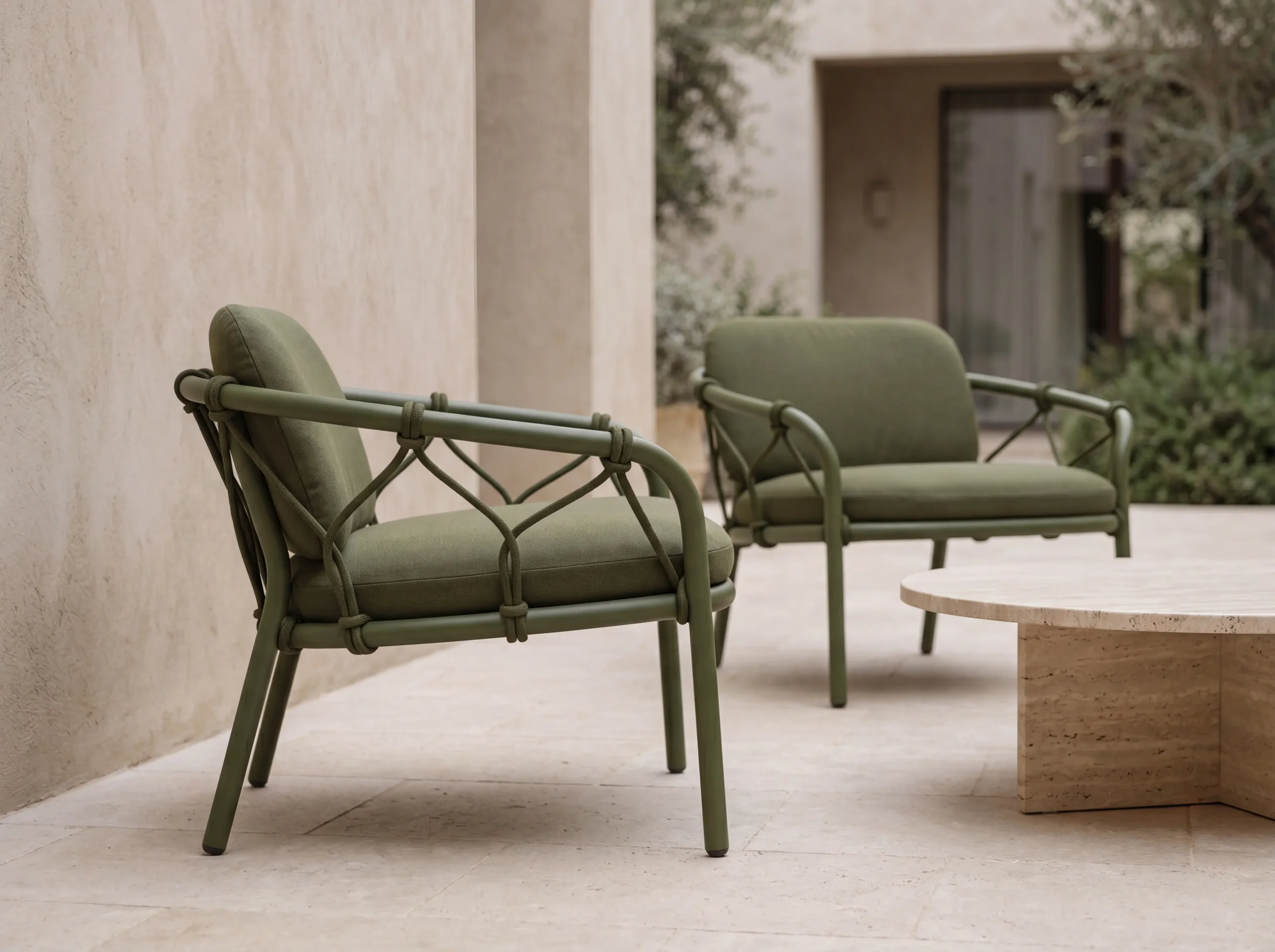
Rope remains useful when it adds texture and comfort rather than becoming decoration for its own sake. A powder-coated frame paired with rope can move between garden retail, boutique hospitality and a higher-spec terrace collection. The buyer should lock down the rope profile, colour, weave pattern and connection detail before bulk production. If the collection is intended for repeat orders, keep an approved material reference and make sure parts such as feet, hardware and cushions can be identified later.
The same chair can look very different when a rope colour or weave density changes, so a general description such as “beige rope” is rarely sufficient for a repeat order. Keep the sample reference, material notes, and product images together in one place. If a collection includes a table, the top and frame finish should be considered alongside the rope rather than approved as unrelated components.
7. Relaxed low dining and outdoor-room settings
Not every outdoor meal needs a formal dining-height table. Lower, more relaxed settings are better suited to resorts, hospitality terraces and buyers building a lounge-led range. This direction works best when the user scenario is clear. A low table that looks good beside a sofa may feel awkward when used for a full meal. Retailers should decide whether they are selling a coffee setting, a casual sharing table or a true dining solution, and then match chair height, cushion thickness, and table proportions accordingly.
A useful buyer brief describes the moment of use: morning coffee, drinks, an informal lunch, a family meal or a hotel poolside setting. That prevents one product from being expected to do every job. It also helps a manufacturer recommend compatible chair and table heights, rather than presenting a lounge frame and a dining top as though they were automatically part of one collection.
8. Folding and nesting furniture for seasonal storage
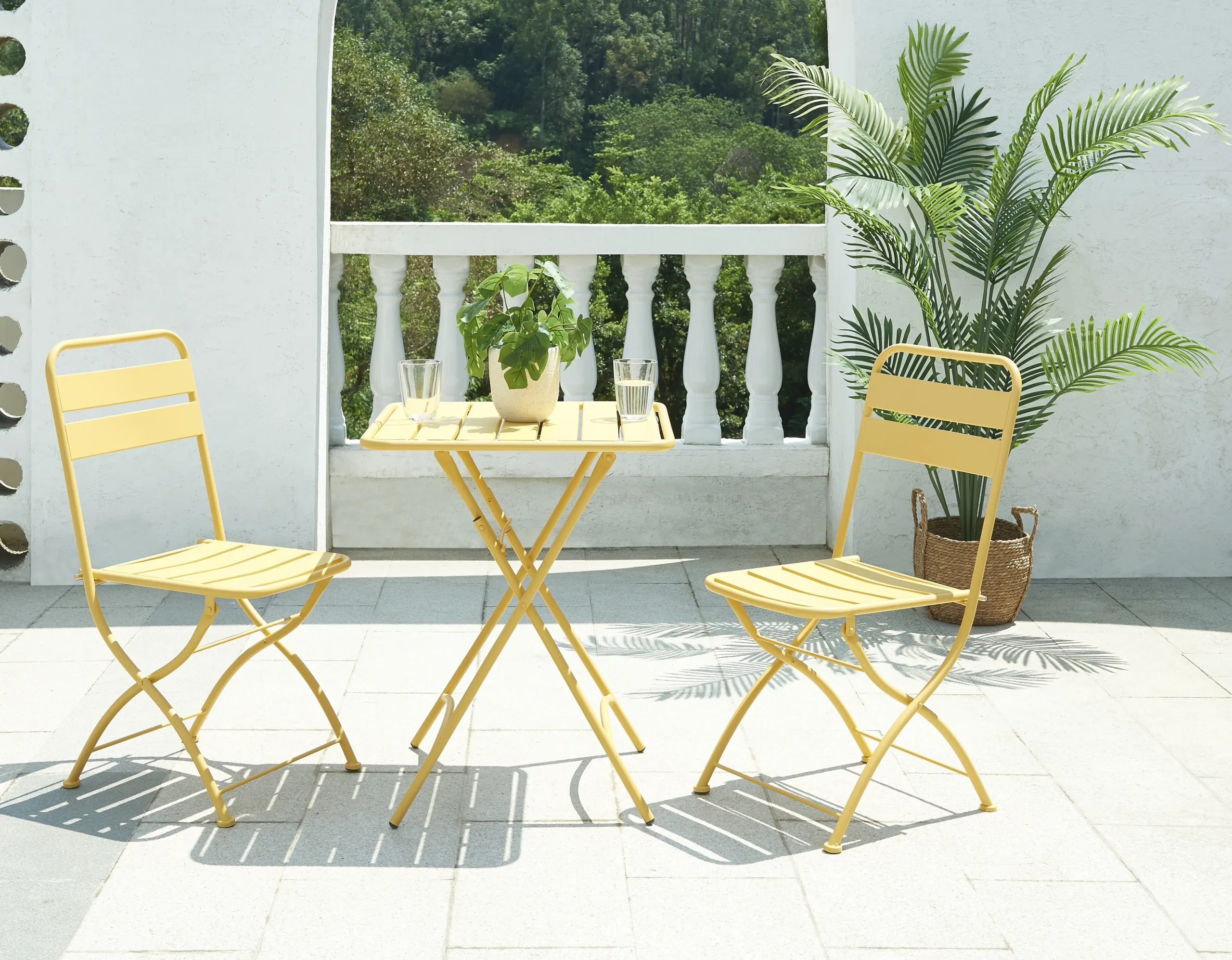
Folding and nesting pieces are not new, but they are gaining relevance wherever storage is tight and the customer expects furniture to be put away between seasons. The design challenge is mechanical rather than visual: locking action, hand clearance, stability when opened, moving parts and finish protection all deserve attention. For a buyer, this is one category where a working sample matters more than a clean render. Open it, close it, carry it, stack it and look at the condition of the finish after repeated handling.
Consider the instruction sheet at the sample stage, not as an afterthought. If a product requires a specific sequence of movements or carries a finger-pinch warning, that information should be made clear to the end customer. The same applies to the carton: a folding piece can be a strong logistics choice, but only if the packing holds the moving parts securely and the user can understand how to handle it when it arrives.
9. Contract-ready café and hospitality seating
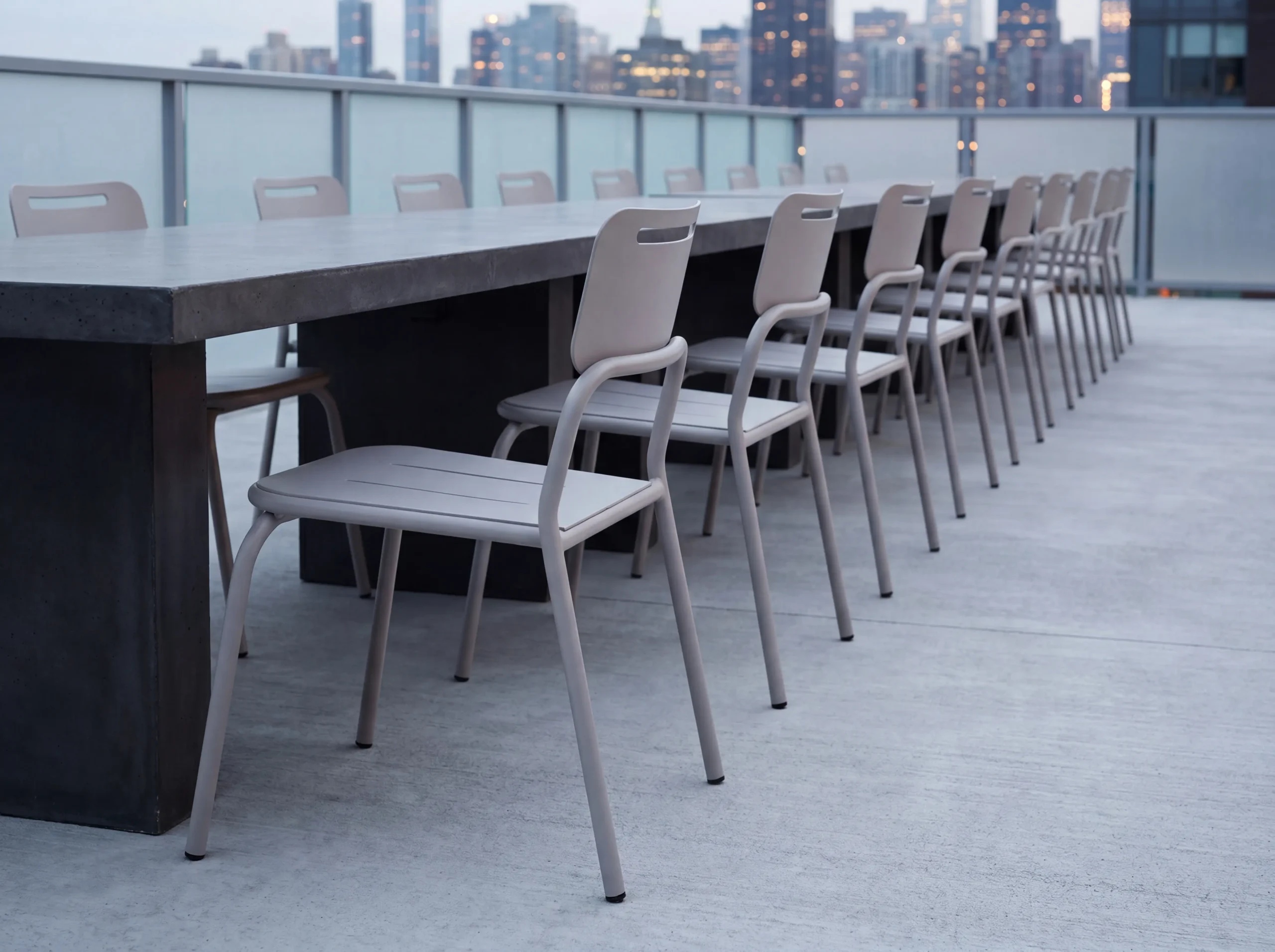
Commercial terraces, restaurant pavements and hotel courtyards need furniture that can be cleaned, moved and reordered without a great deal of drama. A collection aimed at this channel should clearly set out the key use requirements: stackability, maintenance access, component identification and the buyer’s requested testing or documentation process. Do not assume that a residential product becomes contract-ready because it has a metal frame. The buyer’s intended environment, local obligations and project specification still need to drive the final product brief.
This category benefits from a disciplined enquiry. Specify the venue type, whether the furniture will be moved daily, the approximate number of covers, the desired storage method and any buyer-mandated documentation. A manufacturer can then respond to the actual use case. That is more useful than asking for a “commercial grade” product without explaining what commercial use means in the project.
10. Repeatable collections with identifiable replacement parts
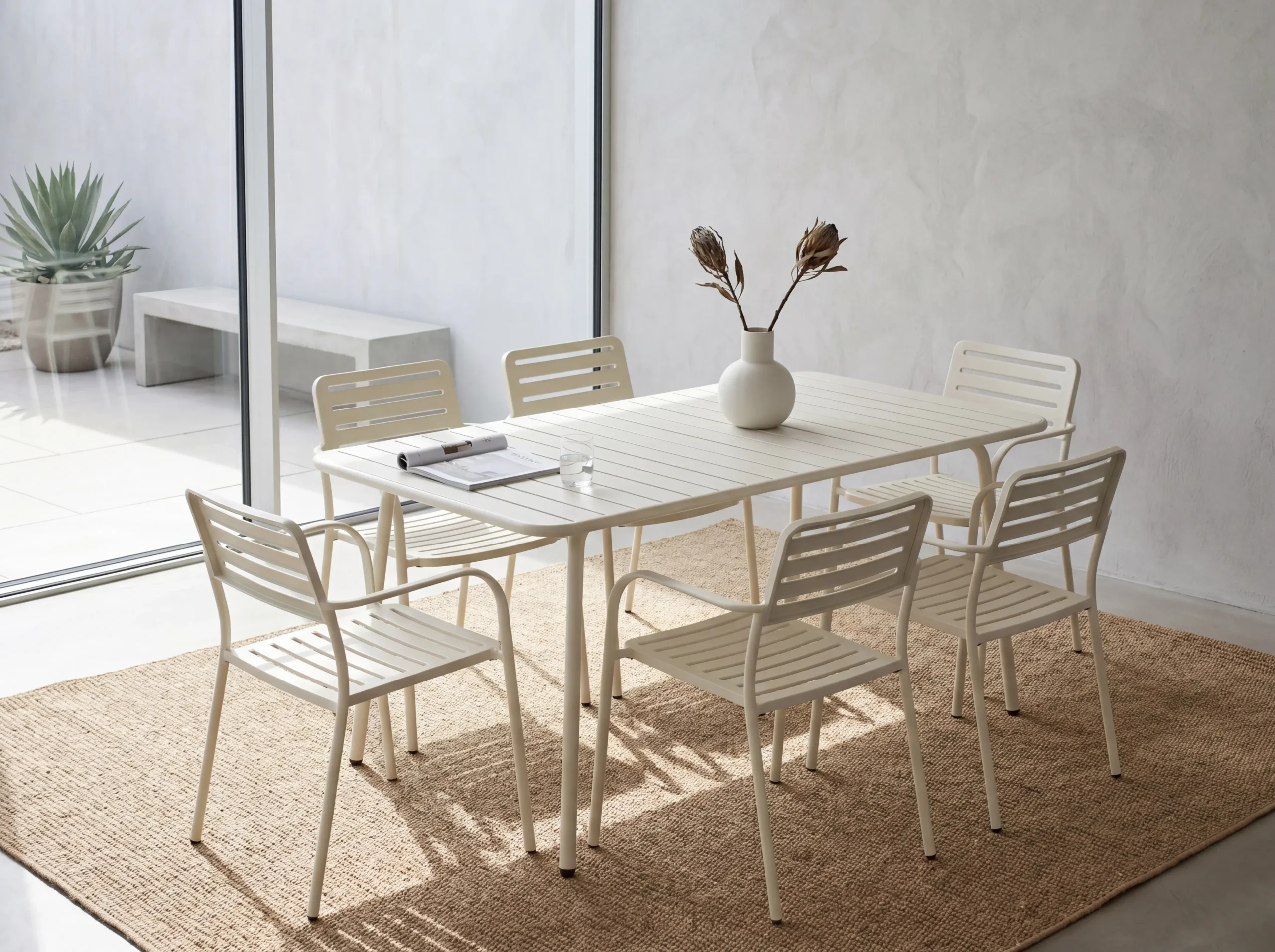
This is the least glamorous direction and one of the most valuable. European buyers often carry a range across more than one season. A design that can be repeated with the same finish reference, rope specification, hardware pack and replacement feet is easier to sell internally and safer to reorder. Build the range around an approved sample, a product specification sheet and clear packing notes. That discipline helps the buyer keep continuity even when a line expands, a colour changes or a small part has to be replaced.
The practical benefit goes beyond fewer after-sales queries. Clear product identification makes it easier for a buyer to manage photography, listings, replenishment and customer service. It also exposes weak points early: if a part cannot be named, specified or supplied separately, the range is less prepared for the normal realities of retail and contract business.
What this means for a 2027 European range
| Range layer | Typical role | What to keep under control |
|---|---|---|
| Core volume | Stackable chairs, compact bistro pieces and practical dining sets. | Carton size, finish repeatability and straightforward merchandising. |
| Differentiators | Rope details, selected colour stories and softened silhouettes. | A coherent material and colour language; avoid near-duplicate SKUs. |
| Project layer | Modular lounges and commercial terrace seating. | Buyer specification, documentation needs and a realistic order plan. |
A six-to-twelve design launch with clear relationships is often easier to buy, photograph and replenish than forty loosely connected SKUs.
Five questions to settle before sampling
- Who is the end channel: a garden retailer, a direct-to-consumer brand, an importer, a café operator or a project supplier?
- Where will the furniture actually be used: a compact balcony, an exposed terrace, a domestic garden, a restaurant patio or a hotel courtyard?
- What does the landed-cost target need to support, once packaging, freight, local handling and likely after-sales needs are considered?
- Which products are intended for repeat orders, and what material, finish and packing references need to be retained to make that possible?
- What documentation or testing does the buyer need for the planned channel and country, rather than what a marketing page happens to claim?
A practical next step for buyers
Before asking for a broad catalogue, send a short range brief. This should cover the target customer, the product direction, expected order volume, launch timing, preferred materials, colour direction and the channel where the furniture will be sold or used. That gives a manufacturer enough context to recommend a focused starting range instead of replying with a generic list of products.
For product and sourcing discussions, buyers can explore rope chairs, review folding chair options, learn about OEM development, see manufacturing capabilities, or request a quote.