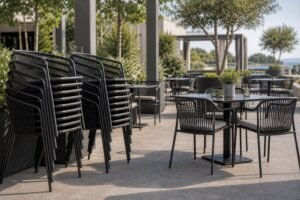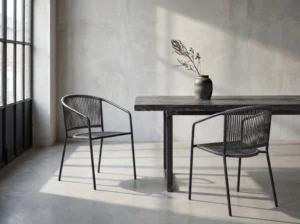
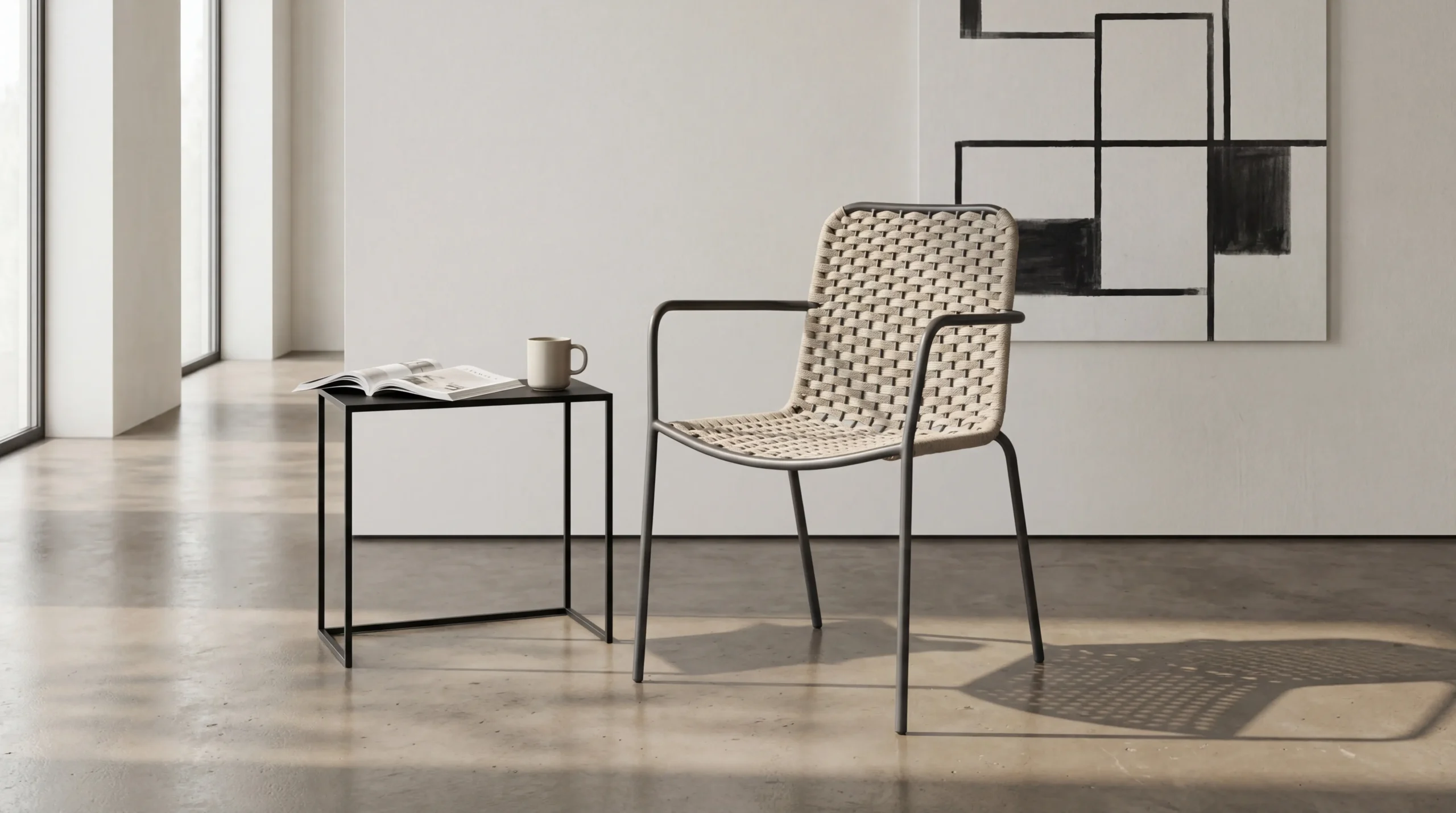
For most commercial outdoor rope furniture, the best rope material is usually solution-dyed olefin rope or UV-stabilized polypropylene (PP) rope. Olefin feels softer and more textile-like, while PP rope is strong, cost-efficient, and widely used for outdoor dining chairs and lounge chairs. Textilene is not technically a rope, but it is often compared with rope because it is used in breathable outdoor seating.
If you are sourcing outdoor rope chairs wholesale for hotels, restaurants, resorts, garden centers, or private-label collections, the right material depends on climate, color stability, sitting comfort, target price, and how the furniture will be cleaned, stored, and shipped.
Quick Sourcing Path for B2B Buyers
- Choose olefin rope when the project needs a warmer, softer and more premium outdoor look.
- Choose UV-stabilized PP rope when price control, durability and volume production matter most.
- Choose Textilene or mesh seating when fast drying and easy cleaning are more important than woven texture.
- Review current Outdoor Rope Chairs if you need product directions before confirming material samples.
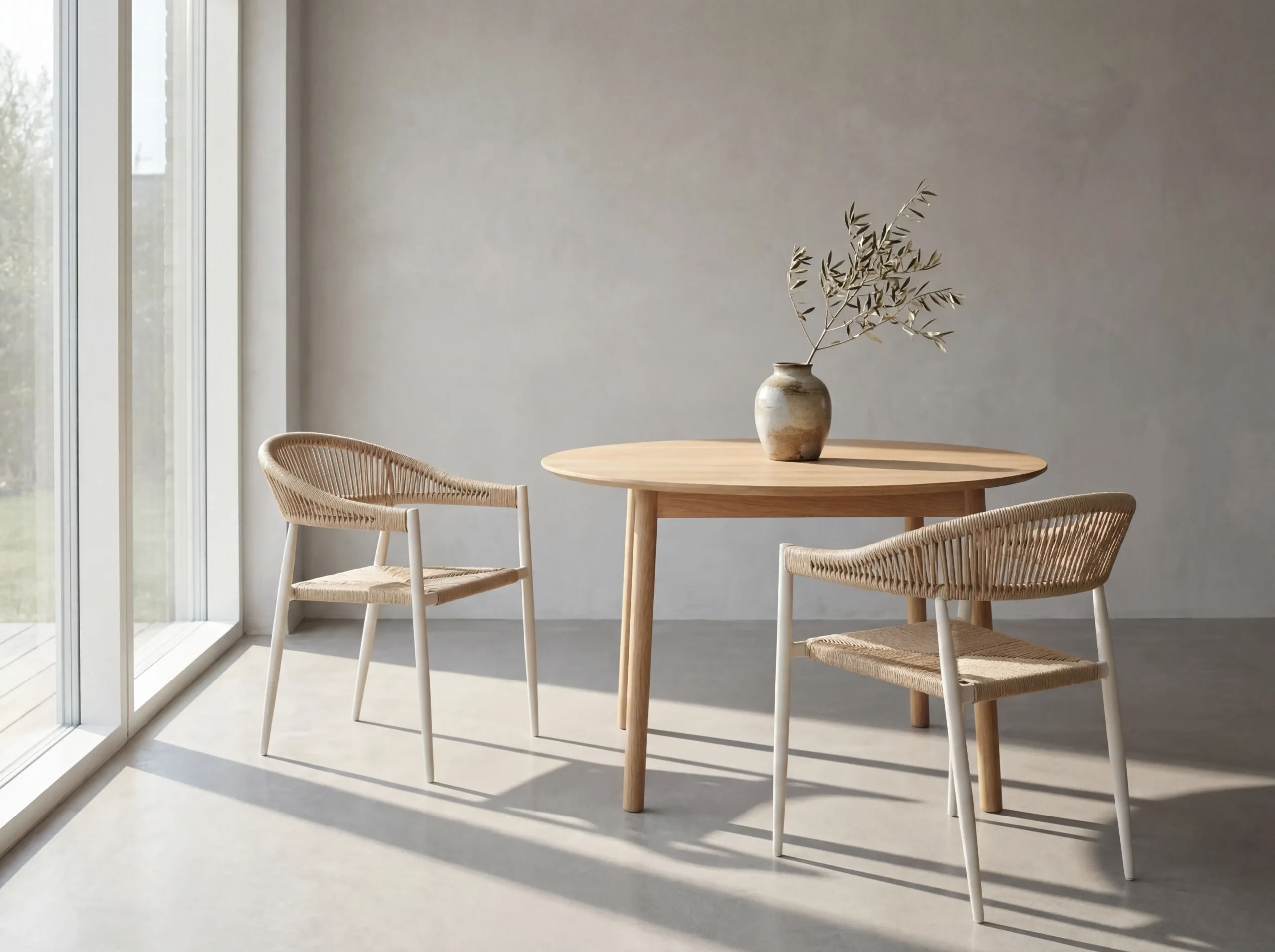
Quick Comparison: Which Outdoor Rope Material Should You Choose?
There is no single best material for every project. A coastal hotel, a restaurant terrace, a retail garden chair collection, and a private-label lounge chair program may all need different rope specifications.
| Material | Feel | Outdoor Performance | Cost Level | Best Use Case |
|---|---|---|---|---|
| Olefin rope | Soft, fabric-like, premium | Good color stability and water resistance | Medium to high | Hotels, resorts, premium rope chairs, lounge collections |
| PP rope | Firm, clean, practical | Good outdoor durability when UV-stabilized | Medium | Dining chairs, commercial patios, value-driven OEM projects |
| Polyester rope | Textile-like, flexible | Good strength, varies by treatment and coating | Medium | Decorative weaving, casual outdoor seating, mixed-material chairs |
| Acrylic rope | Soft and colorful | Good color options, depends on construction | Medium to high | Design-led collections and warm color palettes |
| Textilene | Flat mesh, breathable | Fast-drying and easy to clean | Low to medium | Dining seats, sling chairs, poolside seating, high-turnover use |
Olefin Rope: Best for Premium Comfort and Warm Outdoor Texture
Olefin rope is popular because it gives outdoor furniture a softer, warmer appearance than hard plastic cord. For hotel terraces, resort lounges, and premium garden furniture collections, olefin can make a chair feel closer to indoor furniture while still being suitable for outdoor use.
Buyers often choose olefin rope when they want:
- A softer hand feel.
- Warm neutral colors such as latte, oatmeal, khaki, sand, and taupe.
- A more premium look for hospitality projects.
- Better visual match with olefin cushions or soft outdoor fabrics.
For commercial buyers, the key is to confirm whether the rope is solution-dyed, whether it has UV stabilization, and whether the supplier can keep color consistency across repeat orders. If a hotel chain orders the same chair in several batches, color drift can become a real project problem.
When Olefin Rope Makes the Most Sense
Olefin rope is usually the better choice when the chair is part of a visible hospitality environment: boutique hotel terraces, resort pool lounges, premium garden restaurants, or retail collections that need a warmer lifestyle image. It works especially well with rounded chair frames, low dining silhouettes, soft cushions, and warm neutral color palettes.
From a sourcing perspective, olefin is not only about comfort. It also helps the buyer tell a better product story: soft outdoor texture, color coordination, and a more residential feel for commercial spaces. This can support higher retail positioning or a stronger hospitality design package.
PP Rope: Best for Practical Commercial Rope Chairs
Polypropylene rope, usually called PP rope, is one of the most common materials for outdoor rope furniture. It is lightweight, easy to weave, cost-efficient, and suitable for many outdoor dining chair and lounge chair designs.
For B2B projects, PP rope is often the practical middle ground: more textured and comfortable than plain metal or plastic seating, but more cost-controlled than some premium textile ropes.
When sourcing PP rope chairs, check these details:
- Is the rope UV-stabilized for outdoor use?
- Is the color added during production or only surface treated?
- How tight is the weaving tension?
- Will the rope stretch after repeated sitting?
- Can the rope color match the powder-coated frame?
When PP Rope Is the Smarter Commercial Choice
PP rope is often the better choice when the buyer needs a balance between design and price. For restaurant patios, outdoor dining sets, garden centers, and volume-driven wholesale collections, PP rope can deliver a clean woven look without pushing the product into a premium price tier.
It is also useful for projects where the buyer wants multiple colorways. A factory can often develop PP rope options that coordinate with matte black, taupe, bronze, white, olive green, or terracotta frames. The key is to approve real color samples before production rather than judging from screen images.
Textilene: Not Rope, But Often Compared with Rope Seating
Textilene is a PVC-coated polyester mesh. It is not a woven rope, but many buyers compare it with rope because both are used in breathable outdoor seating. Textilene is especially strong for high-turnover areas such as poolside chairs, restaurant patios, and public seating zones.
Compared with rope, textilene usually looks flatter and more technical. Rope has more texture and a softer design feel. Textilene is easier to wipe clean and dries quickly, while rope often creates a more premium hospitality appearance.
If you are comparing these two materials for commercial seating, see also our guide to Textilene vs. Olefin for commercial outdoor rope chairs.
When Textilene Wins Over Rope
Textilene can be the better option when the buyer values simple cleaning and fast drying above woven texture. For pool areas, public seating, rental properties, and casual dining zones, a textilene seat can be easier for staff to wipe down quickly between uses.
The tradeoff is visual warmth. Textilene often feels more technical and less handcrafted than rope. For premium hotel terraces or design-led retail collections, rope usually photographs better and feels more aligned with current outdoor living trends.
Polyester and Acrylic Rope: Useful for Design-Led Collections
Polyester and acrylic ropes are often selected when the design needs a more textile-like appearance, richer color options, or a softer decorative weave. These materials can work well for boutique hotels, garden lifestyle collections, and outdoor lounge chairs where appearance is a major selling point.
However, commercial buyers should avoid choosing rope only by appearance. Ask for samples, outdoor-use confirmation, colorfastness information, cleaning guidance, and replacement policy. A rope that looks beautiful in a showroom still needs to survive sunlight, rain, cleaning, stacking, packing, and repeated sitting.
Best Rope Material by Project Type
Hotels and Resorts
Choose olefin rope or high-quality UV-stabilized PP rope for a warmer, more premium look. Pair it with aluminum or well-treated metal frames, quick-dry cushions, and a color palette that works across terraces, pool areas, and outdoor restaurants.
For hotel projects, the strongest rope chair is not always the cheapest one. Hotel buyers should think about replacement cycles, outdoor cleaning, guest comfort, and whether the same design can be repeated across guest rooms, balconies, restaurants, and pool areas. If one chair family can cover several spaces with different colors or cushions, the procurement process becomes much easier.
Restaurants and Cafes
Choose PP rope or textilene when cleaning speed, replacement cost, and seating turnover matter. Rope chairs can make a patio feel more comfortable, while textilene can be useful for very high-frequency seating.
Restaurants should also think about stacking, chair weight, and how often staff need to move furniture at opening and closing time. A beautiful heavy lounge chair may be wrong for a cafe that reconfigures tables every day. In that case, a lighter aluminum frame with PP rope can be more practical.
Garden Centers and Retail Collections
Offer two levels if possible: a value PP rope chair and a premium olefin rope chair. This gives retailers a clear price ladder while keeping the same design family.
Retail buyers should also ask whether the same frame can support multiple rope colors. This makes it easier to launch seasonal color stories without creating a completely new frame tool or packaging structure for every SKU.
Private-Label OEM Projects
Choose the rope material after confirming target price, color range, MOQ, packaging, frame material, and expected warranty positioning. For OEM work, the rope is not an isolated choice; it affects the whole product story.
For private-label projects, the rope decision should be made together with the brand’s price tier. A premium collection may justify olefin rope, thicker cushions, and more refined color matching. A mass-market collection may perform better with PP rope, efficient packing, and fewer color SKUs.
How Rope Material Affects Total Product Cost
Many buyers compare rope materials only by unit price, but the actual cost impact is wider. Rope affects weaving labor, frame structure, packaging, replacement parts, color development, and the final retail position of the product.
| Cost Factor | What Changes | Buyer Impact |
|---|---|---|
| Material price | Olefin, PP, polyester, acrylic, and textilene have different base costs | Directly affects FOB price and retail positioning |
| Weaving labor | Complex patterns take longer to weave | Raises production cost and lead time |
| Frame design | Full-wrap designs need more contact points and cleaner welding | Impacts frame cost and quality control |
| Color development | Custom rope colors may need MOQ or lab dips | Affects sample time and minimum order quantity |
| Packaging | Woven chairs may need extra protection to avoid rope abrasion | Influences carton design and container loading |
| After-sales parts | Replacement cushions, glides, and rope repair policy may be required | Important for hotels, resorts, and contract buyers |
This is why a slightly higher rope material cost can sometimes create a better commercial product. If the chair looks more premium, lasts longer in the target environment, and supports a better retail price, the buyer may gain more value than by choosing the cheapest cord.
B2B Specification Checklist for Outdoor Rope Furniture
Before approving a rope chair or rope sofa sample, check these specifications with your supplier.
| Item | What to Check | Why It Matters |
|---|---|---|
| Rope material | Olefin, PP, polyester, acrylic, or other composition | Determines feel, cost, durability, and target market |
| Color method | Solution-dyed or surface-colored | Affects fading and batch consistency |
| UV resistance | Outdoor-use treatment or test data if available | Important for sunny terraces and resort projects |
| Weave tension | Consistent hand weaving or machine-assisted process | Affects comfort, appearance, and long-term shape |
| Frame material | Aluminum or carbon steel with proper coating | The rope is only as reliable as the frame it wraps |
| Cushion match | Olefin, polyester, or upgraded outdoor fabric | Helps the chair feel like one complete product |
| Packaging | Flat pack, stacked, or assembled packing | Impacts freight cost and damage risk |
| Replacement parts | Rope, cushions, glides, screws, and tags | Important for hotels and long-term commercial use |
Sample Approval Checklist Before Mass Production
For rope furniture, a photo is never enough. Buyers should approve a physical sample before placing a full production order, especially when custom colors or new weaving patterns are involved.
- Check the hand feel: Touch the rope surface and confirm whether it feels soft, rough, slippery, or too plastic.
- Check weaving tension: The weave should be even, not loose in one area and tight in another.
- Check sitting comfort: Sit on the chair long enough to feel whether the rope presses into the body or supports evenly.
- Check color under daylight: Rope, frame, and cushion colors can look different indoors and outdoors.
- Check frame contact points: Rope should not rub against sharp welding points or unfinished metal edges.
- Check cushion fit: Cushions should sit naturally on the chair without sliding or looking undersized.
- Check packing protection: Confirm how the supplier protects rope surfaces inside the carton.
- Check replacement options: Ask whether rope, cushions, foot glides, and hardware can be supplied later.
For buyers sourcing a full collection, approve the chair, table, bench, and cushion combination together. A rope chair that looks good alone may not match the table frame color, bench height, or cushion fabric selected for the final collection.
Common Mistakes When Buying Outdoor Rope Chairs
- Choosing by photo only: Rope texture, tension, and hand feel must be checked with a physical sample.
- Ignoring frame treatment: A good rope cannot save a poorly coated frame.
- Mixing colors without a standard: Always confirm rope, cushion, and frame colors under natural light.
- Forgetting replacement policy: Hotels and restaurants should ask how replacement cushions and parts are supplied.
- Using one material for every project: A resort lounge and a fast-turnover cafe may need different rope solutions.
How to Match Rope with Frame and Cushion Materials
Outdoor rope material should be selected together with the frame and cushion. These three elements define the chair’s comfort, durability, style, and price position.
Rope with Aluminum Frames
Aluminum frames are useful for hotels, resorts, and restaurants that need lighter chairs. When paired with rope, aluminum can create a clean and premium outdoor look. It is especially suitable for coastal or high-humidity markets when the finish is properly specified.
Rope with Carbon Steel Frames
Carbon steel can be a good choice for value-driven commercial furniture and heavier, more grounded chair designs. The important point is surface treatment. If the coating process is weak, the rope may still look good while the frame becomes the failure point.
Rope with Olefin Cushions
Olefin cushions pair naturally with olefin or PP rope because they create a consistent outdoor textile story. For hospitality buyers, this combination can feel warmer and more comfortable than hard seating materials.
Rope with Textilene or Mesh Seats
Some chair designs use rope on the backrest and textilene or mesh on the seat. This can reduce drying time and improve cleaning efficiency while keeping some woven detail in the design.
OEM Options from Colors Furniture Factory
Colors Furniture Factory supports outdoor rope furniture projects across dining chairs, lounge chairs, benches, sofas, and full outdoor sets. We can help buyers compare rope materials, develop color combinations, adjust frame structure, and prepare samples for hospitality, retail, and OEM programs.
Useful starting points:
- Rope Chairs for current product direction.
- OEM Solution for custom development workflow.
- Pantone and color customization for frame, rope, and cushion palettes.
- Free Sample for sample discussion and quality confirmation.
When developing a new rope chair program, we recommend sending a target market, preferred style, expected price range, quantity, and color direction first. With that information, the factory can recommend whether olefin rope, PP rope, polyester rope, or textilene is the more realistic material direction.
Final Recommendation
If you need a safe starting point for commercial outdoor rope furniture, choose UV-stabilized PP rope for value-driven dining chairs and solution-dyed olefin rope for premium hotel and resort collections. Use textilene when fast cleaning and high turnover matter more than woven texture.
The best material decision should always be made together with frame finish, cushion fabric, color palette, packaging, MOQ, and replacement parts. That is how a rope chair becomes a commercially reliable product, not just a good-looking sample.
Request Rope Material Samples and OEM Advice
Send us your target market, chair type, preferred colors, order quantity, and expected price range. Our team can recommend suitable outdoor rope materials and prepare an OEM quotation for your hotel, restaurant, resort, garden center, or private-label furniture project.