So You Want to Buy Outdoor Metal Furniture Wholesale?
I’ve been in this industry long enough to watch trends come and go. Aluminum this, wicker that — but one thing stays constant: metal furniture is the backbone of commercial outdoor spaces. Hotels, resorts, restaurants, event venues — they all need stuff that won’t fall apart after one season.
And here’s the thing most people get wrong: they think wholesale is just about finding the cheapest supplier. It’s not. It’s about knowing materials, understanding your real needs, and timing your purchase right. Let me walk you through what actually matters.
What Metal Should You Pick?
Aluminum — The Workhorse
If I had to pick one material for commercial use, it’s aluminum. Hands down.
Here’s why it works: aluminum weighs about 60% less than steel, which means your shipping costs drop noticeably. It doesn’t rust — that’s not a marketing claim, it’s chemistry. The natural oxide layer protects it, and a good powder coating just adds extra armor.
I’ve seen cheap aluminum furniture last eight years in a beachfront hotel. I’ve also seen “premium” steel furniture rust within two years because the coating got scratched during setup. The difference? Aluminum forgives mistakes.
One thing to watch for though — not all aluminum is the same. The cheap stuff uses thin-walled extrusions that flex under weight. Good commercial-grade aluminum uses thicker walls and reinforced weld joints. You can feel the difference the moment you sit down.
Steel — Budget Pick With Tradeoffs
Steel is cheaper — usually 15–30% less than aluminum. For indoor-outdoor applications or covered patios, it works fine. But if you’re putting it in direct rain, coastal air, or poolside where chlorine is in the air? Steel will give you headaches.
I’ve had buyers tell me “but it’s powder coated, it should be fine.” And then six months later they’re sending me photos of rust spots. Powder coating is good, but once it’s scratched (and it will get scratched during delivery and setup), the exposed steel starts oxidizing.
Wrought Iron — Only If You Love Maintenance
Wrought iron looks beautiful. I’ll give it that. But from a wholesale buying perspective, it’s a pain. Heavy (shipping costs go up), prone to rust, and needs regular repainting. It has its place (high-end restaurants with covered terraces, for example), but for most commercial buyers, aluminum does the job better for less hassle.
What People Actually Order
Dining Sets
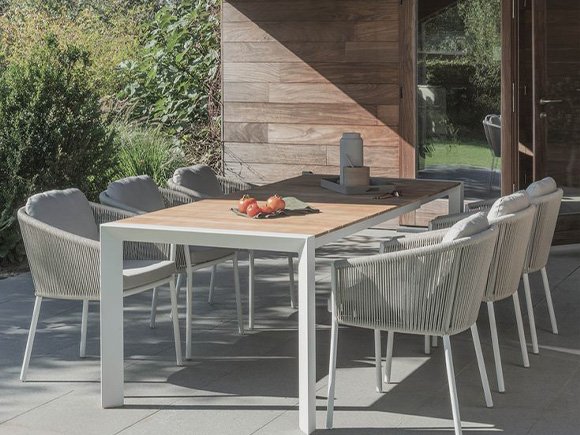
This is the bread and butter of wholesale orders. When a hotel calls me looking to replace their poolside dining, they’re usually asking for 50 to 200 sets at a time.
Here’s what I’ve noticed experienced buyers focus on:
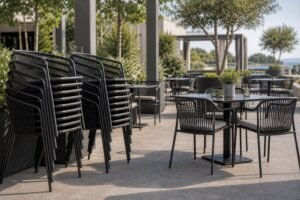
Stackability — If the chairs don’t stack, the hotel needs extra storage space. Stackable chairs save real money over time.
Table size — 42-inch round seats four comfortably. 60-inch rectangle seats six to eight. Sounds obvious, but I’ve seen buyers order the wrong size and end up with tables that don’t fit their deck layout.
Finish — Bronze and black are the safe bets. White looks great but shows dirt faster. Silver is making a comeback, especially in modern hotels.
Lounge Furniture
This category has grown like crazy in the last five years. Outdoor sofas, armchairs, ottomans — people want their outdoor spaces to feel like living rooms.
The smart buyers go modular. Interlocking pieces that can be rearranged for different events. One week it’s a lounge setup for a wedding, next week it’s configured for a corporate retreat. That flexibility is worth paying extra for.
The Niche Stuff
Things I get asked about more than you’d expect:
Fire pit seating — Huge trend right now. Metal frame + fire table insert. Hotels love them.
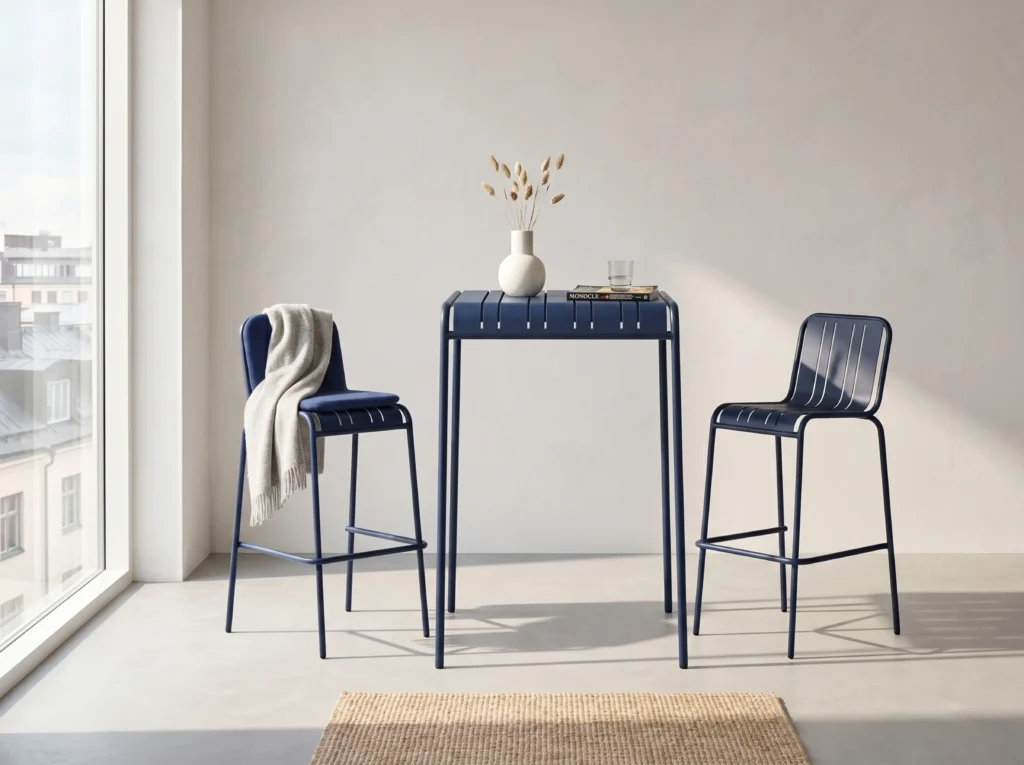
Bar-height sets — Poolside bars, rooftop lounges. Higher margins than standard dining.
Bistro sets — Small footprint, big demand. Balconies, cafes, compact spaces.
How the Wholesale Sourcing Game Actually Works
Going Direct to Manufacturers
If you’re ordering 100+ units, going direct to a factory in China or Vietnam will usually get you the best per-unit price. I’ve seen chair pricing start around $15–$40 FOB from Guangdong factories. But here’s the catch: minimum order quantities are high (often 500+ pieces), lead times run 45 to 90 days, and you’re managing quality control yourself.
I’ve done this route. It works — if you have the volume and can handle the logistics. For smaller buyers, it’s risky.
Going Through Distributors
This is where most of my clients end up. Companies like Colors Furniture, Faire, Resort Chairs, and Contract Furnishings — they bridge the gap. Lower minimums (sometimes as low as 10 units), faster shipping (2 to 4 weeks), and they handle quality inspection.
The tradeoff? You pay a markup — usually 20 to 40% above factory pricing. But for most buyers, that markup is worth it when you factor in the headache they save you.
Online Platforms
Alibaba, Global Sources, Made-in-China — these are useful for finding suppliers, but I’d never place a large order without visiting the factory or hiring a third-party inspector. I’ve heard too many stories about samples looking perfect and bulk shipments being garbage.
What to Check Before You Pay
After years of inspecting furniture orders, here are the things I always check:
Powder coating thickness. Ask for the spec — minimum 60 to 80 microns. Less than that and the coating won’t hold up. I carry a thickness gauge to site visits.
Weld quality. Smooth, consistent welds without bubbles or gaps. This is the most common failure point in metal furniture. If the welds look sloppy, walk away.
Hardware. Every bolt, nut, and connector should be stainless steel. Grade 304 or better. I’ve seen “stainless steel” hardware that started rusting within weeks — turned out it was zinc-plated steel. Don’t take their word for it, test it.
Weight rating. Commercial chairs should support at least 300 lbs static load. Reputable manufacturers will have certification. If they dodge the question, that’s your answer.
How to Time Your Purchase
Here’s a tip that’s saved my buyers a lot of money: buy in the off-season.
The outdoor furniture market follows a predictable pattern. Peak season is March through July — everyone’s setting up for summer, prices are at full retail, and lead times stretch out. Off-season, October through February, manufacturers are hungry for orders. I’ve seen discounts of 15 to 25% during those months.
The downside? Inventory selection is thinner. You might not get every color or style you want. But if you’re flexible and plan ahead, the savings are real.
Trends I’m Watching
Recycled Materials Are Getting Real
Aluminum recycling is genuinely impressive — it takes 95% less energy to produce recycled aluminum compared to virgin material. More buyers are asking for it, and brands like Colors Furniture have been ahead of this curve with green product lines. It’s not just marketing anymore; hotels with sustainability certifications are actively seeking this stuff.
Modular Is Taking Over
The hospitality industry figured out that fixed layouts are a liability. Events change, seasons change, guest preferences change. Furniture systems that can reconfigure (lounge mode to dining mode in 20 minutes) command higher prices but also deliver real value.
Tech in Furniture
Wireless charging built into table bases. USB ports. LED lighting. It sounds gimmicky, but I’m seeing it more in premium projects. Upscale hotels and corporate campuses are the early adopters.
Coastal Specialization
Aluminum with marine-grade powder coating (tested to 1,500+ hours of salt spray resistance) is becoming a category of its own. If you’re buying for a coastal property, this is worth the 20 to 35% premium. Regular powder coating just doesn’t hold up to salt air.
A Real Example: Outfitting a 200-Room Resort
Let me walk through a recent project to make this concrete.
A beachfront resort in Florida needed 200 dining sets (table + four chairs each) and 100 lounge chairs for poolside. Here’s how it played out:
Spec: Powder-coated aluminum, stainless steel hardware, coastal salt-spray rated.
Sourcing: They looked at six manufacturers and ended up going with Colors Furniture. The pricing came in at $285 per set CIF, with a 38% discount off catalog. Not the cheapest quote they got, but the quality inspection came back clean and the lead time was realistic.
Quality check: They ordered pre-production samples and had them tested independently — weld strength, coating thickness, corrosion resistance. Everything passed.
Logistics: Three 40-foot containers, 8-week lead time from order acceptance, plus two weeks for customs and delivery.
Total cost: $57,000 for dining sets + $18,000 for lounge chairs = $75,000. Retail value was estimated at $180,000 to $250,000.
A solid deal, and the furniture is still holding up three seasons in.
What I’d Tell Someone Starting Out
If you’re new to buying outdoor metal furniture wholesale, here’s my shortlist of advice:
Go aluminum for most projects. It’s lighter, rust-proof, and easier to maintain than steel or iron.
Don’t chase the cheapest price. The difference between a $25 chair and a $40 chair often shows up in the first year.
Inspect before you pay. Weld quality and coating thickness tell you more than any catalog photo.
Buy off-season if you can. 15 to 25% savings is real money.
Keep an eye on sustainability. More buyers are asking for recycled content, and that trend isn’t slowing down.
The wholesale market can feel overwhelming with all the options and price points. But once you understand the materials, the channels, and the timing, it starts to make sense. I’ve seen buyers go from total confusion to running their own sourcing operation in less than a year.