Having been in the outdoor furniture export and wholesale business for 16 years, if you asked me what the most significant change in the industry has been over the past decade, my answer wouldn’t be the evolution of materials or the fierce price wars. It is, without a doubt, the awakening of outdoor furniture colors.
I still remember when I first entered the industry, the containers we shipped globally were filled with monotonous black, white, gray, or deeply conservative dark brown wicker. At that time, the only criterion for both buyers and sellers regarding outdoor furniture was simply: “Is it sturdy? Can it last for 10 years?“
But today, the tide has turned. When you walk into any high-end courtyard, trending café, or luxury resort, you will find that outdoor furniture has shed its dull coat to become the visual centerpiece of the space. The younger generation has become the main driving force of consumption. Their core demand has shifted from furniture being “just for sitting” to being “highly Instagrammable and photogenic.”
As a professional manufacturer and source supplier, how can we help our B2B buyers capitalize on this color dividend? Today, I want to combine my 16 years of real-world experience to deeply analyze the “color economics” of the industry.
The Traffic Code: Choosing the Right Outdoor Furniture Colors is Buying “Free Advertising”
Modern B2B procurement is no longer just about “buying and selling goods”; it’s about purchasing a “commercial visual solution.” To intuitively understand this shift in market demand, let’s look at the comparison below:
| Consumer Group | Core Demand | Evaluation Criteria | Aesthetic Preference |
|---|---|---|---|
| Traditional Buyers | Practicality, ultimate durability | Will it last 10 years without breaking? | Conservative & stable (Black, white, gray, dark brown) |
| Modern Buyers | Emotional value, social media sharing | Is it Instagrammable in this specific setting? | Personalized, diverse, and vibrant outdoor furniture colors |
Imagine if your downstream client (e.g., a newly opened beach club) is filled with characterless dark brown wicker chairs. Customers might leave right after finishing their drinks. But what if they arranged a few sets of sleek wire chairs in bright yellow or mint green?
In the era of Instagram and TikTok, the first thing young people do when visiting a new spot isn’t looking at the menu—it’s finding a beautiful corner to snap a photo. Vibrant, well-designed outdoor furniture colors inherently possess a high “Visual ROI” (Return on Investment). Every photo taken and tagged by a consumer acts as a free viral advertisement for that business. Smart wholesalers understand this: Rich furniture color is essentially an extremely low-cost marketing tool.
The Visual Amplifier for Brand Identity: When Furniture Colors Meet Logos
Beyond catering to the photogenic needs of the younger generation, our B2B clients (especially in commercial project procurement) are increasingly prioritizing another critical element: Brand Identity.
In the past, outdoor seating was considered a mere “accessory” outside of a brand’s visual identity. Now, an increasing number of chain restaurants, boutique hotels, and corporate campuses require that their outdoor furniture colors closely match their brand logos or primary VI (Visual Identity) tones.
An organic, eco-friendly healthy food restaurant might request dining chairs customized in an “Avocado Green” that matches their logo.
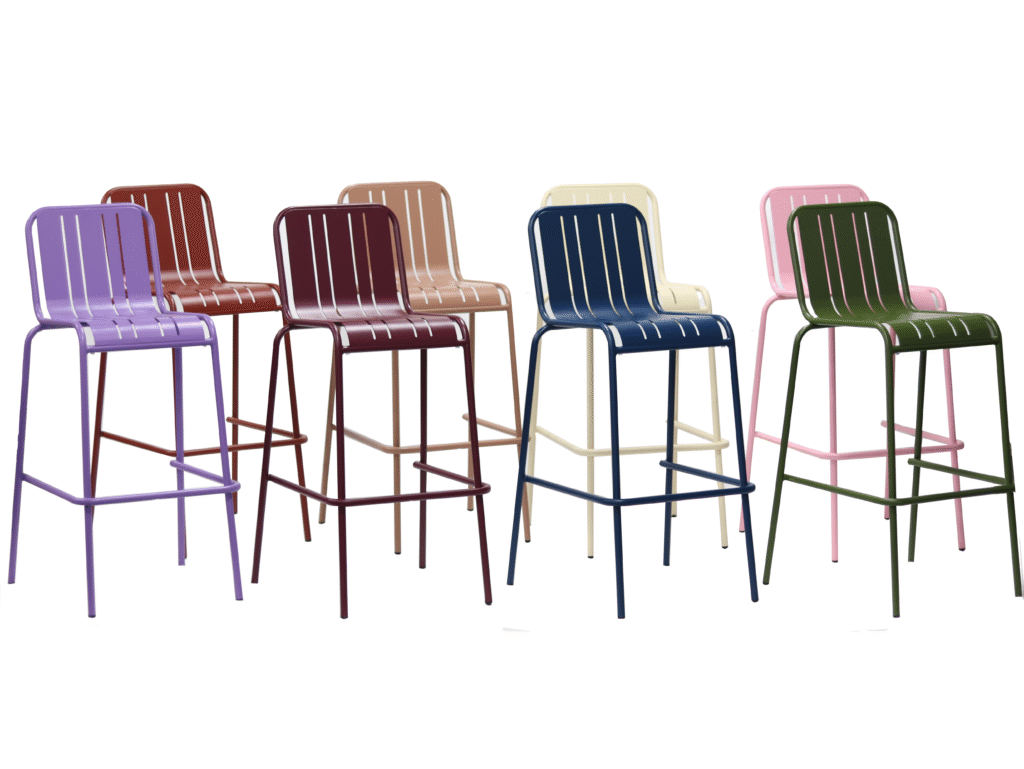
A vibrant boutique coffee chain might apply their signature “Klein Blue” to their outdoor metal plate chairs.
To meet these strict commercial demands, our company has fully unlocked Pantone color customization capabilities. Whatever color a client desires, we can accurately replicate it. When consumers spot that exclusively colored outdoor lounge area from a distance, they recognize the brand even before seeing the signage. This is the ultimate brand immersion brought by customized outdoor furniture colors.
Real Case Study: How a Color Change Helped a Client Win a Huge Hotel Project
Theory is nothing without practice. A couple of years ago, we worked with a B2B buyer who specialized in boutique resort projects in Southeast Asia. Initially, his design proposal was very conservative. He chose one of our classic woven rope chairs but specified the safest “dark brown iron frame with black rope,” believing it was the most dirt-resistant and foolproof option.
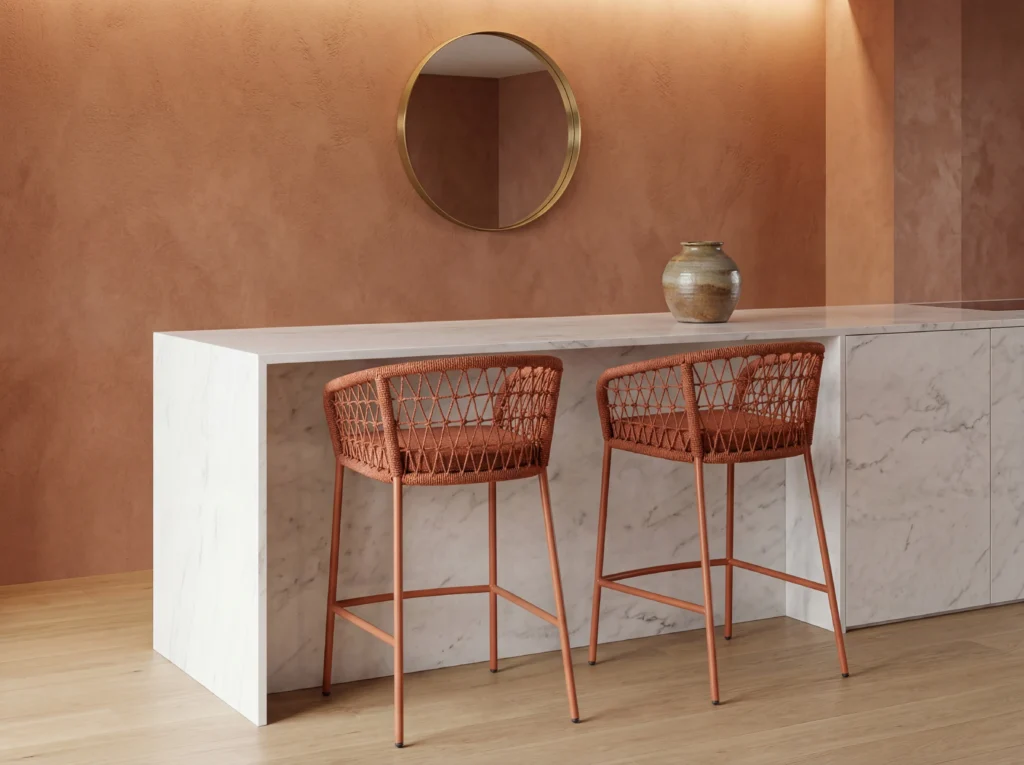
However, considering the hotel’s positioning as a “youthful party and tropical vibe” destination, I strongly advised him to make a bold move: change the frame to a vibrant Terracotta and pair it with an Oatmeal-colored outdoor rope.
The result? Once the furniture was installed, that outdoor lounge area instantly became the hottest viral photo spot in the entire resort. Hundreds of young guests took pictures on those Terracotta chairs and posted them on social media. The hotel owner was thrilled because this batch of furniture turned into their best free promotional poster. Not only did our buyer secure his final payment smoothly, but he also directly handed us two more beach club projects the following year.
This is the real commercial return brought by customizing the right colors.
Why Can Only “Iron Furniture” Maximize the Potential of Colors?
Reading this, many professional B2B buyers might raise a classic question: “With so many colors available, what is your base material? Why not use aluminum? Isn’t it mandatory to use aluminum for outdoor furniture so it won’t rust?”
Currently, we focus on manufacturing a full range of iron furniture—woven rope chairs, iron wire chairs, metal plate chairs, laser-cut chairs, and more. As long as it’s outdoor furniture made of iron, we can perfectly bring it to life. If you are still rigidly sticking to aluminum, you might be falling far behind the technological advancements of this era.
Consider a simple fact: Car chassis are also made of iron, constantly exposed to mud, rain, and outdoor elements. Why don’t they rust easily?
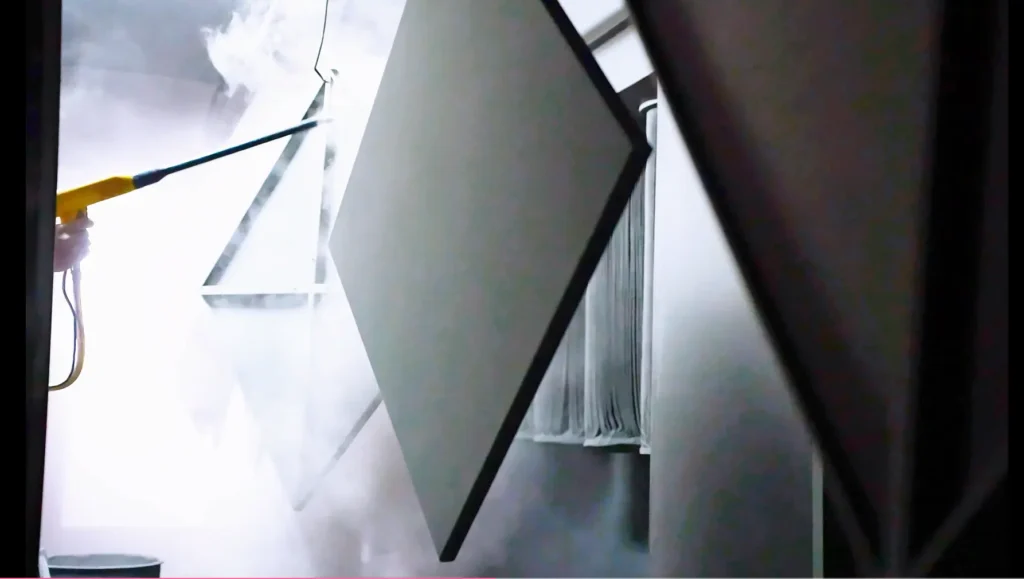
The secret lies in the automotive-grade E-coating process. We apply the exact same anti-rust logic used in car manufacturing:
The First Layer of Defense (Base): We use a high-standard E-coating process, allowing the anti-rust liquid to penetrate the inner walls of the iron tubes and every single hidden corner seamlessly.
The Second Layer of Defense (Finish): The surface is then treated with a premium, outdoor-specific Powder Coating.
This double insurance of “E-coating + Powder Coating” ensures exceptional anti-rust performance that lasts for years. More importantly, the incredible malleability and adhesion of iron allow extremely rich outdoor furniture colors to be presented with perfect texture and gloss.
Regarding why we firmly choose iron among all materials, I have provided deeper, hard-core breakdowns in the following articles. I highly recommend reading them:
| Recommended Deep Reads | Core Content of the Article |
|---|---|
| [Inside a Carbon Steel Patio Chairs Manufacturer: The Ultimate Guide to E-Coating & Rust Prevention] | A deep dive into the automotive-grade E-coating process and how it permanently solves the rust issue for steel outdoor furniture. |
| [Iron vs. Aluminum: Why High-End Custom Bends and Ornate Carvings Require the Strength of Steel] | Exploring the structural superiority of iron when crafting complex, high-end furniture shapes and aesthetic designs. |
A strategic analysis for B2B buyers on optimizing material costs without compromising on quality, durability, or style. |
Beyond the Lens: Cultural Resonance and Psychological Healing
While being “Instagrammable” drives immediate traffic, the true staying power of a color lies in its deeper emotional and cultural connection. Over my 16 years in the industry, I’ve realized that the most successful B2B buyers aren’t just selecting outdoor furniture colors for aesthetics; they are buying “moods” and “traditions.”
1. Echoing Cultural Customs:
Every global market has its unique cultural pulse. For instance, in Middle Eastern projects, rich emerald greens and luxurious golds aren’t just random choices; in their culture, these colors symbolize vitality, oasis, and supreme hospitality. In Mediterranean coastal resorts, crisp whites and Aegean blues are essential to echo their rich maritime heritage. Customizing furniture colors is a powerful way to respect and seamlessly integrate into local customs, making the end-consumer feel a deep sense of belonging.
2. The Power of Psychological Healing:
On a psychological level, modern outdoor spaces have become personal sanctuaries. In today’s fast-paced world, consumers crave “healing environments.” When we supply B2B clients with low-saturation, nature-inspired colors—such as calming Sage Green, warm Oatmeal, or Dusty Blue—we are helping them create a therapeutic atmosphere. These colors are scientifically proven to reduce stress and promote relaxation. When a hotel guest sits in a thoughtfully colored patio chair and feels their anxiety melt away, that feeling is the ultimate luxury product you are selling.
The Hook: The Soul of Outdoor Furniture Colors Lies in the “Style”
Vibrant colors can undoubtedly catch a client’s eye in a second and help project the visual power of a brand’s logo, but this is only the first step in opening up the market.
As a source supplier with 16 years of experience, I must responsibly tell you: Applying outdoor furniture colors is absolutely not just throwing random paint onto a chair like a messy palette.
Imagine if you took a massive, heavy-duty outdoor sofa and painted it bright green or a delicate pink. Would it look good? Far from creating a premium feel, it would instantly strike people as incredibly tacky and cheap. However, if you apply that exact same color to a minimalist metal plate chair, it could become a stunning piece of avant-garde design.
The soul of a color must be deeply integrated with the product’s style, lines, textures, and spatial language to unleash its true commercial value.
So, how exactly should we match the most commercially viable color schemes for different outdoor furniture styles? What kind of “Style + Color” combinations will make your clients pay without hesitation?
How exactly should we match the most commercially viable color schemes for different outdoor furniture styles? What kind of “Style + Color” combinations will make your clients pay without hesitation?
If you are interested in this topic, please read this article. I will use our factory’s best-selling models as real-world examples to give you a detailed breakdown.