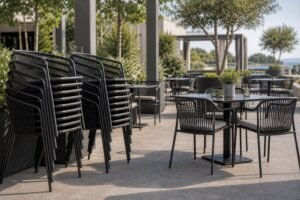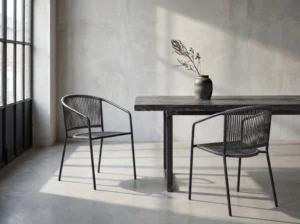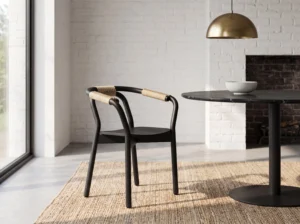
In the competitive landscape of commercial outdoor furniture, the materials you choose dictate the success of your business. For furniture retailers, hospitality procurement managers, and B2B wholesalers, sourcing the right outdoor rope chairs is a critical decision that directly impacts your return on investment (ROI), customer satisfaction, and long-term maintenance costs.
Over the past decade, woven rope designs have dominated the wholesale outdoor furniture market, replacing rigid metals and basic slings with a softer, more luxurious aesthetic. However, not all ropes are created equal. In the global manufacturing hub, two high-performance synthetic materials have emerged as the industry standards: Textilene (often referred to as Teslin) and Olefin.
If you are sourcing commercial patio chairs for luxury resorts, high-traffic restaurant patios, or your retail inventory, understanding the technical differences between Textilene vs. Olefin is non-negotiable. This comprehensive guide, brought to you by the engineering team at Colors Furniture Factory—a premier outdoor furniture manufacturer—dives deep into the molecular structure, durability, UV resistance, and wholesale cost analysis of both materials. By the end of this article, you will know exactly which material to specify for your next bulk order.
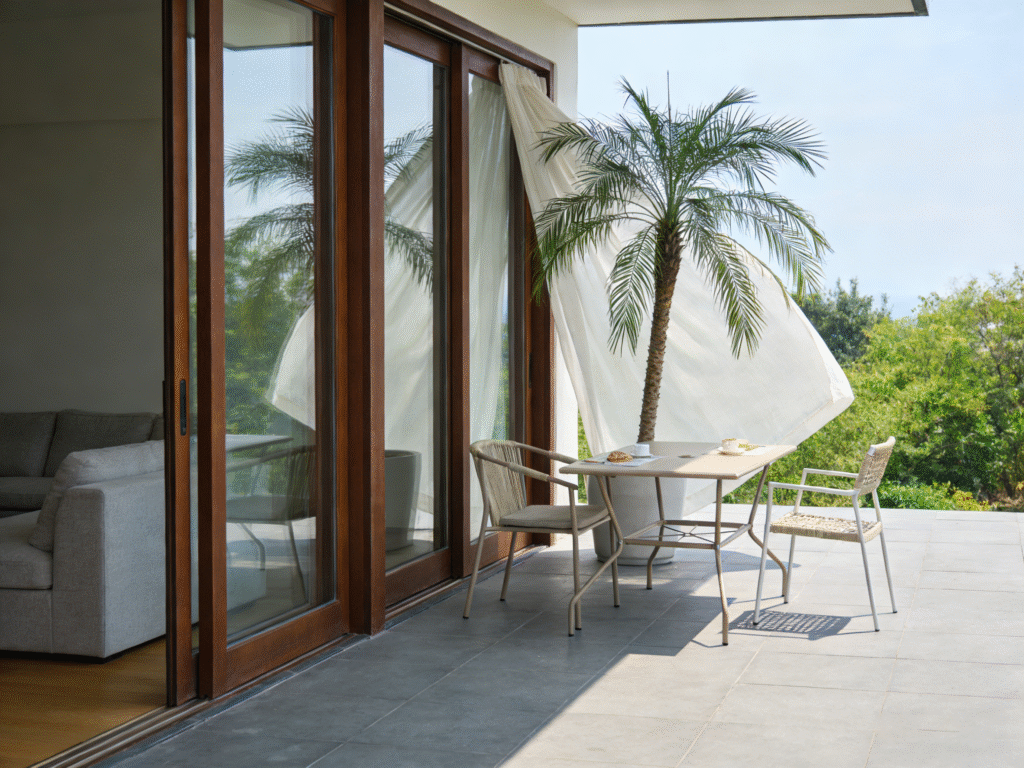
The Rise of Woven Rope in B2B Patio Furniture
Before analyzing the specific materials, it is important to understand why outdoor rope chairs have become a staple in hospitality furniture sourcing. Traditional outdoor seating often relied on heavy cast aluminum or stiff PVC slings. While durable, they lacked the tactile warmth and bespoke design appeal that modern consumers and luxury hotels demand.
Woven rope bridges this gap. It allows outdoor furniture manufacturers to create intricate, hand-woven patterns over lightweight aluminum frames. This results in chairs that are visually striking, ergonomically comfortable without the absolute need for thick cushions, and highly breathable. For B2B buyers, wholesale rope chairs offer excellent profit margins and high end-consumer appeal. The defining factor for longevity, however, lies entirely in whether that rope is extruded from Textilene or Olefin.
Deep Dive: What is Textilene (Teslin) Rope?
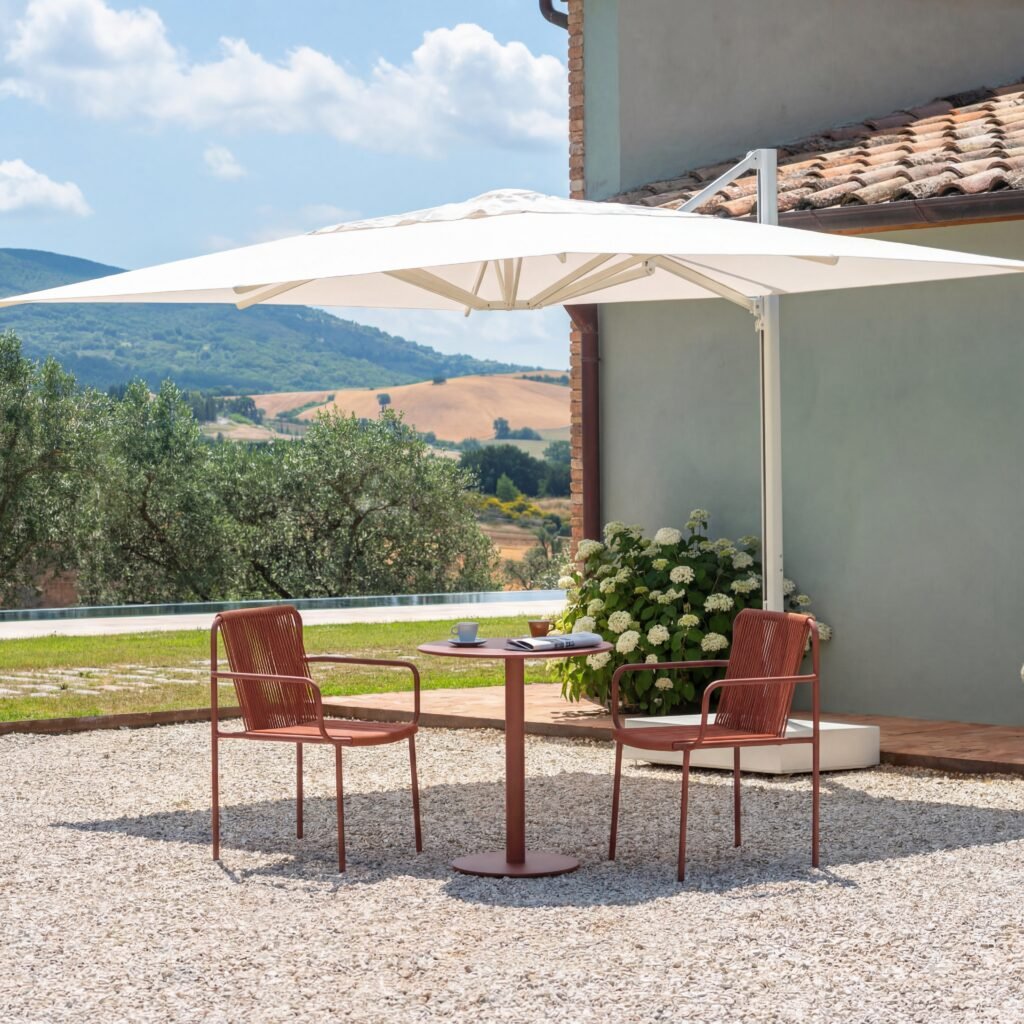
Textilene rope chairs are a powerhouse in the commercial sector. But what exactly is Textilene? Often referred to in factory specifications as “Teslin,” it is not a simple plastic, but a highly engineered composite material designed for extreme durability.
The Manufacturing Process
Textilene starts with a core of high-tenacity polyester yarn. This polyester core is the backbone, providing incredible structural strength and dimensional stability (meaning it won’t stretch out of shape). This core is then individually coated or encapsulated in a flexible, UV-stabilized PVC (Polyvinyl Chloride) sheath. After coating, it is extruded into flat tapes, round cords, or oval ropes, which are then tightly woven onto the chair frames.
Key Advantages for Commercial Use:
- Zero-Stretch Durability: Because of the polyester core, Textilene rope chairs can support heavy, repeated weight in commercial settings (like busy beach clubs) without sagging.
- 100% Waterproof: The PVC coating makes the material completely non-porous. It does not absorb any water, making it the ultimate choice for poolside commercial outdoor furniture.
- High Abrasion Resistance: The smooth PVC surface easily deflects friction, protecting the chair from wear and tear against rough surfaces or heavy denim clothing.
Deep Dive: What is Olefin Rope?
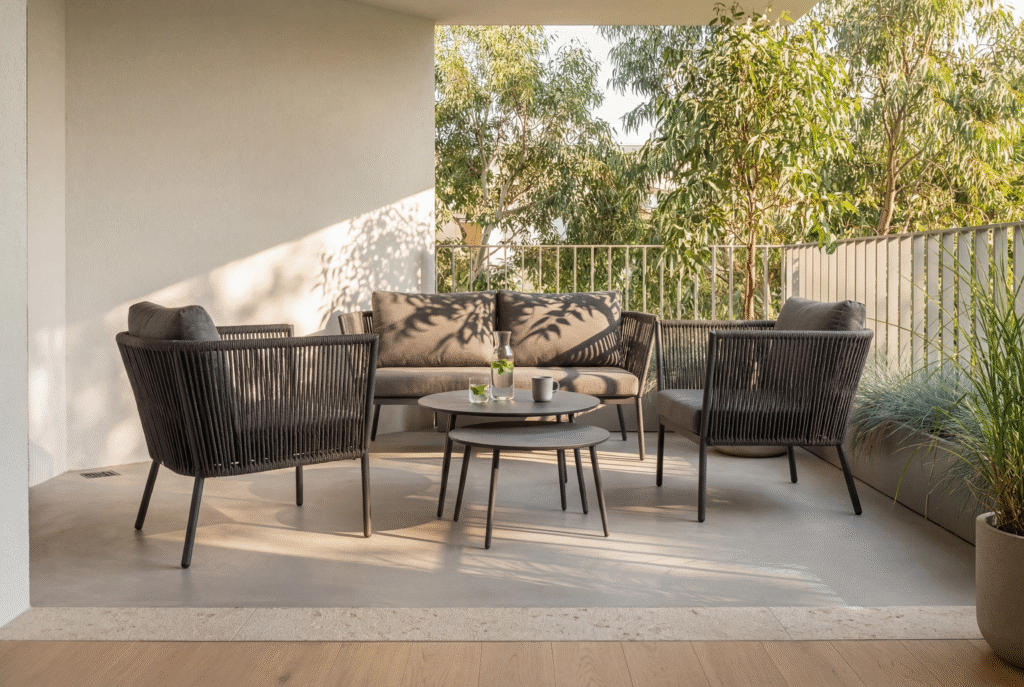
On the other side of the spectrum is Olefin outdoor furniture. Olefin is a generic name for synthetic fibers made from polyolefins, such as polypropylene or polyethylene. In the luxury B2B patio furniture market, Olefin is revered for its premium, fabric-like texture.
The Solution-Dyed Advantage
The most critical feature of high-quality Olefin used by top outdoor furniture manufacturers is that it is “solution-dyed.” In traditional dyeing, a white thread is dipped into color. In solution dyeing, the color pigments are mixed directly into the liquid polymer melt before it is extruded into a fiber. This means the color goes all the way through the yarn, much like a carrot, rather than just on the surface like a radish. These fine filaments are then twisted together to create a thick, traditional-looking rope.
Key Advantages for Commercial Use:
- Unmatched Fade Resistance: Because of the solution-dyed process, Olefin outdoor furniture boasts industry-leading UV resistance. It can sit in the blazing sun of Dubai or Arizona for years without losing its vibrancy.
- Luxurious Tactile Feel: Olefin feels much softer and more like natural cotton or hemp compared to the plastic feel of Textilene. It elevates the perceived value of wholesale outdoor furniture.
- Eco-Friendly Production: The manufacturing of Olefin produces very little waste and uses significantly less water than other synthetic textiles, appealing to eco-conscious commercial projects.
Head-to-Head Performance Comparison (Textilene vs. Olefin)
When placing bulk orders for hospitality projects, procurement teams must evaluate materials across several harsh realities. Here is how they compare in the field:
1. Tensile Strength and Long-Term Sagging
In a commercial environment, a chair might see 20 different users a day.
- Textilene: Wins this category. The polyester core ensures the weave remains tight. It has exceptional memory and bounces back immediately.
- Olefin: While very strong, the twisted nature of polyolefin yarns means it has a slightly higher elongation rate. Over many years of heavy commercial use, a pure Olefin rope seat without cushion support may show minor relaxing compared to Textilene.
2. UV Resistance and Color Fastness (The Sun Test)
- Textilene: Offers excellent UV protection. High-grade PVC coatings are mixed with UV inhibitors that prevent cracking and fading for 3 to 5 years under normal conditions.
- Olefin: The undisputed champion. Solution-dyed Olefin consistently scores the highest ratings (7-8) on the Blue Wool Scale for color fastness. If your hospitality furniture sourcing involves locations with extreme, year-round sun exposure, Olefin is the safest bet to prevent bleaching.
3. Water Absorption and Turnaround Time
For hotels, how fast a chair dries after a rainstorm dictates how quickly they can serve the next customer.
- Textilene: 0% water absorption. Water completely beads off the PVC surface. A quick wipe with a towel, and the commercial patio chairs are instantly ready for use.
- Olefin: Polyolefin fibers are naturally hydrophobic and resist mildew. However, because Olefin rope is made of hundreds of twisted micro-fibers, water can get trapped in the tiny crevices of the rope structure. It dries exceptionally fast in the sun, but it cannot be instantly wiped completely dry like Textilene.
4. Maintenance and Cleaning ROI
Labor costs are a major factor for B2B buyers.
- Textilene: Requires minimal maintenance. The slick PVC surface resists sunscreen oils, red wine, and food stains. It can be easily washed down with mild soap and a hose.
- Olefin: The softer, textured surface can trap dust, pollen, and fine dirt. It requires periodic gentle brushing or light power-washing to keep it looking pristine. Spot cleaning is effective, but it takes slightly more effort than PVC.
Cost Analysis & Wholesale Sourcing Strategy
Pricing is always a primary concern in wholesale outdoor furniture. Generally, high-end, solution-dyed Olefin rope commands a slightly higher premium than standard Textilene. The complex extrusion process and the intricate hand-weaving required for Olefin’s multi-filament ropes drive up the manufacturing costs.
However, when partnering with a direct outdoor furniture manufacturer like Colors Furniture Factory, the price gap is minimized through economies of scale.
Shipping & Container Optimization: Both materials can be woven onto stackable or Knock-Down (KD) aluminum frames. When planning your container loads, the rope material itself does not significantly alter the freight volume, allowing you to mix and match both styles in a single 40HQ container to test your local market preferences.
How to Specify the Right Material for Your Market
To maximize your sales and minimize after-sales complaints, align your material choice with the specific needs of your B2B clients:
- Specify Textilene Rope Chairs If: You are supplying high-volume commercial venues such as public beach clubs, water parks, cruise ships, or busy family restaurants. Your clients need zero-maintenance, instant-dry capabilities, and maximum structural rigidity.
- Specify Olefin Outdoor Furniture If: You are outfitting luxury 5-star resort balconies, high-end residential retail stores, or boutique hotel lounges. Your clients prioritize a premium, soft-touch aesthetic, traditional woven looks, and absolute immunity to UV fading in harsh climates.
Partner with a Premier Outdoor Furniture Manufacturer
Choosing between Textilene vs. Olefin shouldn’t be left to guesswork. It requires a strategic partnership with a factory that understands international commercial standards.
At Colors Furniture Factory, we don’t just assemble furniture; we engineer solutions. As a leading outdoor furniture manufacturer in China, we specialize in high-volume B2B patio furniture production. We stock both commercial-grade Textilene and premium solution-dyed Olefin, offering extensive Pantone color customization to match any architectural design.
Whether you need wholesale rope chairs for your retail distribution network or bespoke OEM/ODM outdoor chairs for a massive hospitality project, our stringent QC processes ensure every piece withstands the test of time.
Don’t let inferior materials ruin your reputation or your profit margins. Upgrade your 2026 product catalog with materials proven to perform.
👉 Ready to source the best commercial outdoor furniture? [Contact Colors Furniture Factory Today] to request our latest wholesale catalog, ask for physical material sample swatches, or get a competitive B2B quotation for your next container order.