
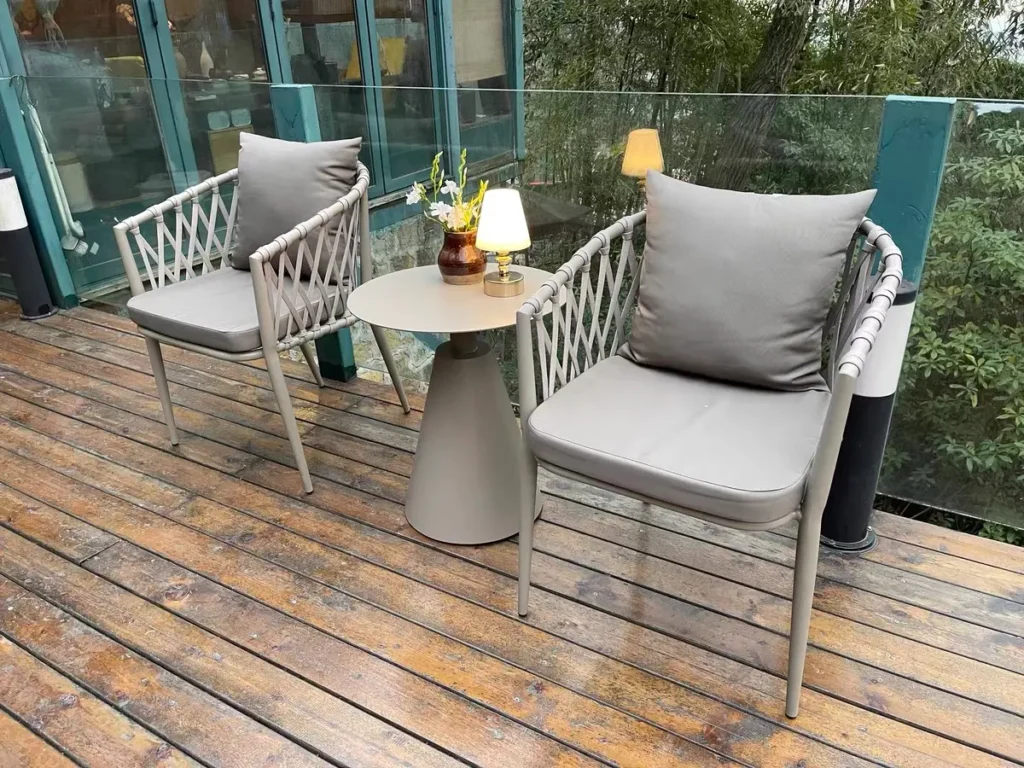
Beyond the Weave: 5 Essentials to Look for When Sourcing Commercial-Grade Rope Braid Chairs

 When searching for “rope braid chair wholesalers” or “weaving rope chair wholesale”, you are often met with an overwhelming list of FOB China furniture manufacturers. However, for professional bulk furniture sourcing, the selection criteria must go far beyond aesthetic photos.

The real decision-making happens beneath the surface—assessing whether a supplier can deliver the durability required for hospitality projects while maintaining a stable supply chain. This guide provides a framework to evaluate your next outdoor furniture factory partner.

1. Production Predictability: From Lead Times to Material Traceability

A reliable rope braid chair wholesaler must offer transparency that mitigates project risks. For international buyers, “predictability” is the most valuable currency.

  • Standardized Lead Times: A professional partner should provide clear timelines for a 40ft HQ container, covering everything from drawing confirmation to Port of Loading (POL).

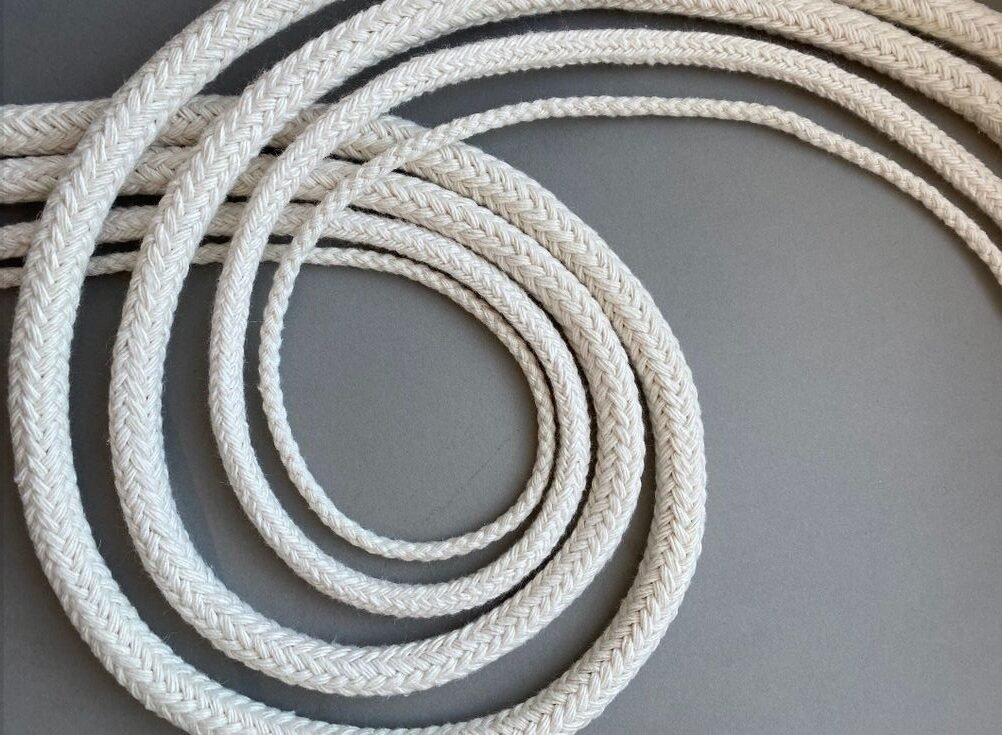
  • Material Science Integrity: Ensure the use of commercial-grade materials, such as UV-resistant Olefin fibers and high-strength aluminum alloy frames.

  • Capacity Management: Inquire about their production buffering during peak seasons to avoid “deadlines” becoming “suggestions.”

2. Documented QC Systems: The “Invisible” Manufacturing Standard

Quality in commercial-grade outdoor furniture is engineered, not just inspected. A supplier’s Internal Quality Control (QC) is the bedrock of your business safety.

  • IPQC (In-Process Quality Control): The factory should monitor weaving density consistency and welding integrity at every stage, not just at the end.

  • Testing Rigor: Look for on-site testing capabilities, including 110kg static pressure tests and salt spray testing for metal coatings (such as professional-grade powder coating or electroplating).

  • AQL Standards: Confirm they follow clear Acceptable Quality Level (AQL) sampling processes for final pre-shipment inspections.

3. OEM/ODM Engineering: Customization & Pantone Trends

In the competitive hospitality furniture market, the ability to offer OEM/ODM services is a major differentiator. Your supplier should be a solution provider, not just a vendor.

  • Design Integration: Can they translate concept sketches into technical DFM (Design for Manufacturing) drawings?

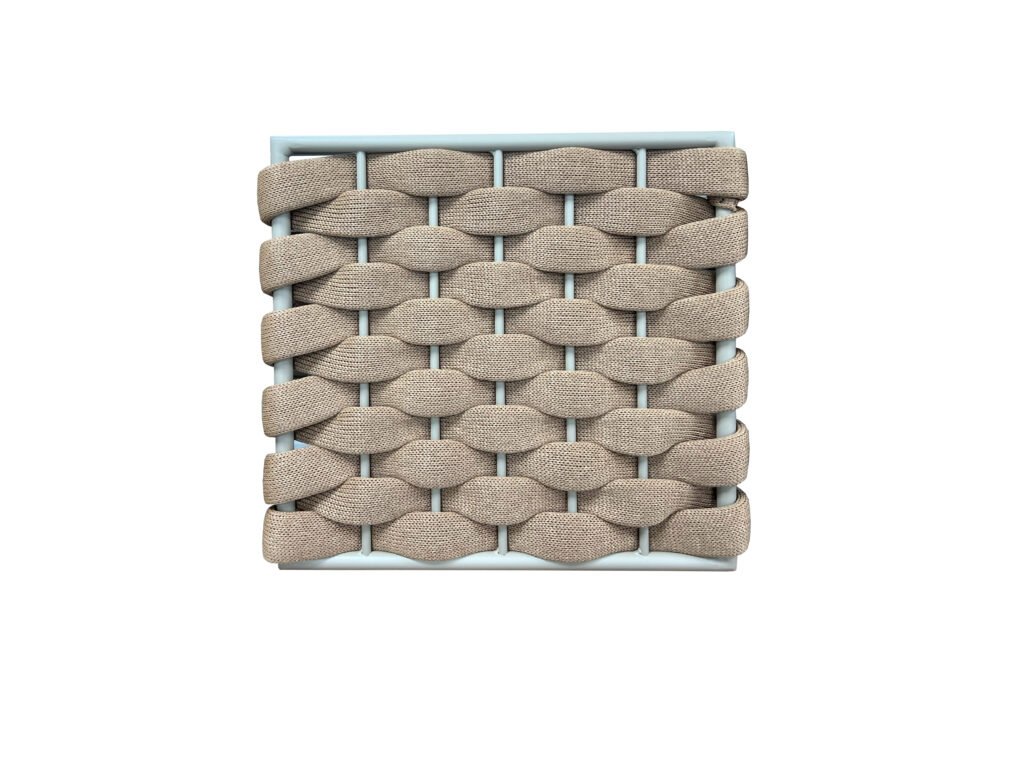
  • Custom Rope Color Options: For projects requiring brand alignment, look for suppliers who can integrate specific Pantone annual color trends into their rope and frame finishes.

  • Structural Flexibility: Beyond color, a high-tier folding chair factory should be able to adjust seat depth, backrest curvature, or stackability features to meet specific commercial needs.

4. Compliance & Global Standards: Your “Market Passport”

To import weather-resistant bistro sets wholesale, products must meet the rigorous safety standards of the destination market.

  • Safety Certifications: Prioritize suppliers who provide third-party test reports (such as SGS or TÜV) verifying compliance with EN 581 (European outdoor standards) or BIFMA (commercial grade) requirements.

  • Material Certification: Ensure all aluminum frame rope weave chairs come with verified material certificates and eco-friendly coating reports (ROHS/Reach).

  • Logistical Documentation: Accuracy in Proforma Invoices, Packing Lists, and Certificates of Origin is essential for seamless customs clearance.

5. Life-Cycle Cost (LCC) & After-Sales Service

The initial direct factory pricing is only the “tip of the iceberg.” A professional procurement strategy focuses on the total cost of ownership over the product’s lifespan.

  • Comprehensive Warranty: Define what the warranty covers—frame integrity, weaving tension, or coating adhesion—and the standard SOP for replacement.

  • Maintenance Support: Does the wholesaler provide a buffer stock of wear-and-tear parts, such as specific floor glides or connectors, for your hospitality project?

  • Refurbishment Potential: High-quality commercial outdoor furniture should be designed for long-term durability and ease of maintenance.


Conclusion: From Vendor to Strategic Partner

Choosing the right rope braid chair wholesaler is about more than just finding a product; it’s about choosing a manufacturing partner that shares your commitment to quality and deadlines.

Take Action: Put Your Selection Criteria to the Test

Ready to move beyond theory? We have developed a comprehensive “Commercial Outdoor Furniture Supplier Evaluation Checklist” to help you audit your next partner.

👉Contact us today to request your copy and transform your procurement into a clear, actionable plan.

FAQs

The core focus should be on warranty scope, response timelines, and spare parts support. Specifically: Formalize Warranty Terms: Define the duration and coverage for different components (e.g., frame integrity vs. rope tension vs. coating adhesion) and specify the start date (e.g., arrival at port or installation completion). Define Response Timelines: Agree on a set timeframe for addressing quality issues (e.g., a solution provided within 48 hours). Spare Parts Inventory: For long-term projects, negotiate a set ratio of “wear-and-tear” parts (such as specific glides or connectors) to be provided as buffer stock at a discounted rate.
Price is a critical factor, but it should never be the sole metric. The correct strategy is to shift the focus from “Purchase Price” to “Total Cost of Ownership” (TCO). A supplier with a slightly higher quote but with clear production cycles, rigorous quality control, full compliance documentation, and reliable after-sales support significantly reduces your hidden risks. These risks include lead-time delays, quality disputes, and damage to your project’s reputation. Consider your budget as an investment in long-term operational reliability rather than a simple product purchase.
You can utilize a three-step verification method: Documentation: Request recent third-party laboratory test reports (e.g., BIFMA or EN 581) and certifications for raw materials. Process: During the sampling or mid-production phase, commission a third-party inspection company or arrange an on-site visit to review IPQC (In-Process Quality Control) records and production line protocols. Track Record: Request case studies of past high-end commercial projects and, with their permission, contact references for a background check. Reliable suppliers are never intimidated by verification.
Propose a specific, moderate design modification—such as adjusting a local dimension or requesting a specific Pantone color match—as a “test case.” Observe their response: Do they reject it outright, give a vague “yes,” or provide a professional feasibility analysis? A reliable partner will have engineers provide a technical assessment of the impact on cost, structure, and lead time, followed by updated technical drawings. This indicates genuine DFM (Design for Manufacturing) capabilities.
You should focus on peak-season capacity allocation and raw material safety stock strategies. These reveal the supplier’s supply chain resilience. Additionally, clarify the exact “start point” of the lead time: does it begin upon receipt of the deposit, final drawing confirmation, or when all materials are ready? Ensure that the contract includes clear penalty clauses for delays caused by the supplier, as this is your most vital risk-control tool.

Table of Contents

Need a quick and nice quote of wholesales or OEM/ODM?