Give your old metal furniture a second life at just 10% of the cost of a new dining chairs set of 6, while achieving a finish that rivals industrial powder coating.
When faced with rusted, peeling patio sets, do you choose the landfill or a massive budget for replacements? In 2026, the smarter, more sustainable path is a professional-grade restoration. This guide transcends basic DIY; from the perspective of a senior designer and product expert, we will deconstruct the systematic process required to achieve commercial-grade durability that aligns with current naturalist and eclectic styling trends.
Step 1: Strategic Planning & Professional Audit — The Rational Start
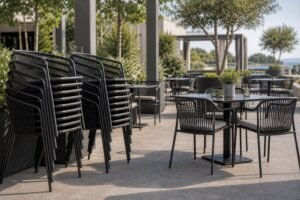
Before beginning, approach the project with an “Asset Management” mindset—this is especially crucial for businesses dealing with a large volume of stackable outdoor chairs.
Structural Value Audit: Your primary task is to verify the integrity of the frame. Are the weld points solid? For commercial clients managing bulk patio furniture, a structurally sound old frame is a high-value asset worth saving.
Surface Diagnosis: Differentiate between surface rust, flaking paint, or deep corrosion. This determines the strength and scope of the rust removal and conversion process required.
Professional Material Checklist:
Core Consumables: High-performance anti-rust metal primer (the foundation of longevity) and the best spray paint for metal (choose high-weatherability, UV-resistant formulas).
Processing Tools: Angle grinders (for industrial efficiency), wire brushes, and sandpaper ranging from 80 to 220 grit.
Safety & Prep: Industrial degreasers, N95 masks, and safety goggles.
Step 2: Factory-Level Surface Treatment — The Science of Adhesion
This phase determines whether your finish lasts one year or five.
Deep Degreasing: Use a professional-grade degreaser to remove all oils. This is a non-negotiable prerequisite for primer adhesion; any residue will lead to early delamination.
Mechanical De-rusting & Refined Sanding: For rusted areas, use mechanical tools followed by a rust converter to transform oxidation into a stable protective layer. Follow this with a uniform sand to create a “mechanical bond” or “tooth”—the goal is a textured surface the primer can “grab,” not just a smooth one.
The Invisible Armor (The Primer): Applying a dedicated anti-rust metal primer is the bridge between an amateur fix and a professional restoration. While mass-production relies on powder coating, the correct application of a high-quality primer is the only way a DIY project can achieve similar long-term resistance.
Step 3: Coating Execution & Color Strategy — Unifying Function and Aesthetics
The Art of Spraying: Select a premium outdoor spray paint and apply it using the “thin layers, multiple passes” technique. Allow ample drying time between coats to ensure a tough, uniform film.
2026 Color Trends for Commercial Applications:
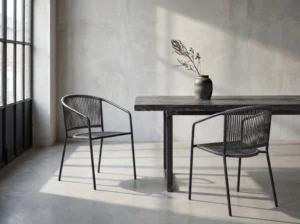
The Eternal Classic (Matte Black): Restoring old sets into black dining chairs is a low-risk, high-return strategy. It effortlessly creates a high-end industrial look, hides wear-and-tear, and significantly lowers long-term visual maintenance costs.
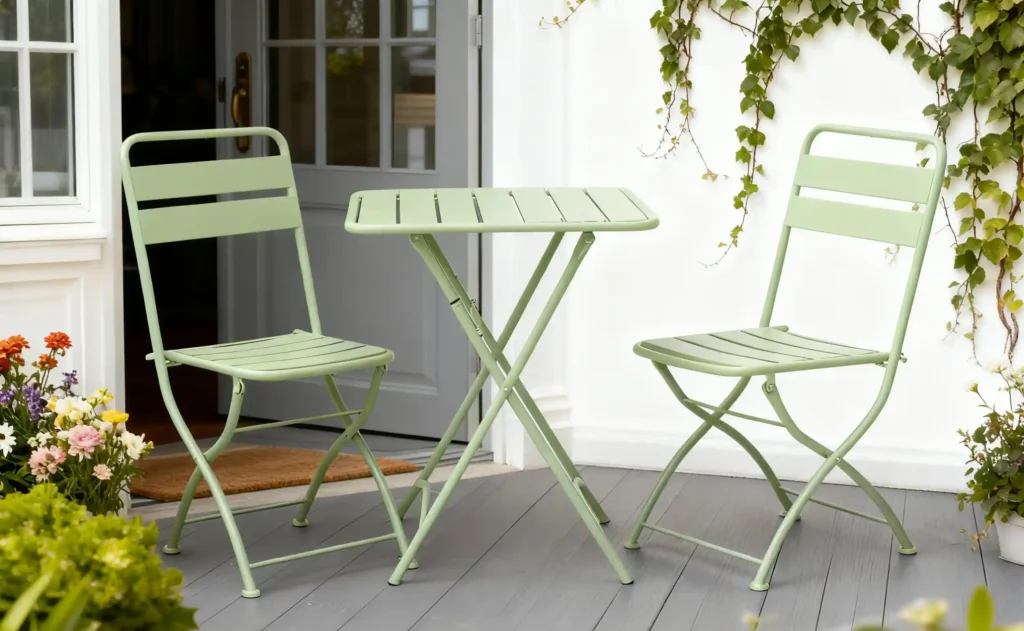
Naturalist Inspiration: Sage green, terracotta, or deep sea blue—these shades connect the furniture to the landscape, softening the coldness of the metal and creating a unique outdoor commercial ambiance.
Functional Crossover: A beautifully restored metal chair can easily transition indoors as a kitchen chairs update, providing spatial flexibility and stylistic continuity.
Step 4: Design Elevation — Beyond the Paint Job
Placing your renewed furniture within a curated space adds exponential value.
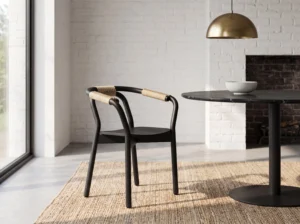
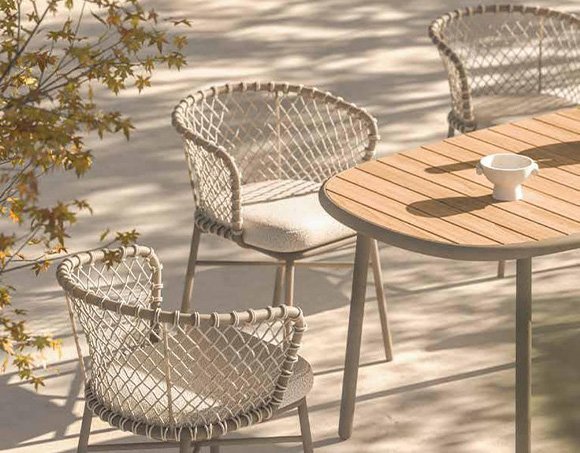
Material Mixing: Don’t let your modern metal chairs stand in isolation. Pair them with a heavy solid wood table or a dining bench. This deliberate textural contrast—cool metal vs. warm timber—is the core of high-level outdoor design.
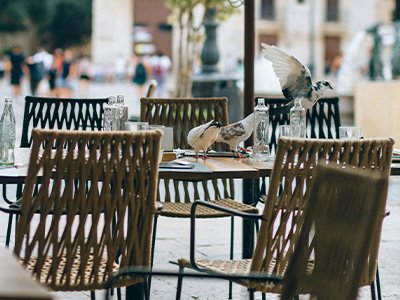
Comfort & Completeness: Consider adding custom cushions or upholstery. This not only enhances the seating experience and increases “dwell time” for guests but also allows commercial spaces to update their theme at a low cost by simply swapping fabrics.
Step 5: Asset Management & Long-term Care
Professional restoration requires professional maintenance to maximize ROI:
Clean regularly with a soft cloth; avoid abrasive chemicals.
Conduct annual inspections to “spot-treat” minor scratches before the base metal is exposed.
For commercial use, keep a periodic maintenance log to systematically extend the lifespan of your outdoor seating and control the total cost of ownership.
Conclusion
A professional restoration of outdoor metal furniture is an engineering project in value reshaping. It is more than a cost-saving measure; it is a commitment to sustainability and a professional process that transforms existing assets into high-quality pieces that meet modern aesthetic standards. Whether you are refreshing a private patio or revitalizing a large-scale commercial wholesale outdoor furniture project, this systematic approach ensures returns far beyond expectations.
Now, we want to hear from you: Are you planning a small home refresh or a large-scale commercial project? Drop a comment below and tell us which color you’re choosing for 2026! If you’re tackling a high-volume project and need professional advice on wholesale outdoor furniture or maintenance at scale, feel free to reach out—we’re here to help your vision take shape.