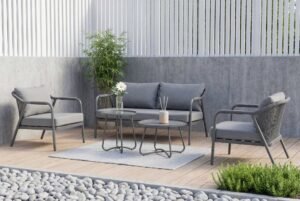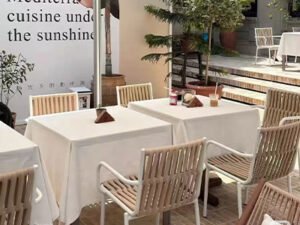
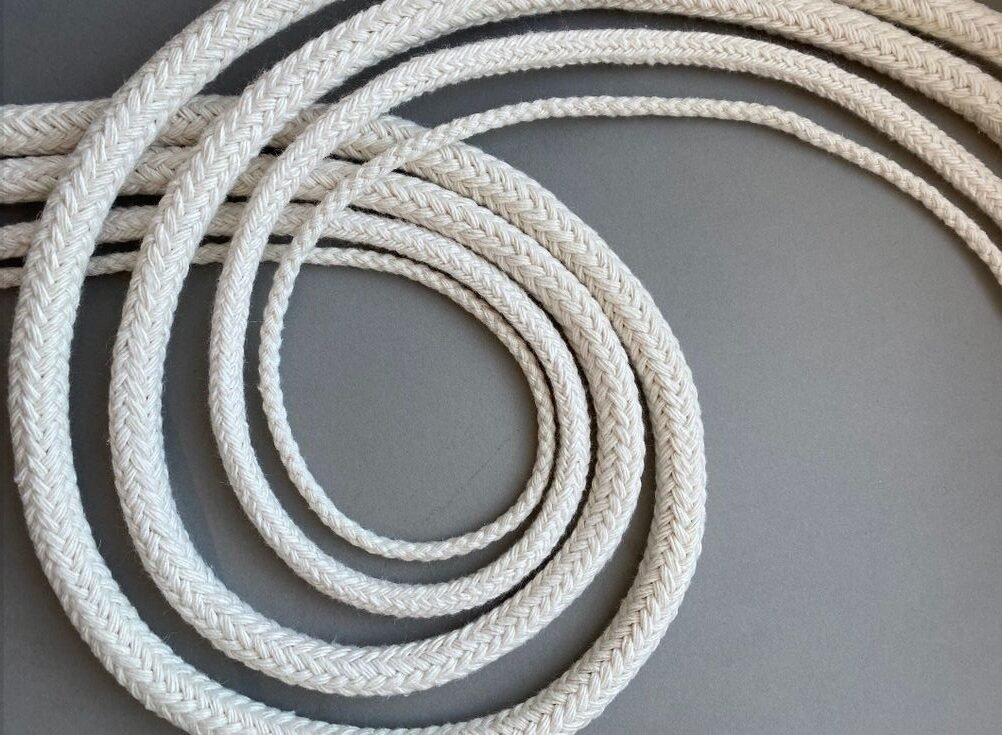
This article focuses on the basic introduction and core pros and cons of four key rope materials widely used in outdoor rope chairs, woven rope chairs, and weave dining chairs. It aims to provide essential references for understanding material properties and selecting suitable options for outdoor furniture, helping you make informed decisions for your outdoor seating solutions.
1. Textilene
Basic Introduction
Textilene is a classic rope material for outdoor rope chairs and other outdoor furniture pieces. Its core structure consists of “an inner core (polyester or polypropylene, providing tensile strength) + an outer PVC coating (isolating external damage)”. It emphasizes a “balance between weather resistance and cost-effectiveness” and is a widely applied basic rope material in outdoor furniture, especially for durable outdoor seating like woven rope chairs.
Core Pros & Cons
| Pros | Cons |
|---|---|
| 1. Strong weather resistance: Resists UV rays and rain, not easy to become brittle or moldy during long-term outdoor use; | 1. Limited high-temperature resistance: When the ambient temperature exceeds 45°C, the PVC coating may slightly soften, leading to a slightly sticky feel; |
| 2. Corrosion & salt spray resistance: The PVC coating can withstand salt erosion in coastal areas, preventing oxidation; | 2. Prone to hardening and brittleness in low temperatures: Below -5°C, the coating becomes hard, and slight cracks may appear when bent; |
| 3. Easy to clean: Features a smooth surface—oil stains and dust can be wiped off with a damp cloth, no special maintenance required; | 3. Average environmental friendliness: Some low-cost products may contain trace plasticizers in the PVC coating, which might produce a slight odor at high temperatures (products complying with national standards can avoid this issue). |
| 4. Stable structure: High load-bearing capacity, and the woven rope (ideal for woven rope chairs) is not easy to deform. |
Suitable Countries & Regions
- Southeast Asia (Tropical Monsoon Zones): Vietnam (Ho Chi Minh City), Thailand (Bangkok), Philippines (Manila)These areas have annual rainfall of 1,500-2,500mm and high humidity (60%-85%) but no extreme heat (summer temps ≤38°C). Textilene’s mold resistance and easy cleaning prevent issues like mildew in rainy seasons, making it perfect for outdoor rope chairs and woven rope chairs in residential patios or resort gardens.
- Mediterranean Europe: Spain (Costa Brava), Italy (Amalfi Coast), Greece (Cyclades Islands)Mild coastal climates (summer temps 25-35°C, winter ≥5°C) and moderate salt spray align with Textilene’s strengths. It resists corrosion from sea breezes, ensuring long-term use of weave dining chairs on coastal terraces—while its low maintenance suits busy hospitality businesses (e.g., cafes, hotels).
- Eastern US: North Carolina, Virginia, Georgia (USA)Humid subtropical climates (annual rainfall 1,000-1,500mm, temps -2°C to 32°C) avoid extreme temperatures. Textilene’s stability and cost-effectiveness make it a top choice for mid-range outdoor furniture, such as woven rope chairs for suburban backyards.
2. Polyester (Outdoor-Modified Version)
Basic Introduction
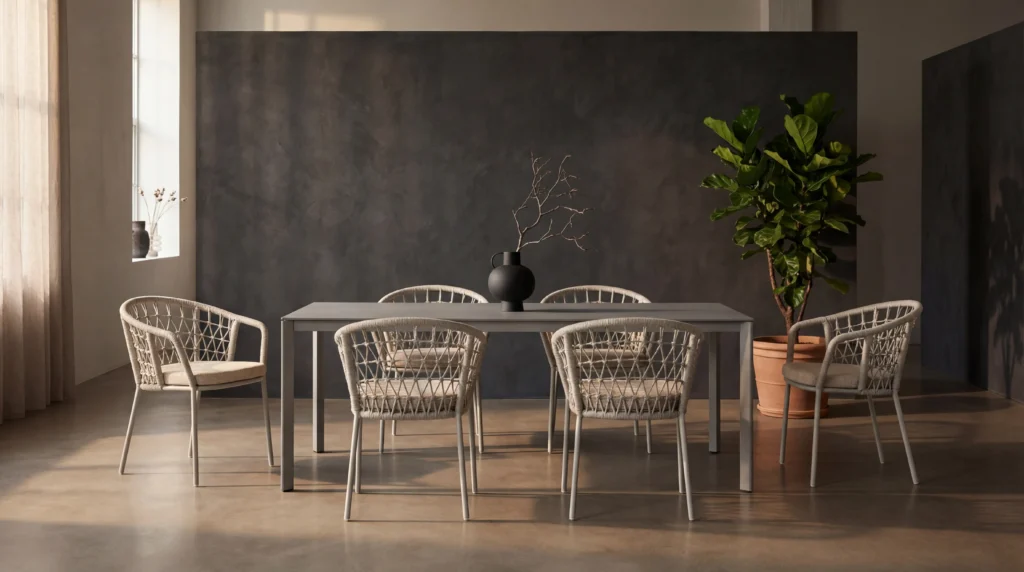
Polyester, also known as PET fiber, is often used in a modified form (added with UV inhibitors and anti-mildew agents) for outdoor rope chairs. Its core advantages are “wear resistance and cost-effectiveness”, making it a versatile and durable material. It is particularly suitable for mid-range outdoor rope chairs, weave dining chairs, and other outdoor furniture that requires frequent use.
Core Pros & Cons
| Pros | Cons |
|---|---|
| 1. Superb wear resistance: High fiber strength, not easy to pill or break even with long-term sitting and rubbing (suitable for high-frequency use in outdoor spaces), ensuring a long service life; | 1. Weak UV resistance: Unmodified polyester fades easily under long-term sun exposure—UV-resistant coatings are required to improve sun resistance; |
| 2. Cost-effective: Lower raw material cost than acrylic and olefin, ideal for bulk purchases of outdoor furniture like outdoor rope chairs; | 2. Moderate hygroscopicity: May absorb slight moisture in humid environments if not properly ventilated, resulting in a slightly heavy feel; |
| 3. Good low-temperature resistance: Maintains flexibility even below -10°C, no risk of brittleness; | 3. Average salt spray resistance: Uncoated polyester is prone to salt erosion in high-salt-spray areas (e.g., Hainan, China), accelerating aging. |
| 4. Rich color options: Excellent dyeability, available in various bright colors and patterns, adding visual diversity to woven rope chairs and weave dining chairs.deform. |
Suitable Countries & Regions
- Eastern Europe: Poland, Hungary, Czech RepublicContinental climates (winter temps -10°C to 0°C, summer 20-28°C) and low humidity (40%-60%) let Polyester’s low-temperature flexibility shine. Its low cost caters to budget-focused markets, making it ideal for outdoor rope chairs in residential courtyards or small restaurants.
- Midwestern US & Southern Canada: Iowa, Illinois (USA), Ontario (Canada)Cold winters (down to -15°C) and mild summers (≤30°C) match Polyester’s cold resistance. Dry conditions reduce moisture-related issues, while its wear resistance handles frequent use of weave dining chairs in family gardens. The material’s affordability also fits middle-class consumer needs.
- South Africa (Inland Regions): Gauteng (Johannesburg), Free StateTemperate dry climates (summer 25-30°C, winter 5-15°C) and moderate UV (lower than coastal areas) work well with modified Polyester. Its rich color options appeal to residential outdoor furniture buyers, who prioritize both style and value for woven rope chairs.
3. Olefin (Polypropylene PP Fiber)
Basic Introduction
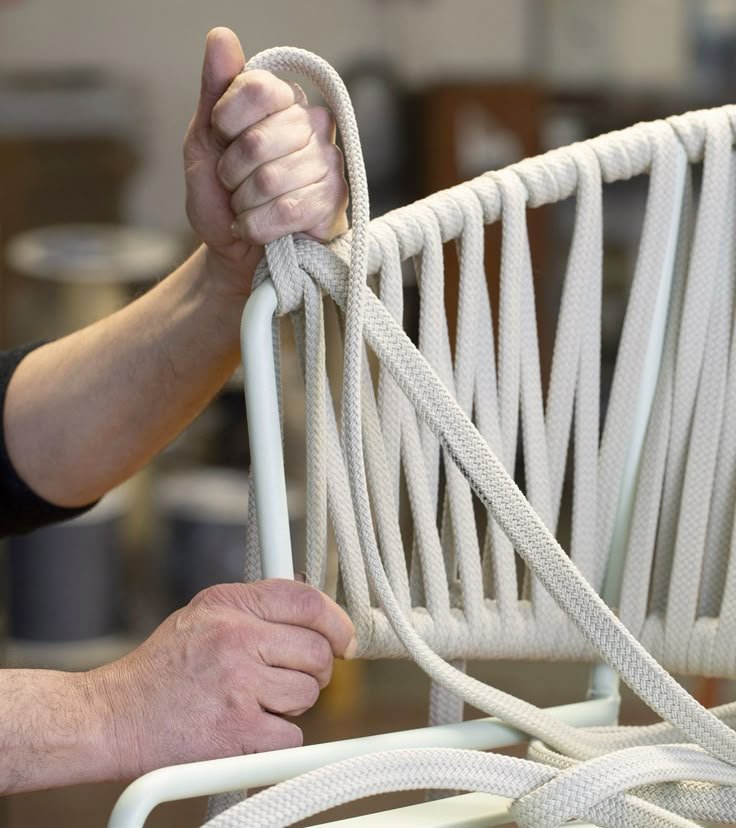
Olefin is made of polypropylene (PP) fiber, with core characteristics of “zero water absorption and strong mildew resistance”. It is designed for “humid outdoor environments” and has a lightweight, soft feel. It is an optimal choice for woven rope chairs, outdoor rope chairs, and other outdoor furniture in high-humidity regions (such as southern China or tropical areas).
Core Pros & Cons
| Pros | Cons |
|---|---|
| 1. Zero water absorption: Rainwater and dew slide off instantly, keeping the rope dry at all times in humid outdoor spaces; | 1. Moderate UV resistance: Unmodified olefin is prone to fiber aging (resulting in a rough feel) under long-term sun exposure—UV inhibitors need to be added; |
| 2. Superb mildew resistance: The fiber itself does not provide a breeding ground for mold, so there is no risk of mildew or blackening even during the rainy season; | 2. Prone to deformation in high temperatures: When the ambient temperature exceeds 50°C, the fiber may slightly shrink, and the seat surface of woven rope chairs may slightly collapse after long-term high-temperature exposure (requiring a rigid frame for support); |
| 3. Excellent salt spray resistance: Stable chemical properties, capable of withstanding high salt spray (e.g., coastal areas in Hainan or Southeast Asia), making it suitable for coastal outdoor furniture; | 3. Weaker wear resistance than polyester: Slight pilling may occur with high-frequency use. |
| 4. Lightweight and soft: Low density (lighter than water), comfortable sitting experience, and the overall outdoor rope chair or weave dining chair is lightweight for easy movement. |
Suitable Countries & Regions
- Southeast Asian Rainforests: Indonesia (Bali), Malaysia (Kuala Lumpur), SingaporeYear-round high humidity (75%-90%) and frequent rain (2,000-3,000mm/year) make Olefin’s zero moisture absorption critical. It stays dry even during monsoons, preventing mold on outdoor rope chairs—ideal for beach resorts or urban rooftop gardens. Coastal areas (e.g., Bali’s beaches) also benefit from its salt spray resistance.
- Amazon Basin (South America): Brazil (Manaus), Colombia (Leticia)Hot, humid rainforest climates (temps 25-32°C, humidity 80%-95%) demand mildew-proof materials. Olefin’s anti-mildew properties ensure woven rope chairs and weave dining chairs last in outdoor spaces with little sunlight or ventilation.
- Southern China : Guangdong, Fujian, HainanSubtropical monsoons (rainy season 4-9 months, humidity 70%-85%) and coastal salt spray make Olefin a top choice for local outdoor furniture brands. It is widely used in outdoor rope chairs for resorts, parks, and residential balconies.
4. Acrylic (PMMA Fiber, Outdoor-Grade)
Basic Introduction
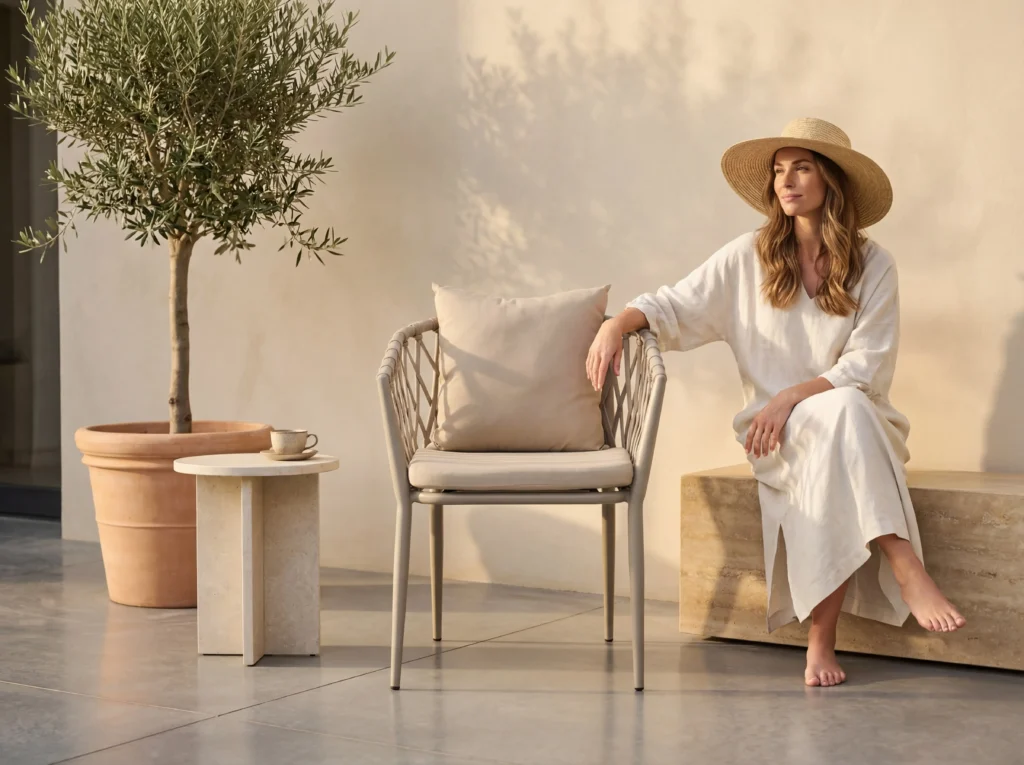
Acrylic, or polymethyl methacrylate (PMMA) fiber, is an outdoor-grade material with core features of “top-tier UV resistance and comprehensive weather resistance”. It is designed for “strong UV and extreme high-temperature scenarios” and has a high-end texture. It is the top pick for high-end outdoor rope chairs, woven rope chairs, and weave dining chairs in luxury outdoor furniture lines (e.g., villa gardens or high-end hotels).
Core Pros & Cons
| Pros | Cons |
|---|---|
| 1. Top-tier UV resistance: Contains natural UV-resistant components, no fading or brittleness even under long-term strong sun exposure (e.g., Hainan, China or the Middle East) for 5-8 years; | 1. High cost: Raw material cost is 2-3 times that of polyester and 1.5 times that of Textilene, only suitable for high-end outdoor furniture markets; |
| 2. Extreme high-temperature resistance: No softening or deformation when the ambient temperature is ≤60°C, suitable for outdoor furniture in high-temperature regions; | 2. Average low-temperature resistance: Slightly hard feel below -10°C, less comfortable than polyester in low-temperature outdoor spaces; |
| 3. Comprehensive weather resistance: Balances salt spray resistance, mildew resistance, and aging resistance, making it adaptable to all climates; | 3. Careful cleaning required: The high-gloss surface may leave marks if oil stains are not cleaned for a long time—neutral detergents are needed for wiping (avoid hard brushes). |
| 4. High-end texture: Good fiber gloss and delicate hand feel, enhancing the visual premium of outdoor rope chairs and weave dining chairs. |
Suitable Countries & Regions
- Middle East: Saudi Arabia (Riyadh), UAE (Dubai), Qatar (Doha)Extreme desert climates (summer temps 45-55°C, intense UV radiation) require materials that withstand heat and sun. Acrylic’s high-temperature stability and UV resistance ensure outdoor rope chairs and weave dining chairs retain color and shape—perfect for luxury hotels, villas, and rooftop lounges.
- Australia & New Zealand: Queensland (Australia), North Island (New Zealand)Some of the world’s strongest UV radiation (due to ozone layer factors) and summer temps 30-40°C. Acrylic’s fade resistance is a must for outdoor furniture—residential and commercial buyers (e.g., beach clubs) prefer it for woven rope chairs that maintain aesthetics long-term.
- Western US Luxury Markets: California (Los Angeles), Florida (Miami) (USA)Mild winters, hot summers (30-40°C), and strong UV (especially in coastal California) plus high demand for luxury outdoor living. Acrylic’s premium texture and durability align with high-end homes, resorts, and upscale restaurants—used for high-priced weave dining chairs and designer outdoor rope chairs.
Summary: Regional Material Selection Guide
| Rope Material | Key Regional Fit | Typical Use Cases |
| Textilene | Humid coastal/temperate regions (Vietnam, Mediterranean Europe, Eastern US) | Mid-range outdoor rope chairs, resort woven rope chairs |
| Polyester | Temperate dry/cost-sensitive regions (Eastern Europe, Midwest US, inland South Africa) | Budget-friendly weave dining chairs, residential outdoor seating |
| Olefin | High-humidity/tropical coastal regions (Indonesia, Amazon Basin, Southern China) | Beach resort chairs, rainforest-area woven rope chairs |
| Acrylic | Extreme UV/high-temp/luxury regions (Middle East, Australia, California) | Luxury villa chairs, high-end hotel weave dining chairs |