A Strategic Imperative: Redefining Value in Commercial B2B Furniture Procurement
For procurement directors, project managers, and supply chain leaders, the 2026 sourcing landscape is defined by a pivotal challenge: structural, not cyclical, inflation in aluminum costs. This shift, driven by macro forces like AI’s colossal energy demand, has made the traditional outdoor furniture supply chain a source of financial volatility. Leading organizations are no longer just seeking new suppliers; they are executing a foundational strategic pivot in material selection. The transition from aluminum to advanced, engineered iron represents the new core of value engineering for durable goods, directly addressing the critical search for a sustainable contract furniture sourcing 2026 strategy.
The Aluminum Equation: Why Cost Pressures Demand a New Outdoor Furniture Supply Chain Strategy
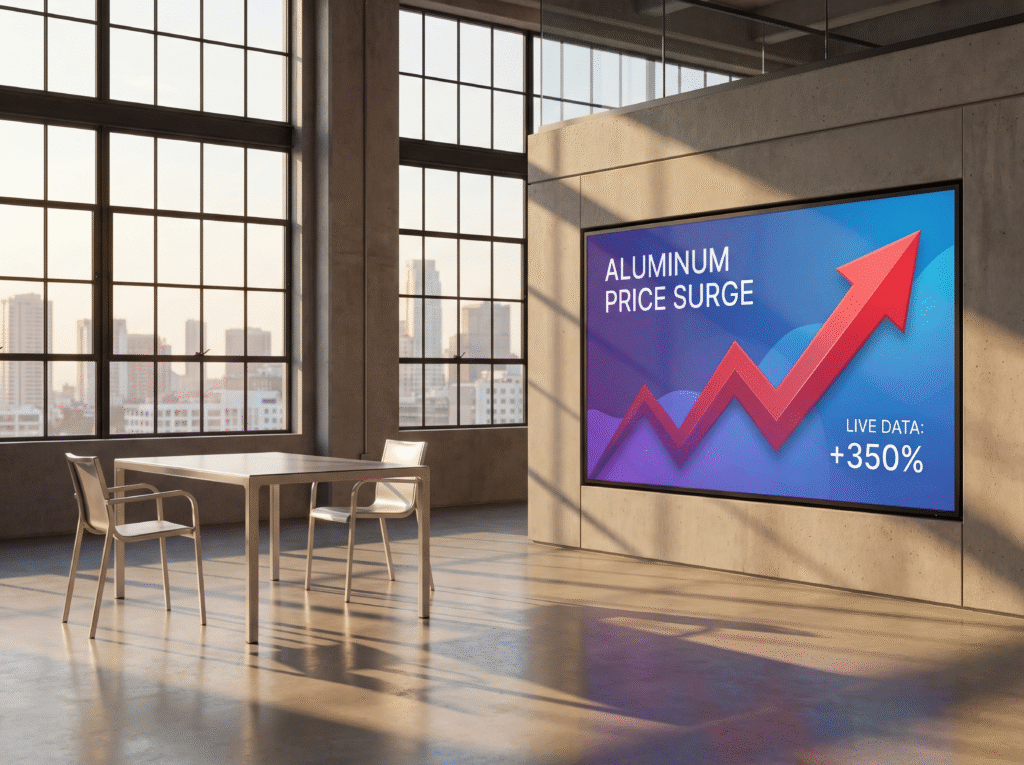
Hope for an aluminum price “return to normal” is misplaced. The drivers are systemic:
The AI Energy Vortex: AI infrastructure competes directly with smelters for massive, stable power loads, a battle aluminum production is losing.
Green Energy Reallocation: Producers and tech giants vie for the same renewable Power Purchase Agreements (PPAs), constricting “green aluminum” supply.
Geopolitical Fragility: Export controls and logistical bottlenecks add persistent volatility premiums.
For the B2B buyer, this creates a triad of risk: unpredictable pricing, unreliable lead times, and unmanageable budget exposure. The central procurement question has evolved from “How do we buy aluminum cheaper?” to “What superior material offers predictable cost, supply, and performance?“ This is the essential context for evaluating the aluminum vs iron furniture cost debate.
The Engineered Iron Advantage: A Procurement Framework Built on Performance Data
Modern iron transforms the value proposition through automotive and architectural-grade surface science, directly countering historical concerns.
Dismantling the “Rust” Paradigm with Science
The corrosion objection is obsolete. Today’s systems provide superior, verifiable protection:
Electrophoretic Deposition (E-Coating): The automotive gold standard, E-coating for iron furniture uses an electrical charge to deposit a uniform, pore-free polymer film onto every surface, including recesses and welds. It delivers corrosion resistance that typically exceeds 1,000 hours in a salt spray test, outperforming many standard aluminum finishes.
Multi-Stage Defense Systems: For extreme environments, a hot-dip galvanized base provides cathodic protection, topped with a robust powder coating. This combination in powder coated galvanized steel furniture creates a dual-defense barrier often more resilient than bare or anodized aluminum.
A Procurement-Centric TCO Analysis: Aluminum vs. Iron
The strategic case for iron is clear when analyzed through a Total Cost of Ownership (TCO) lens:
Evaluation Dimension | Aluminum (Current Reality) | Modern Engineered Iron | Procurement Impact |
|---|---|---|---|
Cost Predictability | Very Low; tied to volatile energy/AI markets. | High; steel markets are more stable, and material is a smaller portion of final cost. | Locks in project budgets, protects margins. |
Supply Chain Resilience | Fragile; concentrated in high energy-cost regions. | Robust; global raw material and mature processing networks. | Mitigates geopolitical risk, ensures on-time delivery. |
Design & Customization | Limited by extrusion profiles; complex bends are costly. | Excellent; superior malleability supports organic, custom, and intricate designs. | Enables unique design differentiation and value-added solutions. |
Structural Longevity | Good, but thin-walled designs can fatigue over time. | Excellent; higher density and strength translate to a longer lifecycle and lower maintenance. | Reduces Total Cost of Ownership, extends asset service life. |
Vendor Options | Limited; concentrated supplier base for quality extrusions. | Diversified; includes high-efficiency Chinese outdoor metal furniture manufacturers and cost-competitive Indonesian outdoor metal furniture manufacturers. | Enables a dual-source or multi-region procurement strategy for optimal leverage. |
The B2B Procurement Blueprint: A Four-Pillar Validation Strategy
Transitioning requires a disciplined, evidence-based approach. Here is the framework for contract furniture sourcing in 2026:
1. Technical Validation: Demand Data, Not Just Samples
Require potential outdoor metal furniture factory partners to provide:
Independent Salt Spray Test Reports for their specific coating system, demanding results for 1000 hours salt spray test to ASTM B117 with no red rust.
Adhesion Test Certificates (cross-cut tape test per ISO 2409).
Cycle Test Data for moving parts.
2. Total Cost of Ownership Modeling: Redefine “Cost”
Build a 5-10 year TCO model including:
Initial purchase price.
Estimated maintenance, repair, and refinishing costs (significantly lower for properly coated iron).
Replacement costs due to failure (factoring in iron’s longer structural lifespan).
Logistics and inventory costs (considering supply chain stability).
3. Supplier Capability Audit: Partner, Don’t Just Purchase
Audit against strategic partnership criteria:
Engineering Collaboration: Can they participate in Value Engineering to optimize designs for cost and manufacturability?
Vertical Integration: Do they control key processes from raw material to surface treatment? This dictates quality consistency.
Compliance & Certification: Do they hold relevant ISO certifications and comply with international material standards (e.g., REACH, Prop 65)?
4. A Dual-Source Manufacturing Strategy
Build resilience by leveraging the strengths of both major hubs:
Partner with a leading Chinese outdoor metal furniture manufacturer for engineering sophistication, supply chain efficiency, and rapid response to complex designs. Ideal for high-end, custom, time-sensitive projects.
Engage a qualified Indonesian outdoor metal furniture manufacturer for cost optimization, tariff advantages for certain markets, and growing industrial support. Ideal for price-sensitive, high-volume standard lines. Critically assess their surface treatment maturity and processing consistency.
Call to Action: Initiate Your Strategic Material Transition Assessment
In an era of volatility, inaction is a strategic risk. Proactively pivoting your procurement foundation from aluminum to modern engineered iron is the decisive move to build cost resilience, supply chain security, and product differentiation.
This transition should not start from a blank page. We have operationalized this decision framework into an actionable toolkit: The B2B Metal Furniture Strategic Sourcing Transition Pack. It includes:
A Total Cost of Ownership Comparative Calculator to quantify the financial impact for your specific projects.
A comprehensive Supplier Capability Audit Checklist.
A Manufacturing Hub Capability Landscape Guide for China and Indonesia.
 Initiate this critical strategic review today. Contact us to receive your complimentary toolkit and schedule a 30-minute strategic sourcing consultation. Let’s transform the current cost challenge into your organization’s long-term structural advantage.