
E-Coating & Powder Coating Process for Metal Outdoor Furniture
For metal outdoor furniture, surface treatment is one of the most important decisions behind durability, appearance, and buyer confidence. This page explains how B2B buyers should understand e-coating, powder coating, anti-rust planning, coating inspection, and project-specific testing when sourcing metal patio chairs, rope chairs, folding chairs, dining tables, coffee tables, benches, stools, and commercial outdoor furniture from Colors Furniture Factory.
Colors Furniture Factory is a Foshan-based metal outdoor furniture manufacturer serving importers, wholesalers, retail brands, hospitality buyers, restaurant projects, cafe projects, and OEM/ODM outdoor furniture programs. Because many Colors products use metal frames, coating quality directly affects product performance. A good finish is not only about color. It affects corrosion resistance, scratch risk, customer complaints, warranty pressure, cleaning, packaging protection, and whether a product can perform in the buyer’s intended environment.
Quick Answer
Powder coating is a common finishing method for metal outdoor furniture. It creates a colored protective layer on the metal surface and is widely used for patio chairs, folding chairs, metal tables, stools, benches, and outdoor frames. E-coating, also called electrophoretic coating, is often discussed as an additional anti-corrosion layer or primer-style process for projects that need stronger rust-resistance planning. Not every order needs the same coating route. The right specification depends on material, product structure, outdoor environment, target market, warranty expectation, and buyer budget.
For B2B buyers, the most important point is to define the coating requirement before bulk production. Buyers should confirm whether the project needs standard powder coating, enhanced pre-treatment, primer, e-coating, powder coating over e-coating, salt spray testing, coating thickness checks, or third-party inspection. The test method, test duration, sample preparation, laboratory, and acceptance criteria should be agreed before production rather than after goods are finished.
Why Coating Matters for Outdoor Metal Furniture
Outdoor furniture is exposed to rain, humidity, sunlight, temperature change, dust, cleaning chemicals, and daily handling. In commercial spaces, the stress is higher. A chair in a restaurant terrace may be moved many times each day. A hotel patio chair may sit near moisture, pool water, or coastal air. A retail product may travel through long export shipping, warehouse handling, delivery, and final assembly before the end customer uses it. If the surface treatment is weak, the product can lose value quickly even when the frame design looks good.
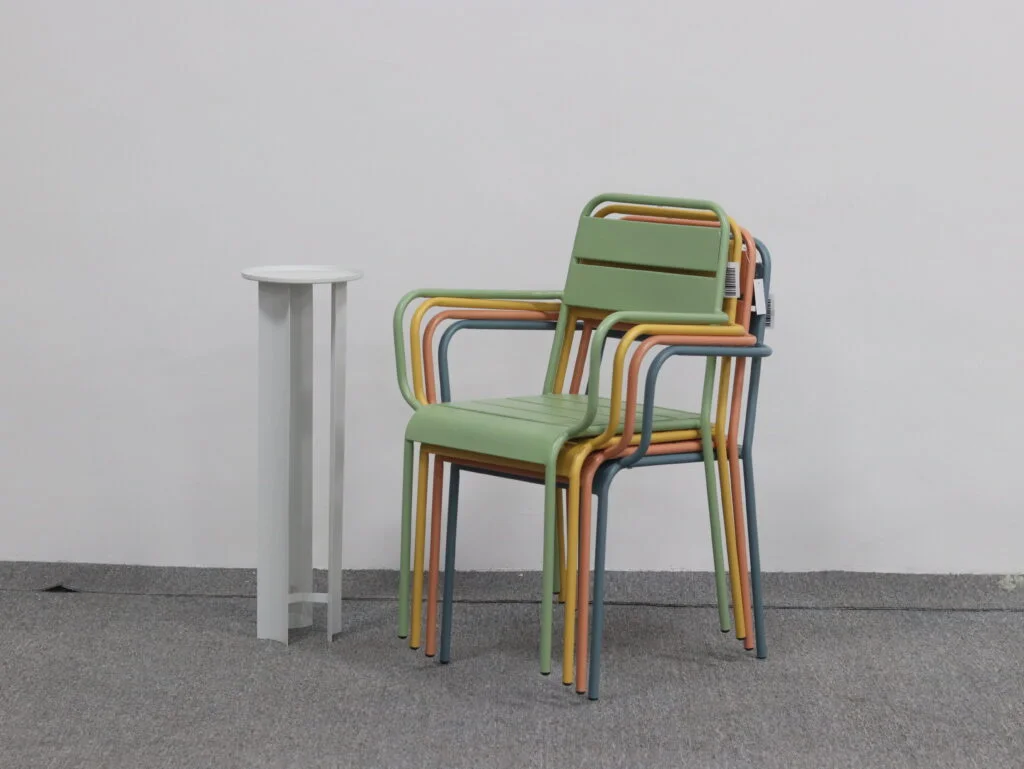
For metal outdoor furniture, the coating system helps protect the frame from oxidation and corrosion. It also creates the product’s final color and texture. A buyer choosing a green bistro chair, a matte black outdoor dining chair, a terracotta folding chair, or a custom hotel rope chair is not only choosing a color palette. The buyer is choosing a finish that must remain attractive under outdoor use. This is why coating should be discussed as part of the product specification, not only as a visual preference.
Coating Process Overview
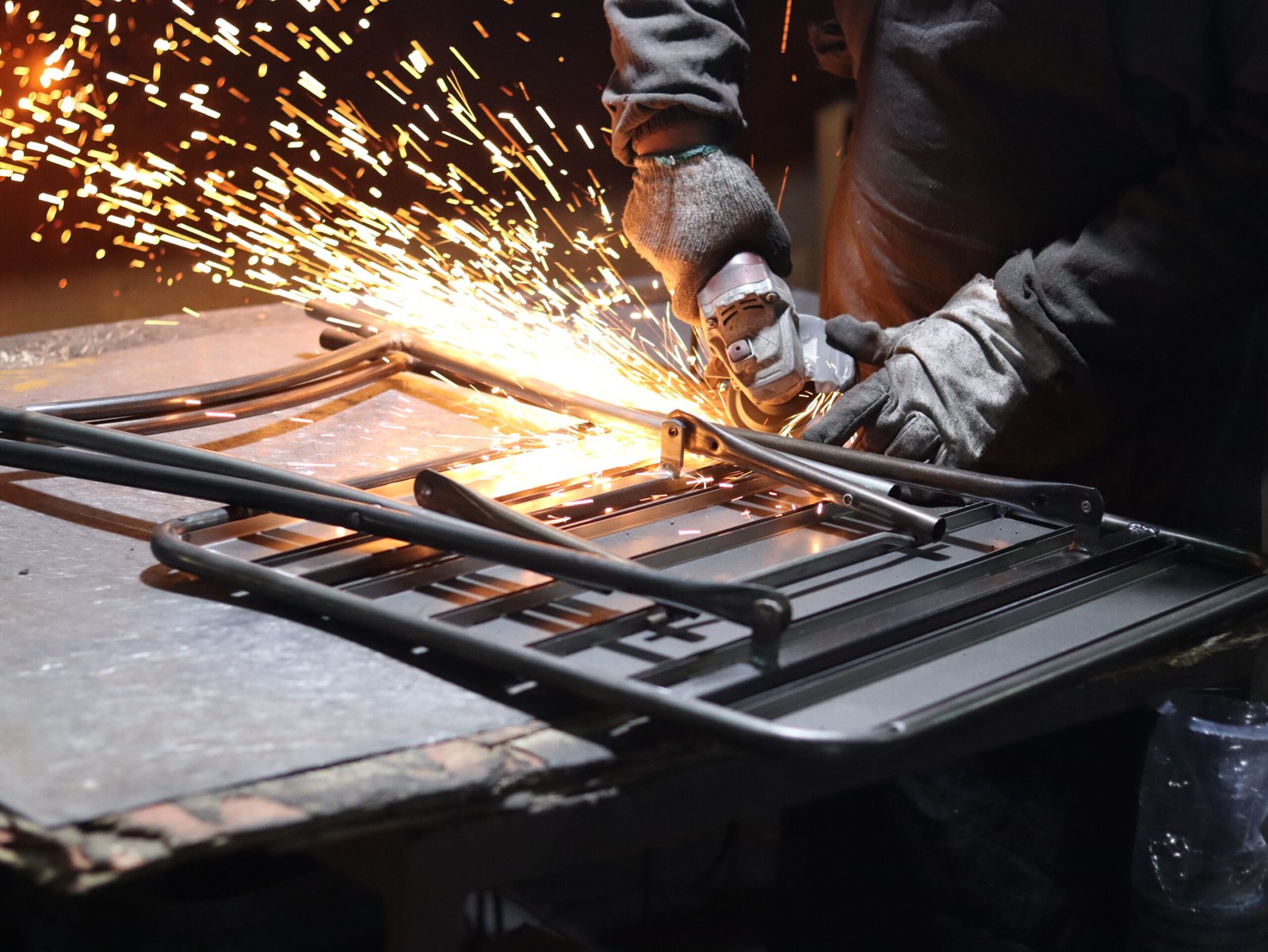
A practical coating process starts with a confirmed product and material specification. The factory and buyer should understand the frame material, tube size, welding details, surface condition, color, target use environment, packaging route, and any special test requirement. The surface treatment route can then be planned around the order.
In a typical metal outdoor furniture workflow, frames are formed, welded, cleaned, prepared for surface treatment, coated, cured, inspected, assembled with rope or other components where needed, packed, and checked before shipment. The exact process varies by product and project. A simple indoor-style metal chair, a commercial outdoor dining chair, a rope lounge chair, and a hotel project product should not be treated as identical. Outdoor use, corrosion risk, and buyer expectation should guide the finish.
Pre-Treatment Before Coating
Pre-treatment is the hidden foundation of coating performance. If the metal surface is dirty, oily, rusty, dusty, or poorly prepared, the coating may not bond well. Buyers often focus on the final color because that is what they can see in photos. However, pre-treatment is often what determines whether the finish performs over time.
Pre-treatment may include cleaning, degreasing, rust removal, surface preparation, and chemical treatment depending on the project and factory process. The goal is to create a surface that allows the coating to adhere properly and cover the frame consistently. Corners, welded joints, holes, underside areas, and sharp edges need special attention because these are common weak points in outdoor furniture.
For B2B projects, buyers should ask how the surface will be prepared and whether additional anti-rust planning is needed. A chair used in a dry balcony market may not need the same surface-treatment specification as a chair used in a coastal hotel, humid public garden, or restaurant patio with daily cleaning.
What Is E-Coating?
E-coating is a process where an electrically charged coating is deposited onto a metal surface in a controlled bath. In outdoor furniture sourcing, buyers often discuss e-coating as an additional protective layer before powder coating or as part of a stronger anti-corrosion route. It can help improve coverage in complex areas compared with a finish that only reaches easily visible surfaces, but the actual result depends on the process, material, design, pre-treatment, and inspection standard.
Colors Furniture Factory discusses e-coating requirements with buyers when a project needs stronger anti-rust planning. Because coating routes can vary by order, buyers should confirm whether e-coating is required, what product will use it, what standard applies, what testing is expected, and whether the cost and lead time match the project. It is better to define the requirement during sample development than to add it after bulk production has already started.
What Is Powder Coating?
Powder coating is a dry finishing process commonly used for metal outdoor furniture. A powder material is applied to the prepared metal surface and then cured so it forms a protective and decorative layer. Powder coating is popular because it can provide durable color, a wide range of finish options, and good production efficiency for chairs, tables, folding furniture, and metal frames.
For Colors Furniture Factory buyers, powder coating is relevant to colored metal chairs, folding bistro furniture, outdoor dining sets, metal coffee tables, rope chair frames, stools, benches, and commercial patio furniture. Buyers should confirm color, gloss level, texture, coating coverage, sample approval, and whether the coating matches the target market. A retail brand may prioritize color consistency across repeat orders. A hotel buyer may care more about scratch resistance, cleaning, and corrosion risk. A cafe buyer may need a finish that looks good in outdoor photos while still handling daily use.
E-Coating vs Powder Coating
E-coating and powder coating should not be treated as the same thing. Powder coating is commonly used as the final visible color layer. E-coating is often discussed as an additional corrosion-protection layer or primer-style step before the final powder coating, especially for projects where stronger anti-rust planning is important. In some projects, standard powder coating may be enough. In other projects, the buyer may request an enhanced coating route.
| Item | Role in Outdoor Furniture | Buyer Notes |
|---|---|---|
| Pre-treatment | Prepares the metal surface before coating | Important for adhesion, consistency, and rust-risk reduction |
| E-coating | Can be specified as an additional protective layer for some metal projects | Confirm requirement, cost, lead time, test standard, and sample method early |
| Powder coating | Creates the final visible color and protective finish | Confirm color, gloss, texture, coverage, curing, and sample approval |
| Salt spray testing | Evaluates corrosion-resistance performance under a defined test condition | Confirm standard, duration, laboratory, sample, and acceptance criteria before production |
| Coating inspection | Checks visual finish, coverage, scratches, exposed metal, and weak points | Ask for photos, inspection notes, or third-party inspection for larger orders |
What Buyers Should Specify
A coating requirement should be written clearly in the order file. Buyers should not rely on a general phrase such as good outdoor coating. A practical specification should include the product model, frame material, finish color, gloss or texture, target environment, corrosion-resistance expectation, whether e-coating or primer is required, powder coating requirement, packaging protection, and any test or inspection request.
For example, a buyer sourcing carbon steel patio chairs for a coastal hotel may need a stronger anti-rust discussion than a buyer sourcing folding chairs for a dry inland market. A retail brand selling colorful outdoor furniture may need strict color consistency and repeated sample approval. A restaurant chain may need scratch resistance, easy cleaning, stable packaging, and replacement consistency. These needs should be translated into a coating and inspection plan before the order is confirmed.
Common Coating Inspection Points
Coating inspection should include both visible surfaces and hidden risk areas. Inspectors should check color consistency, gloss level, texture, coating coverage, pinholes, scratches, orange peel, exposed metal, rough areas, sharp edges, underside areas, welds, holes, and corners. The product should be compared with the approved sample where possible.
Buyers should also review whether packaging protects the coating. Even a good finish can be damaged if coated frames rub against each other in the carton, if hardware is loose, or if sharp corners are not protected. For chairs and tables with multiple metal components, inner protection can be as important as the coating itself. Packaging photos are useful evidence before shipment.
Salt Spray Testing and Project-Specific Evidence
Salt spray testing is often discussed for metal outdoor furniture, especially when buyers care about corrosion resistance. However, it should be handled carefully. The buyer and factory should agree on the test standard, duration, laboratory, sample preparation, sample quantity, timing, and pass criteria. A test number without context can be misleading. The requirement must match the product, market, and use environment.
For larger B2B orders, buyers may request coating photos, production photos, sample records, inspection reports, third-party inspection, or laboratory test reports. Colors Furniture Factory can discuss these evidence requirements at the quotation and sample stage. The earlier the evidence plan is defined, the easier it is to match production, cost, timing, and buyer expectations.
Coating Choices by Use Environment
The best coating route depends on where the furniture will be used. A balcony chair, a garden chair, a restaurant terrace chair, a seaside hotel chair, and a public-space bench may all need different coating discussions. Buyers should think about humidity, rain, salt air, poolside use, cleaning frequency, storage method, and expected service life.
For lower-risk environments, a well-prepared powder-coated finish may be suitable. For higher-risk environments, buyers may request enhanced pre-treatment, e-coating, primer, stronger powder coating, or testing. The correct choice is not always the most expensive option. The correct choice is the option that matches the buyer’s market, warranty promise, product price point, and risk tolerance.
How Colors Furniture Factory Supports Coating Decisions
Colors Furniture Factory supports B2B buyers by helping them discuss product structure, frame material, surface treatment, color selection, sample approval, and inspection needs. The company works with metal outdoor furniture, carbon steel outdoor chairs, rope chair frames, folding furniture, outdoor dining chairs, coffee tables, benches, stools, and commercial patio furniture projects.
When a buyer sends a coating-related inquiry, the most helpful information includes product category, material preference, target market, use environment, required color, expected order quantity, packaging requirement, and any testing or compliance expectation. With that information, the coating route can be discussed more clearly. If the buyer needs e-coating, salt spray testing, third-party inspection, or a stronger anti-rust plan, those requirements should be included before sample confirmation.
Related Coating and Sourcing Resources
- OEM/ODM Outdoor Furniture Manufacturer for B2B Projects
- Quality & Testing Center for Outdoor Furniture
- Factory Tour: Metal Outdoor Furniture Production in Foshan
- Colors Furniture Factory Company Profile
- Carbon Steel Patio Chairs Manufacturer E-Coating Guide
- E-Coated Outdoor Metal Furniture Manufacturer Guide
- Carbon Steel vs Aluminum Outdoor Furniture
Frequently Asked Questions
What is the difference between e-coating and powder coating?
Powder coating is usually the final visible color layer for metal outdoor furniture. E-coating is often specified as an additional protective layer or primer-style process for projects that need stronger anti-corrosion planning.
Does every metal outdoor furniture order need e-coating?
No. Not every order needs e-coating. The right coating route depends on the material, product structure, outdoor environment, target market, warranty expectation, and buyer budget.
What should buyers confirm before ordering powder-coated outdoor furniture?
Buyers should confirm color, gloss, texture, pre-treatment, coating coverage, sample approval, packaging protection, and whether any corrosion-resistance test or third-party inspection is required.
Can buyers request salt spray testing for coated metal furniture?
Yes. Buyers can request salt spray testing, but the standard, duration, laboratory, sample method, and acceptance criteria should be agreed before production.
How can buyers reduce coating damage during shipping?
Buyers should confirm carton strength, inner protection, frame separation, hardware packing, corner protection, and loading photos so coated surfaces are less likely to rub or scratch during shipment.
Contact Colors Furniture Factory
If you are sourcing powder-coated outdoor furniture, carbon steel patio chairs, rope chair frames, folding chairs, metal dining chairs, or OEM/ODM commercial outdoor furniture, you can contact Colors Furniture Factory with your coating requirements, target market, use environment, color direction, and testing expectations.
Contact Colors Furniture Factory