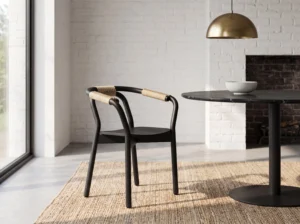
A Material Specification Paradigm Shift: From Inherent Limitation to Engineered Solution
In the commercial specification of outdoor furniture for coastal resorts, cruise liners, and high-humidity municipal projects, the historical veto against iron has been rooted in a legitimate fear of corrosion. The specification question has evolved from “Is rust still a problem?” to a more precise engineering challenge: “What is the verified corrosion mitigation strategy for this asset in a high-salinity environment?” In 2026, the definitive answer lies in a technology transfer from high-volume manufacturing: OEM-Standard Electrophoretic Coating (E-Coating). This process, the non-negotiable baseline for automotive chassis and component longevity, has re-engineered the viability of iron for the most demanding outdoor applications. It transforms iron from a compromise material into a performance-specified asset with a predictable, extended lifecycle, directly addressing the total cost of ownership (TCO) models of professional procurement teams.
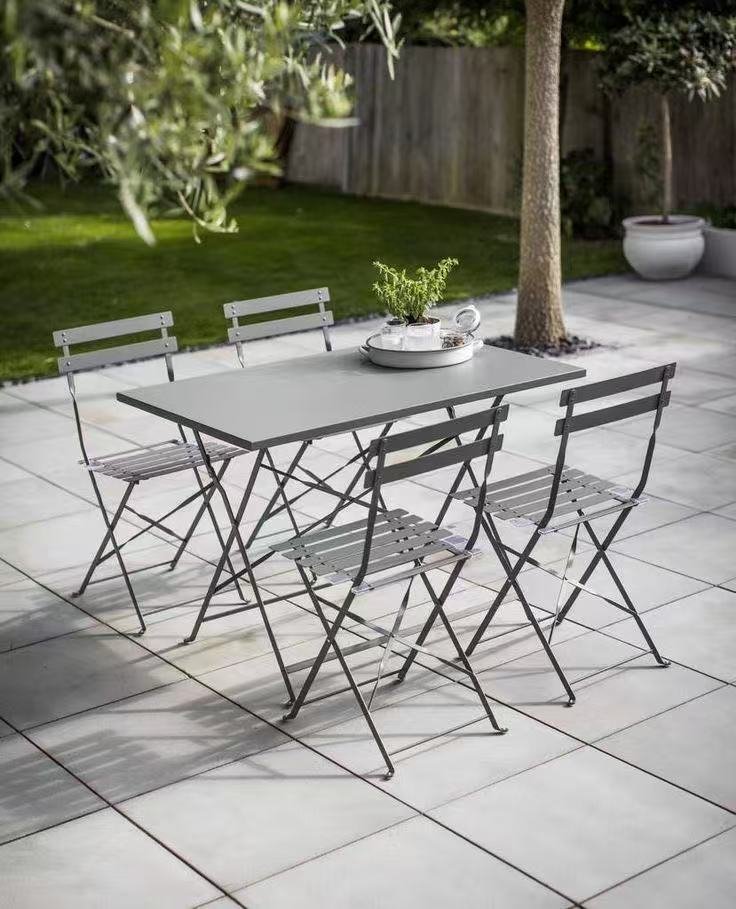
The Engineering Superiority of E-Coating: Beyond “Paint” to Molecular Bonding
The distinction between E-Coating and conventional finishes is not incremental; it is fundamental. It replaces a mechanical application process with an electrochemical integration, achieving protection that is quantitative, verifiable, and rooted in OEM standards.
Deconstructing the Process: A 9-Stage Protocol
A true OEM-standard line at a qualified outdoor metal furniture factory is a controlled sequence, mirroring automotive practice:
Alkaline Cleaning & Rinsing for degreasing.
Surface Activation to prepare the crystalline structure.
Zinc or Iron Phosphating to create a microcrystalline layer for enhanced adhesion and corrosion inhibition.
Multiple Rinse and Seal Stages to remove residuals.
The Electrocoating Bath: The cathodically charged workpiece is immersed in an epoxy resin bath. The electrical field forces a uniform deposition of resin onto all conductive surfaces.
Post-Rinse & Curing: The part is oven-cured, cross-linking the polymer into a dense, continuous film.
Solving the Powder Coating Achilles’ Heel: The Faraday Cage Effect
This is the critical technical differentiator. In powder coating, the charged powder particles struggle to deposit uniformly into recesses, corners, and interior channels of complex fabricated pieces due to the Faraday Cage Effect—the electrical field shields these areas, leading to thin, inconsistent coverage that becomes the primary failure point. E-Coating’s electrolytic process in a conductive bath fundamentally overcomes this. The coating forms from the metal outward, with deposition driven to all surfaces equally, ensuring complete, uniform coverage in tubular cavities, sharp corners, and welded joints, areas where powder coating is inherently weak.

Performance Data: Specification-Grade Verification
The justification for specification shift is found in empirical, accelerated testing data. The benchmark is the Neutral Salt Spray (NSS) Test per ASTM B117.
Coating Technology | Typical Film Build | NSS Test Performance (to Red Rust) | Protection Mechanism | Key Limitation |
|---|---|---|---|---|
Standard Wet Spray Paint | 30-60 μm | 300-500 hours | Physical Barrier | Uneven build; poor edge/weld coverage; weak adhesion. |
Conventional Powder Coating | 60-120 μm | 600-800 hours | Physical Barrier | Faraday Cage Effect causes inadequate coverage in recesses and interiors. |
OEM-Standard E-Coating | 15-25 μm | 1000+ hours (Standard Spec) | Electrochemical Bonding + Pore-Free Barrier | None. Complete coverage of all surfaces, including interior cavities. Exceptional adhesion. |
The “Edge & Weld Coverage” Specification Mandate
Corrosion initiates at the weakest point. E-Coating’s electrodeposition actively targets edges, welds, and complex geometries first, forming a continuous, hermetic seal. This makes it the only finish suitable for specifying intricate, high-design ironwork intended for decades of service in aggressive environments.
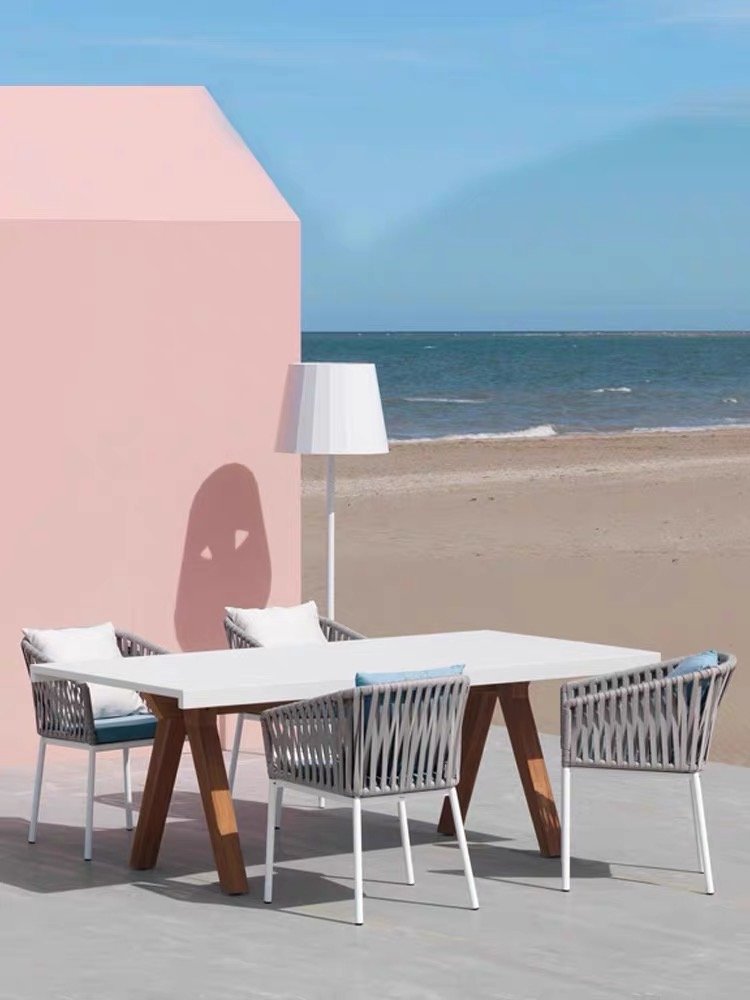
Strategic Sourcing Implications: From Cost to Engineered Value
For the professional buyer, this translates into a recalibrated value proposition for iron furniture.
1. Lifecycle Cost Engineering & Asset Longevity
A specification demanding 1000+ hour NSS performance is an engineering directive for multi-decade service life. This drastically reduces CapEx cycling, operational downtime for refinishing, and long-term maintenance liabilities, directly optimizing the project’s TCO.
2. Unconstrained Design for Manufacture (DfM)
Designers and specifiers are liberated from simplifying designs for coatability. Complex fabrications, hollow sections, and detailed assemblies can be specified with full confidence in their corrosion protection, enabling aesthetic differentiation without engineering compromise.
3. Dual-Hub Manufacturing Strategy for Supply Chain Optimization
A sophisticated procurement strategy leverages the distinct competencies of the two primary manufacturing hubs:
Partner with a Tier-1 Chinese outdoor metal furniture manufacturer for engineering precision, advanced automation, and the ability to execute highly complex fabrications. They lead in process control and technical sophistication.
Engage a certified Indonesian outdoor metal furniture manufacturer to leverage cost-structure advantages and, critically, to optimize duty-free access to key EU and North American markets under various trade agreements.
Leverage our dual-hub manufacturing strategy to optimize duty-free access to EU/US markets while maintaining Chinese engineering precision. This approach de-risks supply chains and maximizes value.
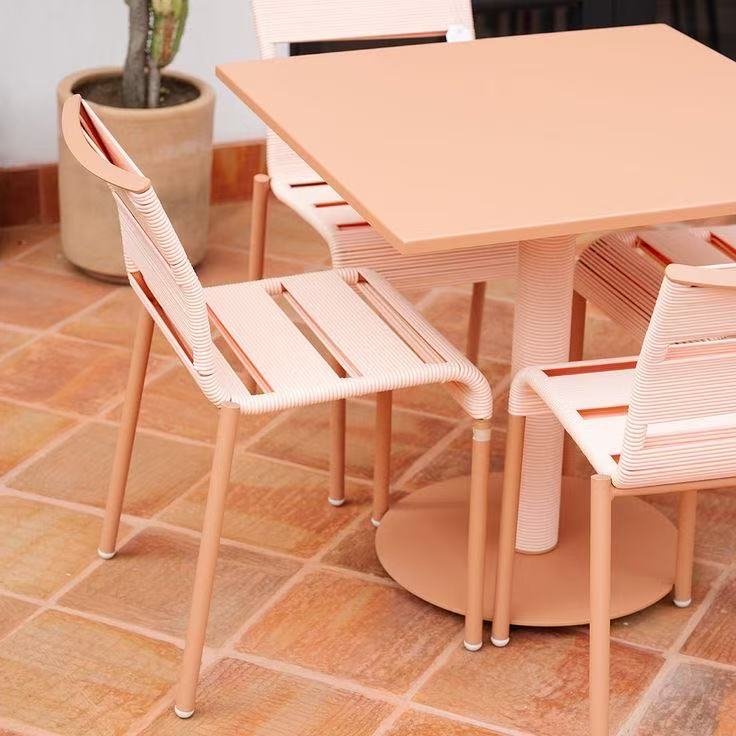
The Procurement Audit Protocol: Verifying OEM-Standard Compliance
To ensure specification compliance, procurement and engineering teams must move beyond brochures to forensic verification:
Demand Certified Test Reports: Require third-party NSS test reports (1000+ hours on finished production samples), adhesion test results (ASTM D3359, 5B rating), and cyclical corrosion test (CCT) data if available.
Audit the Facility Process Flow: Verify the existence of a complete, automated pretreatment and E-Coating line. The number of stages (7-9 is ideal) and process control logs are key indicators.
Conduct Destructive Sample Analysis: Request a cross-section of a coated tubular sample. Inspect for uniform interior coating and measure film build consistency. The absence of bare metal in cavities is non-negotiable.
Review Quality Management Systems: Certifications like IATF 16949 (automotive quality) are the ultimate indicators of an OEM standards culture, though ISO 9001 is a baseline.
Conclusion: Specifying Beyond Historical Bias
The specification bias against iron is now a relic of outdated manufacturing technology. OEM-Standard E-Coating has decisively solved the corrosion equation, providing a level of verified protection that meets or exceeds that of many marine-grade aluminum alloys. For the professional specifier, this means iron can—and should—be evaluated on its superior structural properties, design versatility, and total cost of ownership, backed by forensic performance data.
The most resilient, cost-effective, and aesthetically uncompromised specification for high-salinity and demanding commercial outdoor applications will increasingly feature iron, protected by the same electrochemical science that guarantees the longevity of global automotive fleets.
Ready to issue a bulletproof specification? Download our Technical Data Dossier: E-Coating Performance for Outdoor Furniture, containing standardized specification language, test method requirements, and a factory audit scorecard.
Contact our technical specification team today for a consultative review of your project requirements and to connect with our vetted network of OEM-standard manufacturing partners.